
The Wash
The Grounds at NFATC
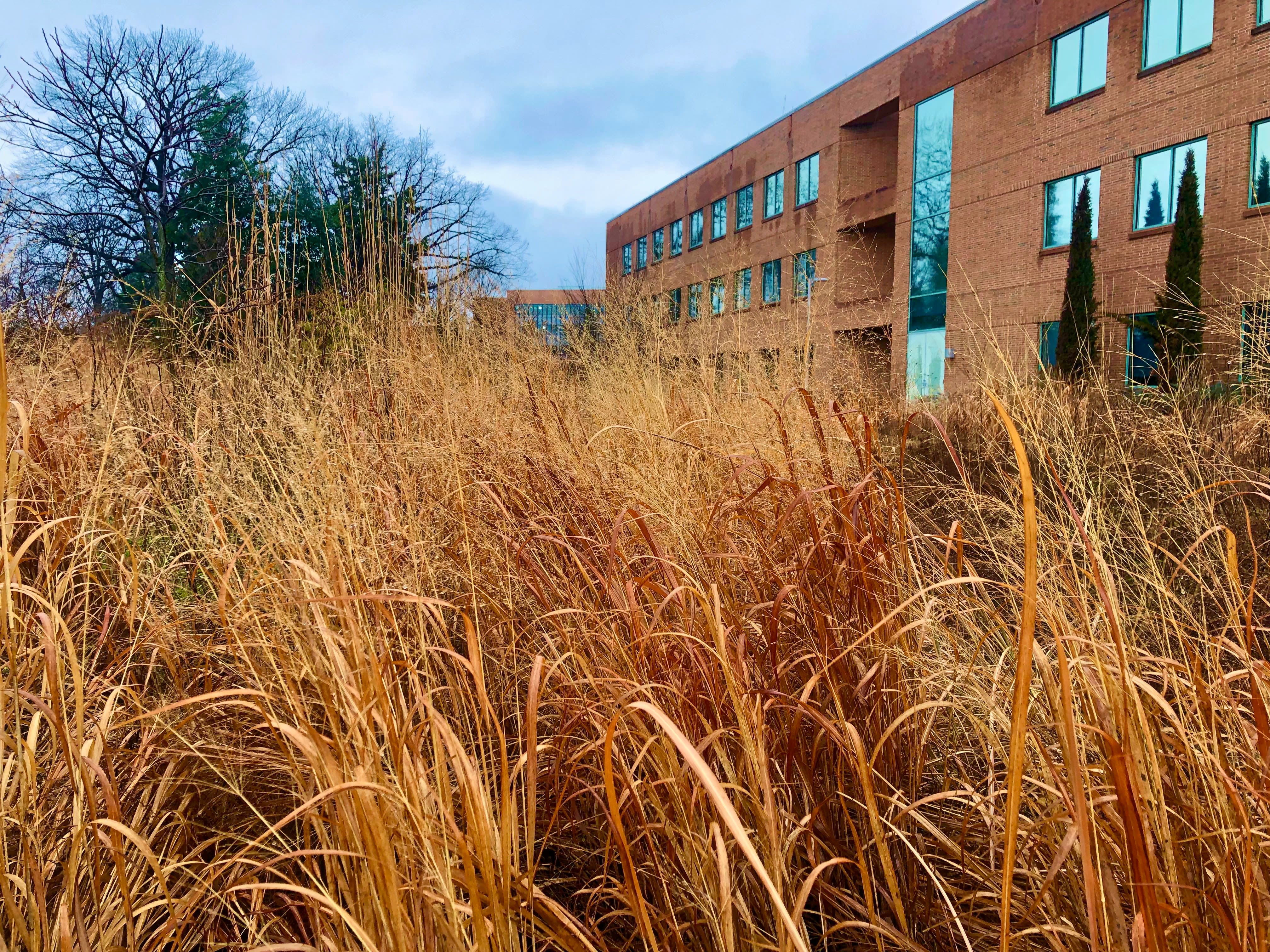

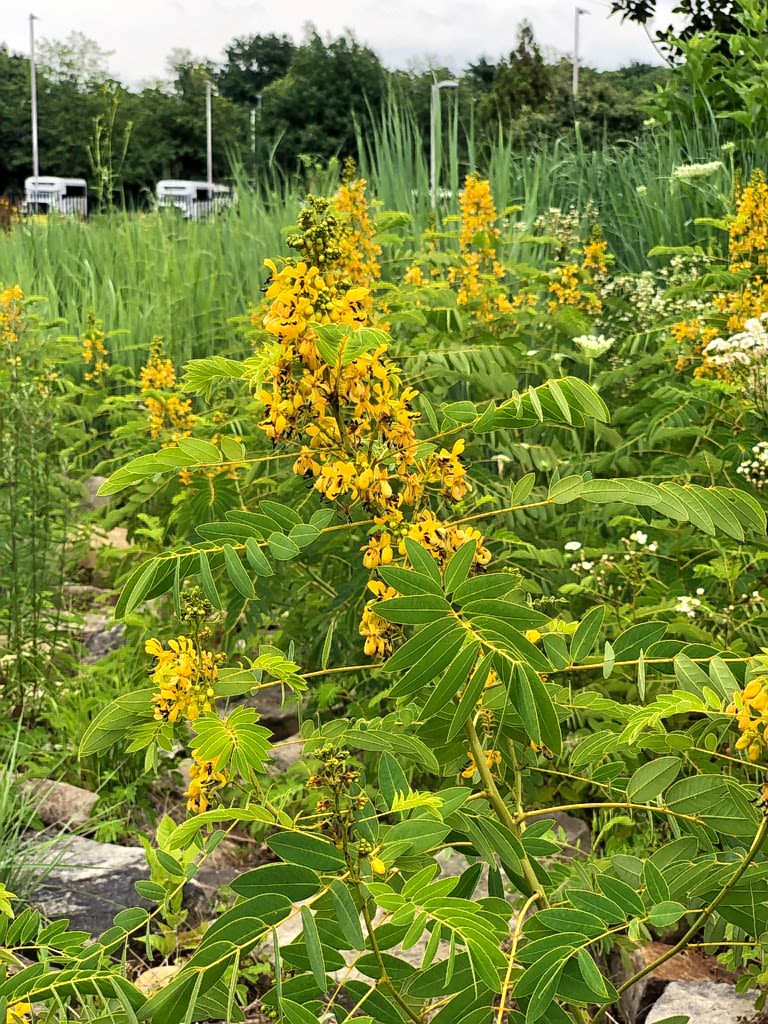
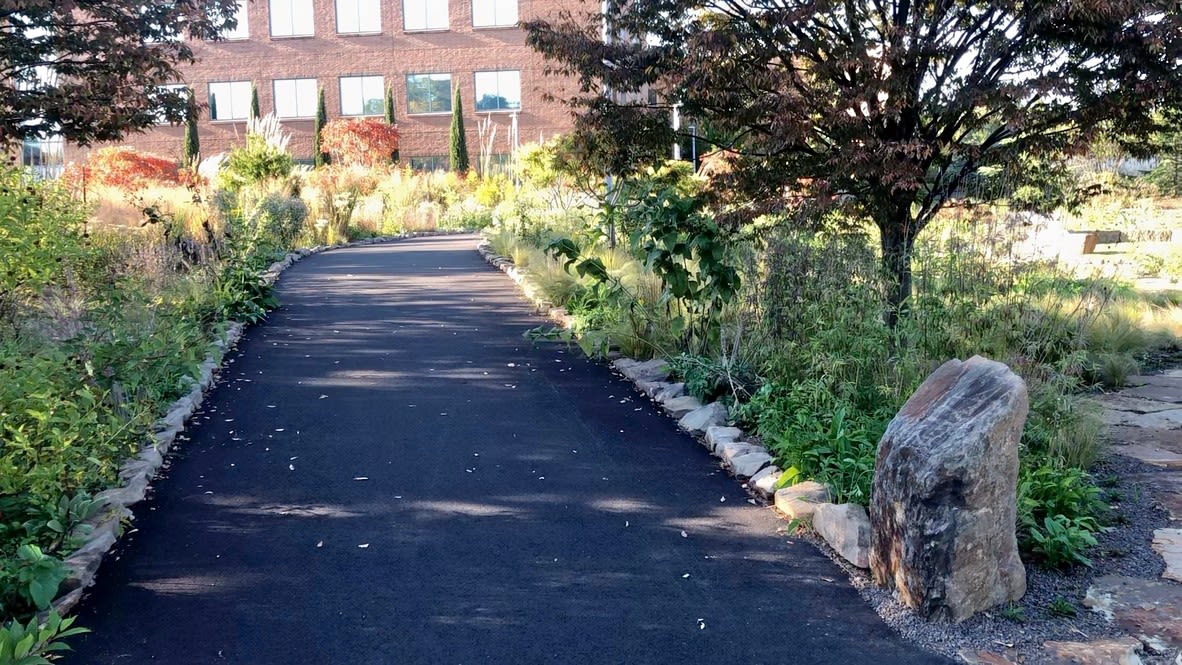
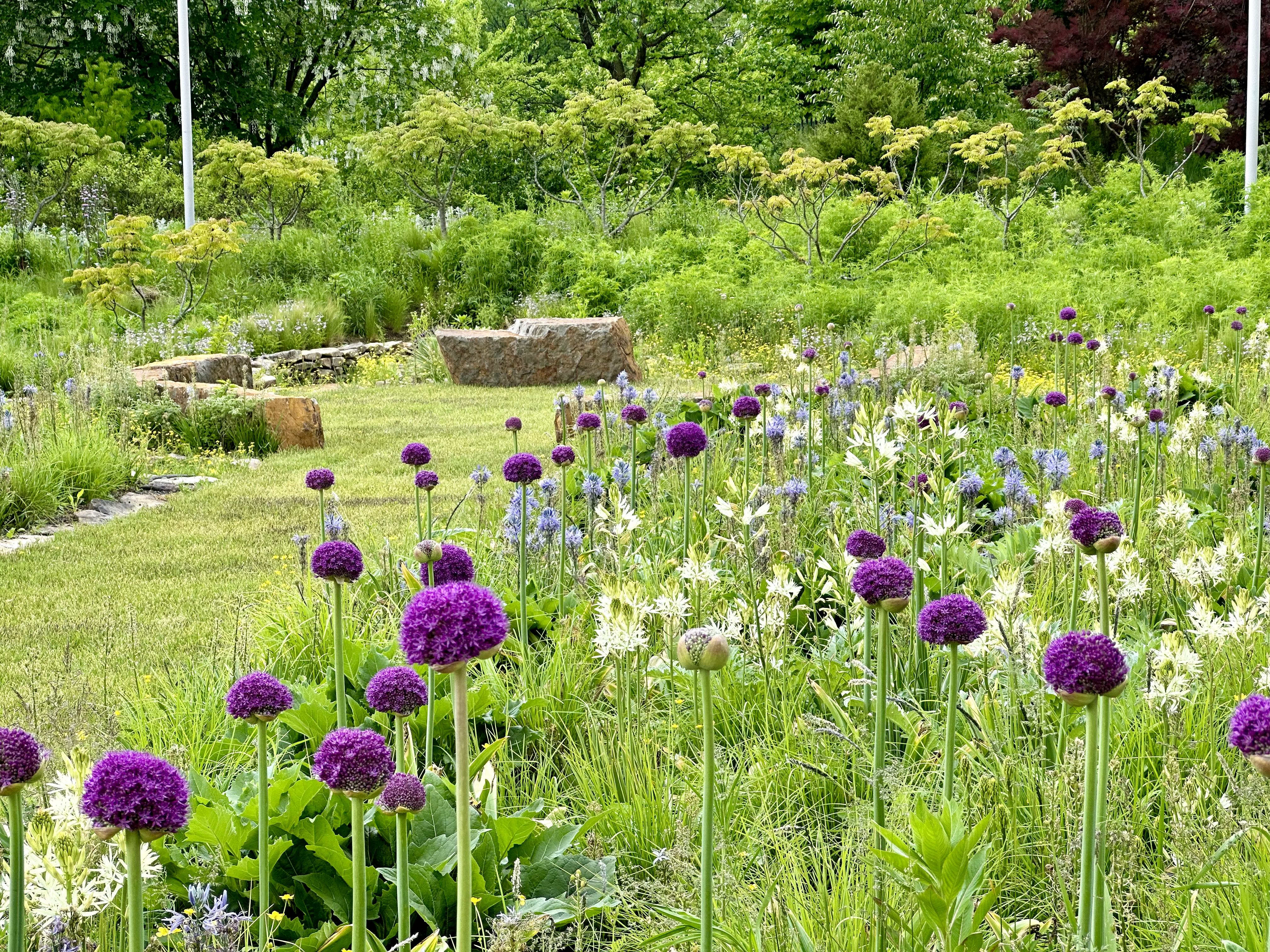
The paths through the Wash are enveloped in the plantings of a stylized prairie feeling, sending you through a space that keeps your eyes moving between the sights and sounds of a garden alive with birds.
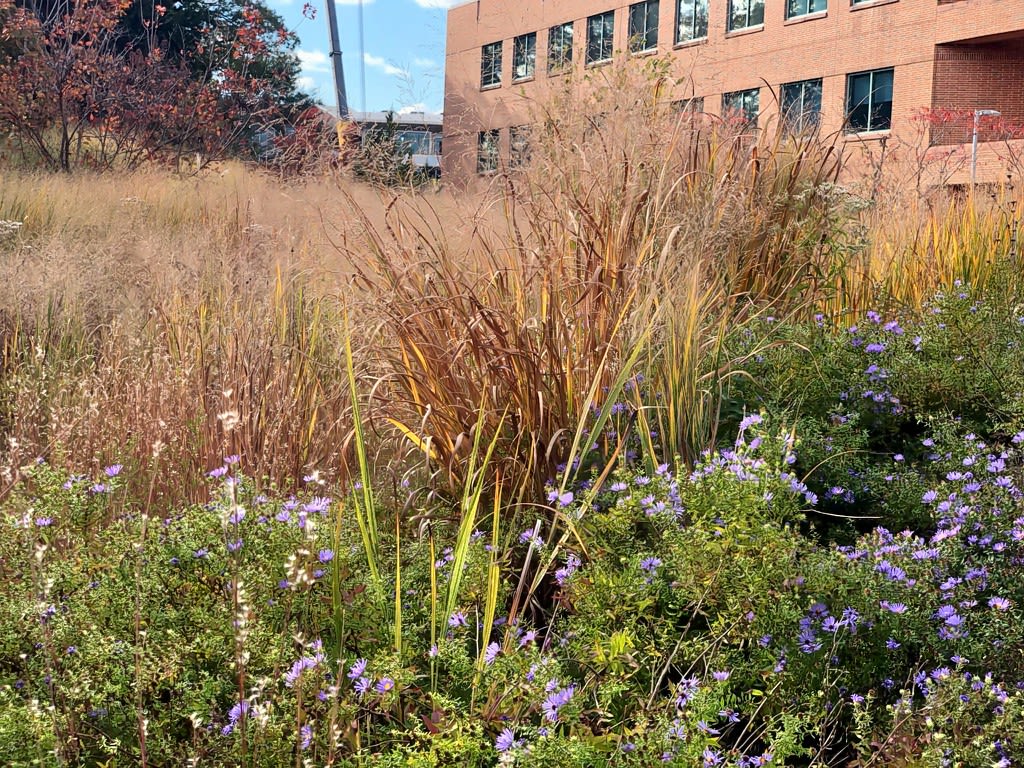
The Wash is edgy and does not abide by any determined order. Highly seasonal, the planting begins by being cut low, exposing the runs of rock that direct stormwater flows through the space. Punctuations of spring ephemerals combine with fresh flushes of powder blue foliage until the heat of summer fuels raucous growth of deep green that is subtly tuned to maintain balance. Autumn's decreasing light stimulates the setting of seed, bringing growth to its zenith just prior to color changes that mix iridescent reds with straw. The planting remains high all winter, providing a critical habitat that rustles in the breeze.
The Wash offers those walking through much to digest, providing a chance to clear their minds as they start and end their days.






Horticulturist's Tour
Listen to NFATC Horticulturist Darren DeStefano talk about overcoming challenges and failures to design this garden.
Select the play button to listen to the audio as you follow along with the transcript below.
This is the most challenging garden on campus.
It's the lowest point on the grounds. The soils are heavily compacted. That reality was hard for me to get my mind around. When I first started working in this space, I implemented soil fracturing techniques, and I thought that I could bring my will to create a space where I would grow a bunch of trees. That produced utter folly. This space is a veritable graveyard of plants.
What I came to realize in being repeatedly humbled of trying to grow different plants in this space was that I wasn't getting the message. You know, I wasn't listening, and I wasn't applying myself in a way that was going to lead to success.
(Scroll to follow along with the audio.)
I went back to the drawing board completely, and I ended up deciding to go along the lines of an ecologically based scenario. I specifically used an ecological theory called Grime’s Triangle that classifies plants according to how they come to dominate their environment.
When you get plants that occupy these three points of the triangle and you blend them all together, you create an ecologically based design that is self-organizing. Each plant finds the place where it wants to be. What is inappropriate will perish, but you have something inside of your palette that will come to replace it.
I mean the Wash, for me, a lot of times when I come to campus, that's the gate I will enter in. The distance between the turnstile and the building is enough to have a complete thought.
And walking through the Wash with it growing on either side, especially when it’s at its, you know, the height of its powers in late summer, it's a real cleanse.
Featured Plants



Serbian Spruce
(Picea omorika)
Serbian spruce is an evergreen conifer in the pine (Pinaceae) family and is endemic to the karst slopes of the Drina River Valley on the border of Serbia and Bosnia. It was discovered growing on Mount Tara by Josif Pančić, the eminent Serbian botanist, in 1875, and recognized as a unique species in 1887.
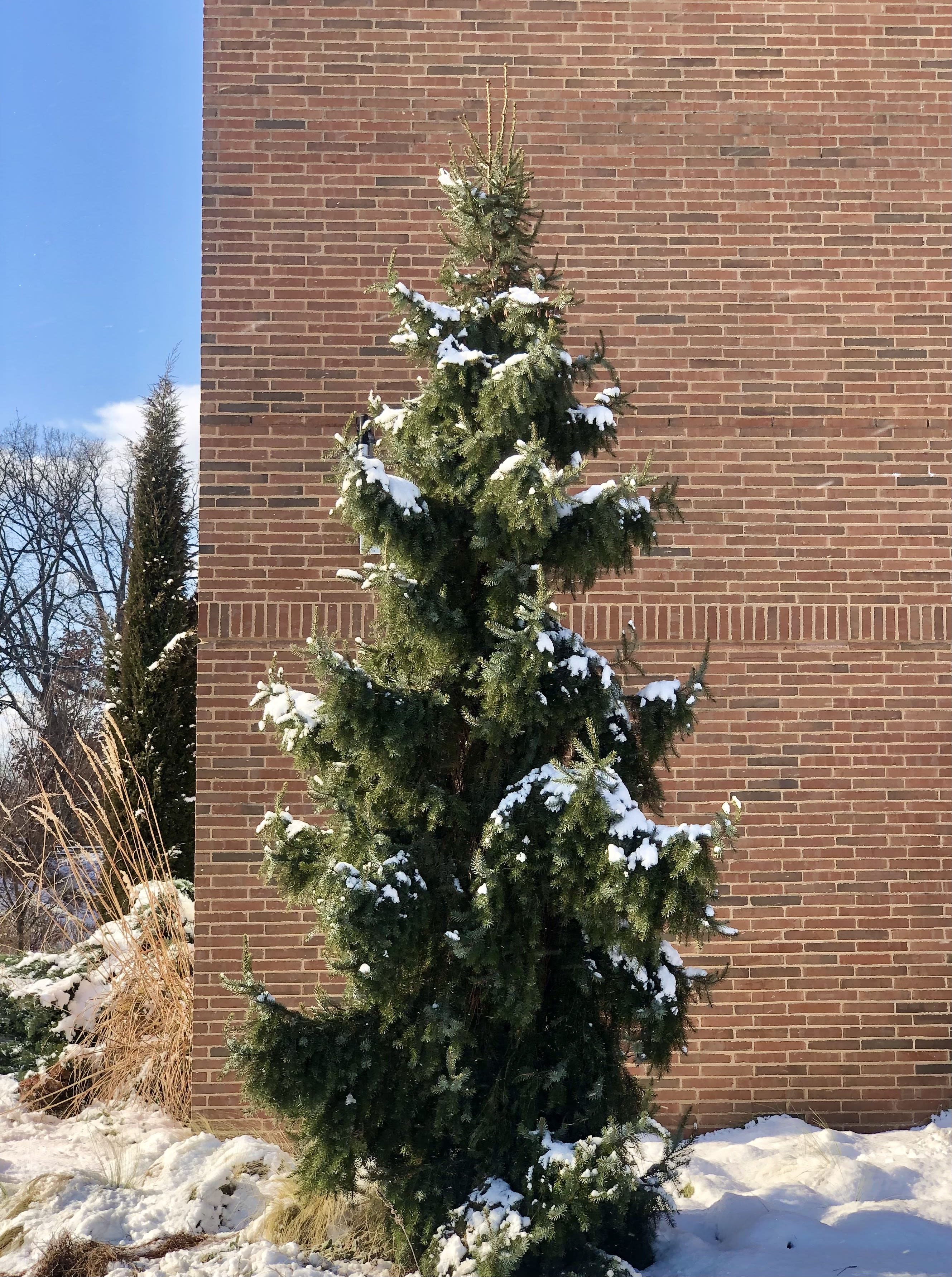
Unlike its timber-producing brethren of the boreal north, Serbian spruce is elegant, tightly columnar with sweeping branches that cascade down but arch upward toward the tip. It's a spire of a tree coated in flattened green needle foliage with silver undersides that lend a bluish cast in a breeze. Small, finger-size cones emerge violet purple before fading to golden brown pendants on the tips of mature branches.
The Serbian spruce is graceful, especially when bearing snow. Trees were planted behind the K Building in 2012. You will also find some beside the E Building.
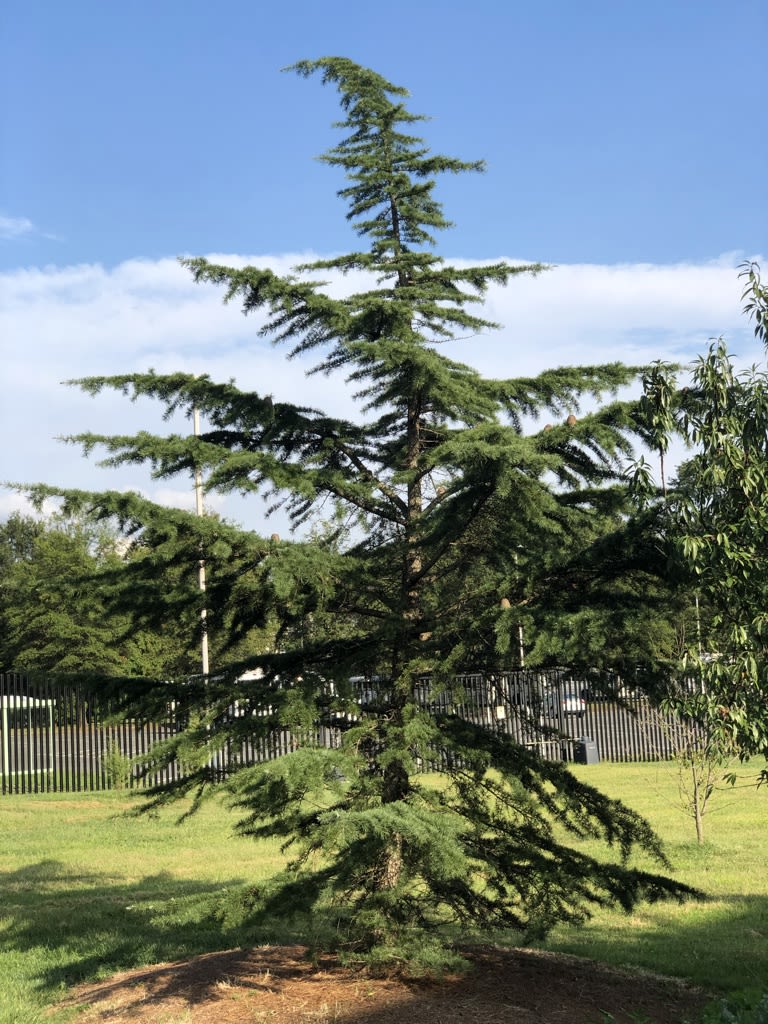
'Karl Fuchs' Himalayan Cedar
(Cedrus deodara ‘Karl Fuchs’)
Himalayan cedar is a coniferous tree in the pine (Pinaceae) family and is native to the western reaches of the Himalayas. Growing at elevations up to 10,000 feet, stands of Himalayan cedars form just below the alpine zone. They were dubbed “devadaru” in Sanskrit, which means “timber of the gods.”
Himalayan cedars exhibit the distinct characteristics of a true cedar: short whirled needles, barrel-shaped cones borne upright on the tops of branches, and terraced architecture radiating from massive trunks of long-lived trees. They are unique in that they tend to have a graceful drooping appearance compared to all other cedars and produce glaucous new growth in spring, creating a snow-tipped effect that lasts for several weeks.
Like their Mediterranean brethren, they are known for exceptionally fine-grained, aromatic timber that is among the most rot-resistant in the world and thus was prized in antiquity for construction.
The specimens at NFATC are ‘Karl Fuchs,’ which were selected in Germany from seeds collected in the Paktia Province of Afghanistan in the 1960s. They were established on campus in 2017 in recognition of our local Afghan staff and involvement in the region.
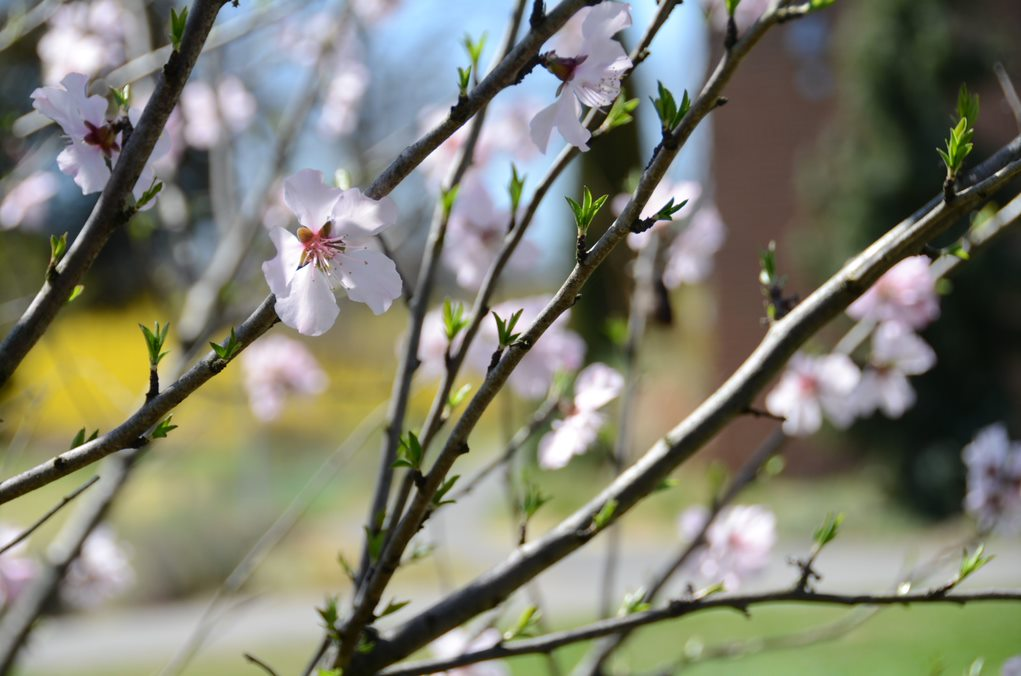
‘Hall’s Hardy’ Sweet Almond
(Prunus dulcis ‘Hall’s Hardy’)
Sweet almond is a member of the rose (Rosaceae) family and is native to the rich slopes and hillsides of central Asia, from Anatolia to Pakistan. They were first domesticated in Persia 4,000 years ago.
Wild varieties, known as bitter almonds, produce cyanide. When consumed, a few handfuls make a lethal dose, although small amounts are used to lend a quintessential flavor to confections, especially marzipan.
Almond trees exhibit significant variation and varieties such as marconas and pizzuta. Flowers are five petaled, pale pink to white, and emerge prior to foliage around the spring equinox. They serve as the harbinger of spring for the Mediterranean realm and dry reaches of Asia, where small orchards light up with vibrant color and perfume the air with a fresh scent. Van Gogh was moved to paint the flowers in Arles, France, likely smitten by the fragrant orchards there, which he did not know in northern Europe.
The sweet almonds at NFATC are ‘Hall’s Hardy,’ a variety suitable to NFATC’s location at the limit of a sweet almond’s hardiness range. They were planted in 2017 at the rear of the K Building.
Through the Seasons
Select each of the images below to zoom in and learn more.

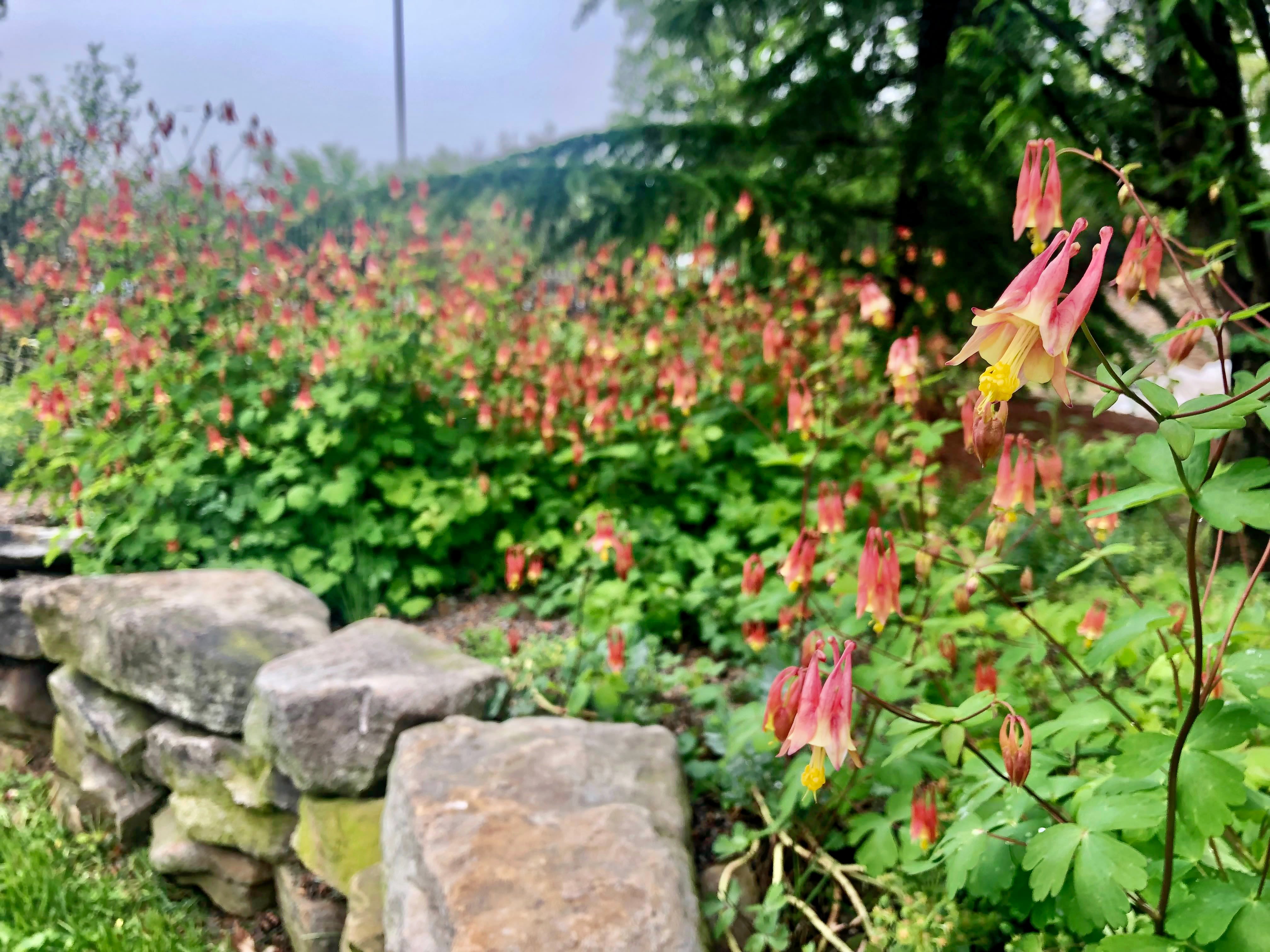
Columbine in bloom
Columbine in bloom
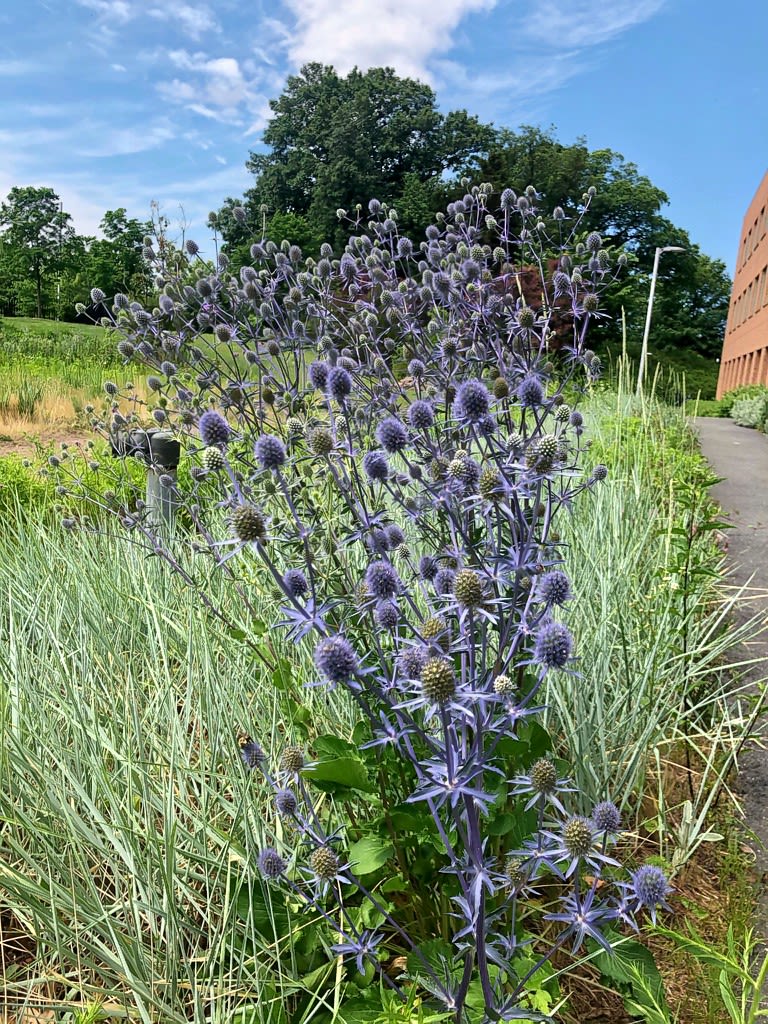
The mid-summer to fall blooms of sea holly
The mid-summer to fall blooms of sea holly
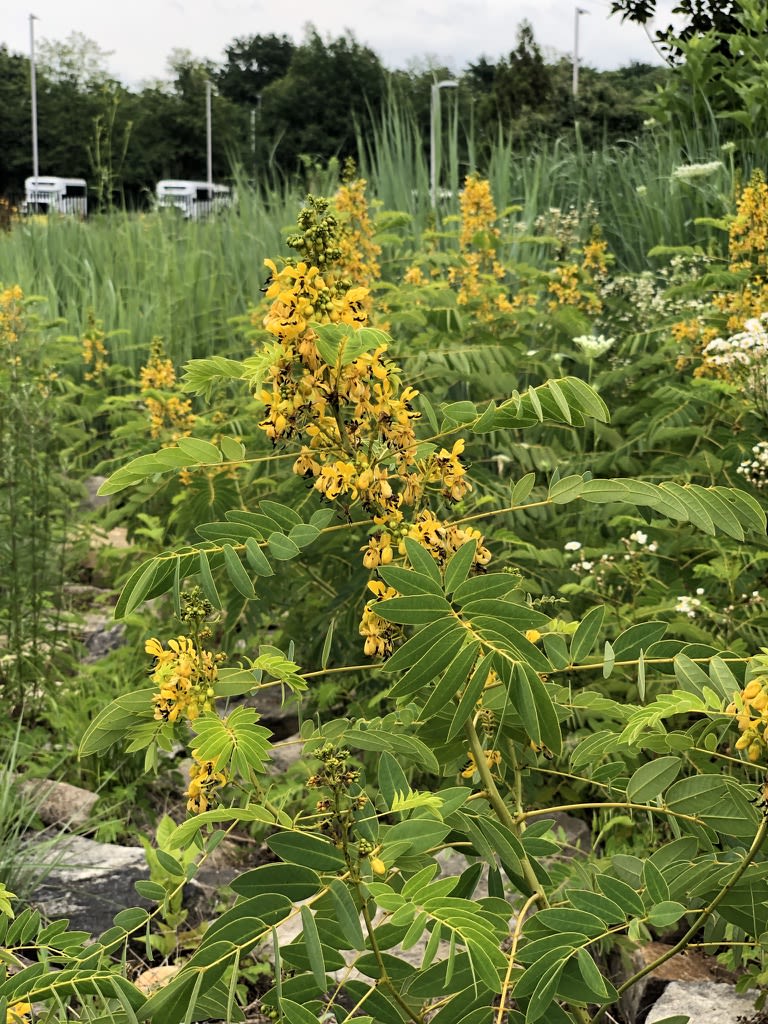
Senna blooming from mid- to late summer
Senna blooming from mid- to late summer
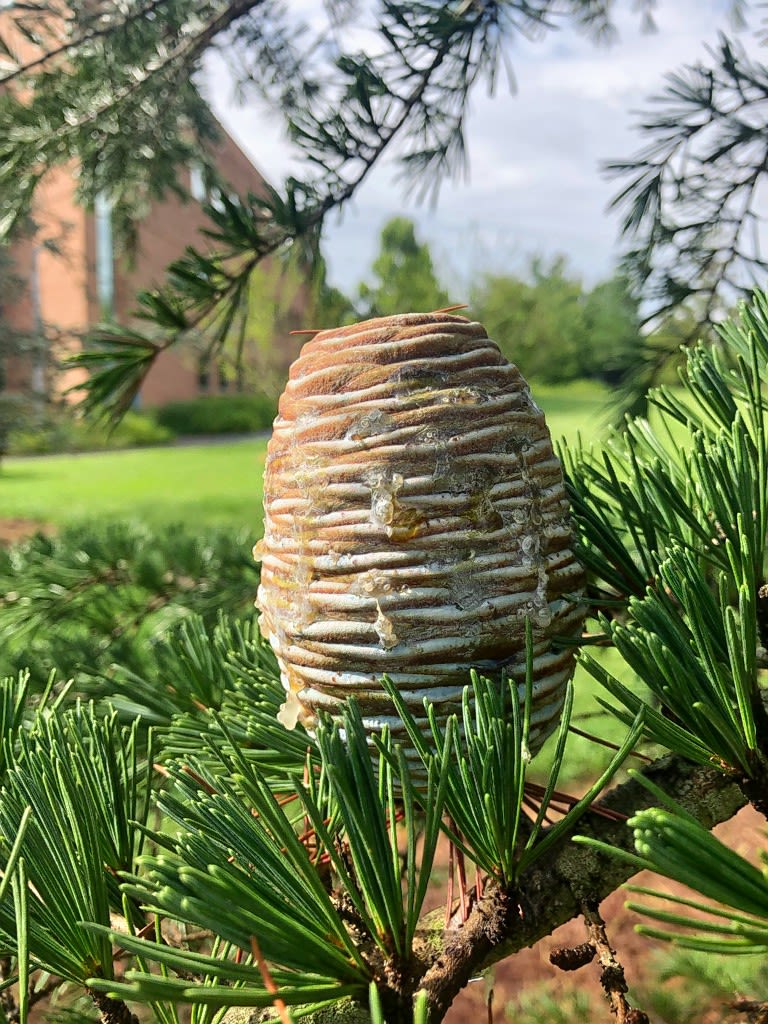
The cones of a Himalayan cedar
The cones of a Himalayan cedar
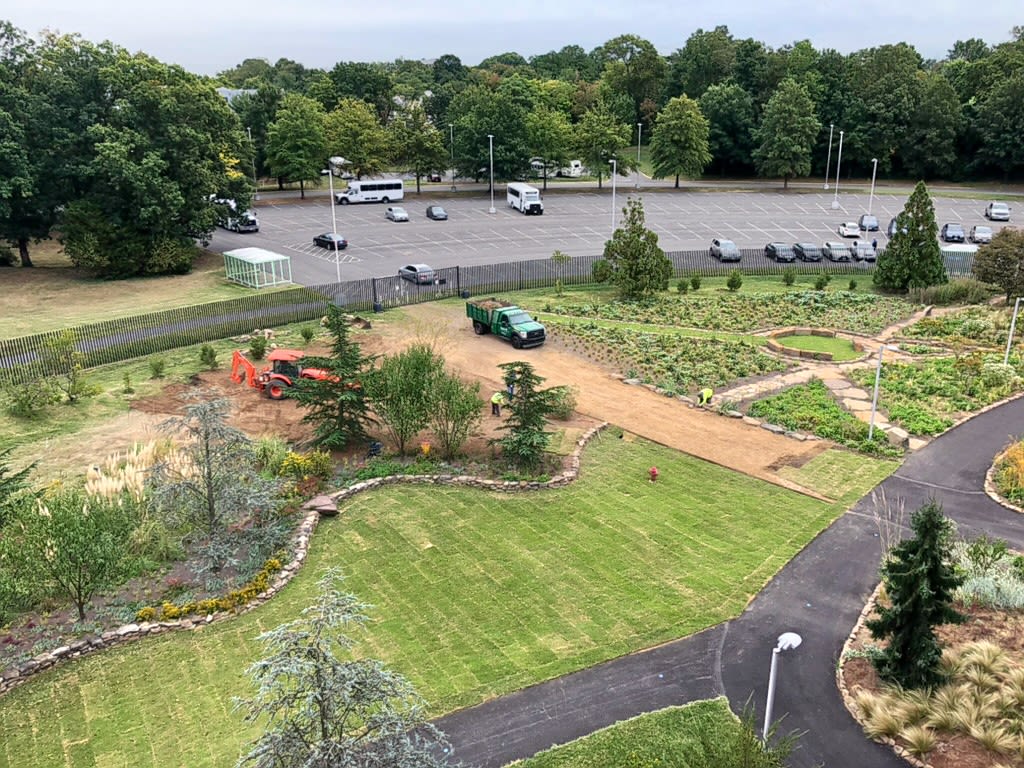
Efforts to lay sod and extend the sightline from the Wash to the Rock of Valls Noyes
Efforts to lay sod and extend the sightline from the Wash to the Rock of Valls Noyes
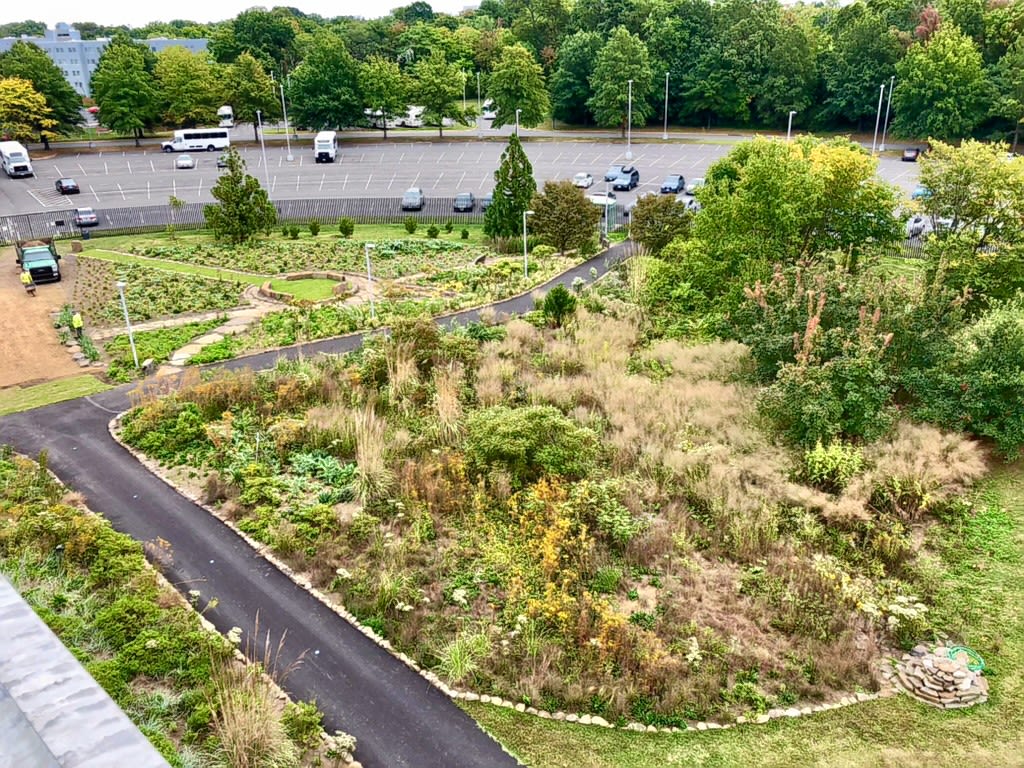
Overview showing the thick vegetation that makes for great bird habitat
Overview showing the thick vegetation that makes for great bird habitat
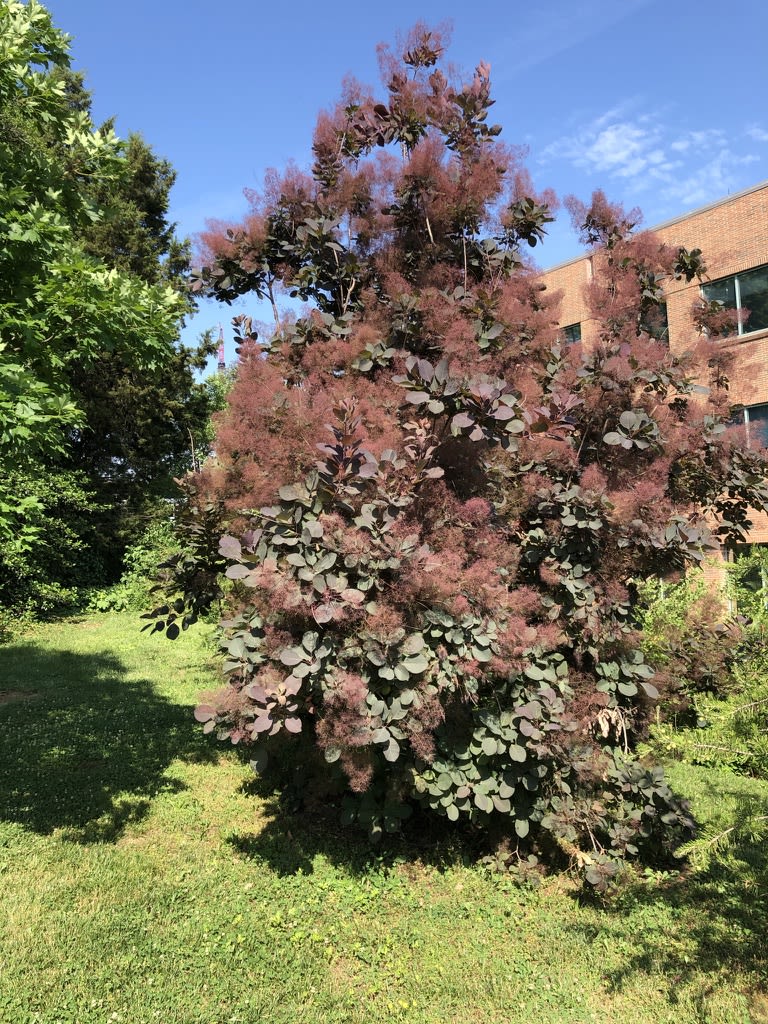
The feathery plums and dark round leaves of smokebrush
The feathery plums and dark round leaves of smokebrush
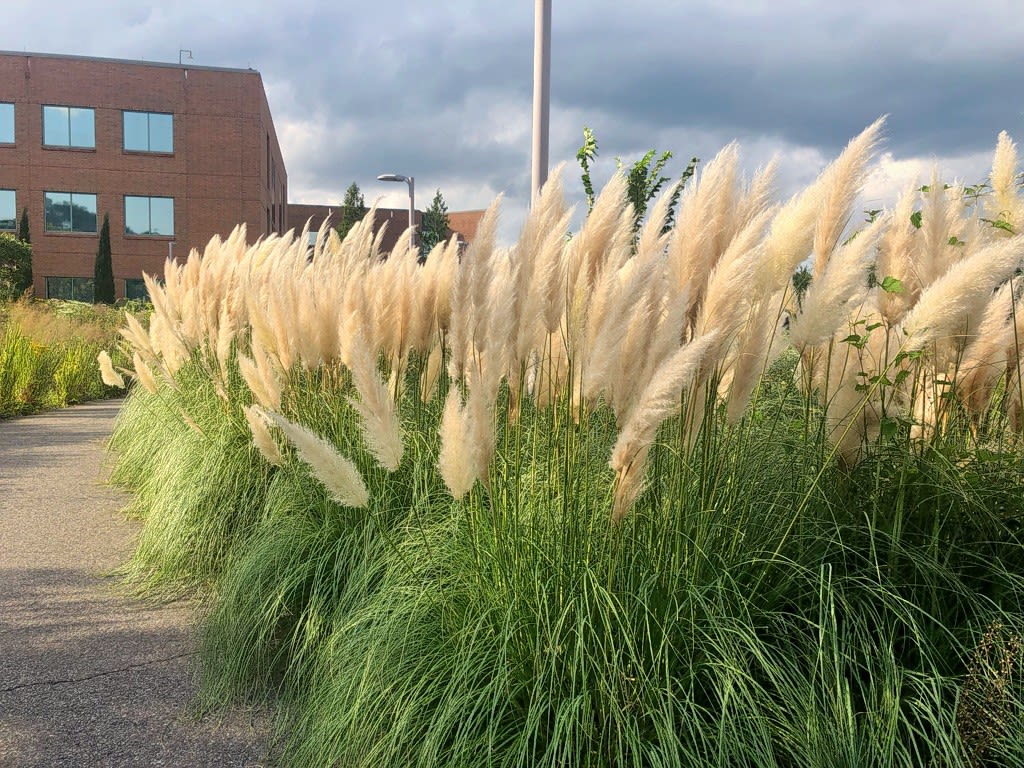
Pampas grass at the height of late summer
Pampas grass at the height of late summer
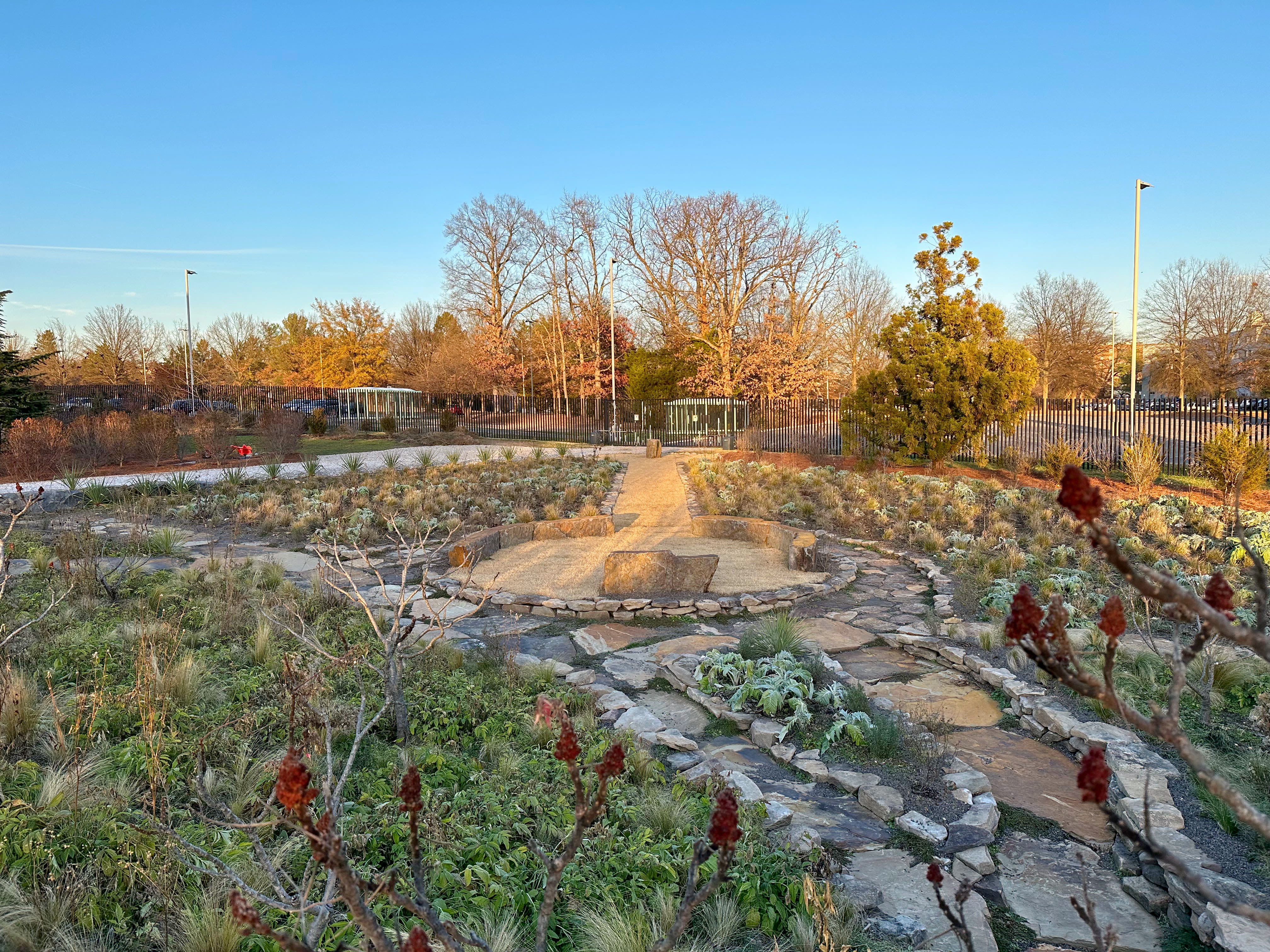
Stone paths, plantings, and new sod laid
Stone paths, plantings, and new sod laid
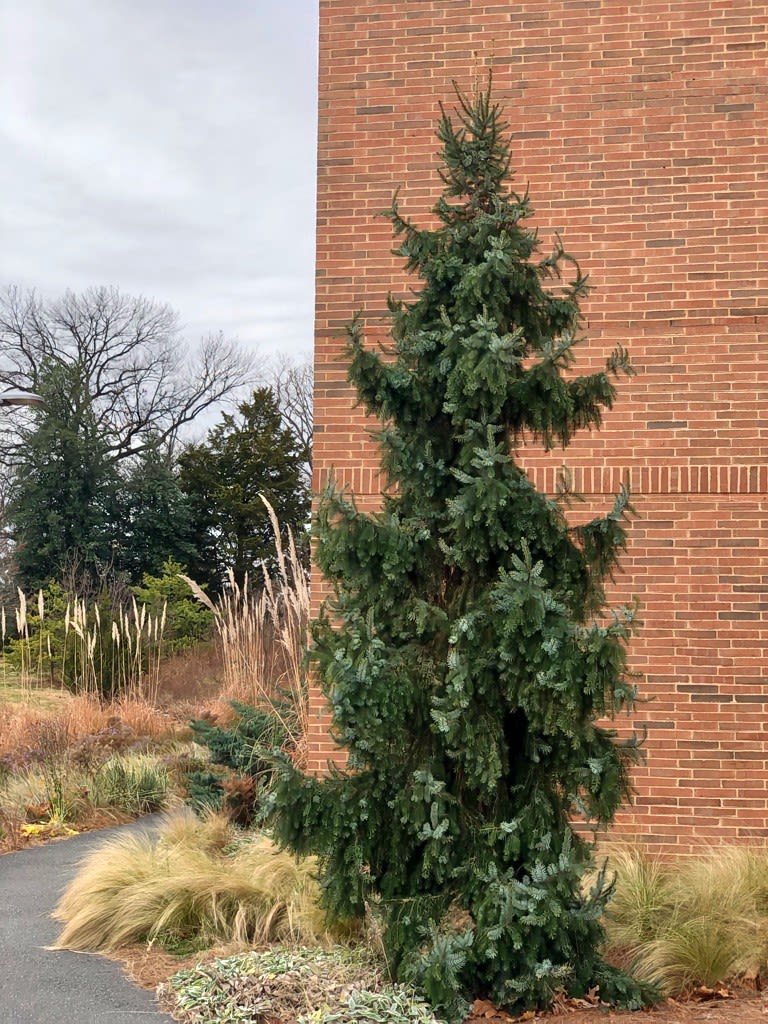
A Serbian spruce beside the K Building
A Serbian spruce beside the K Building
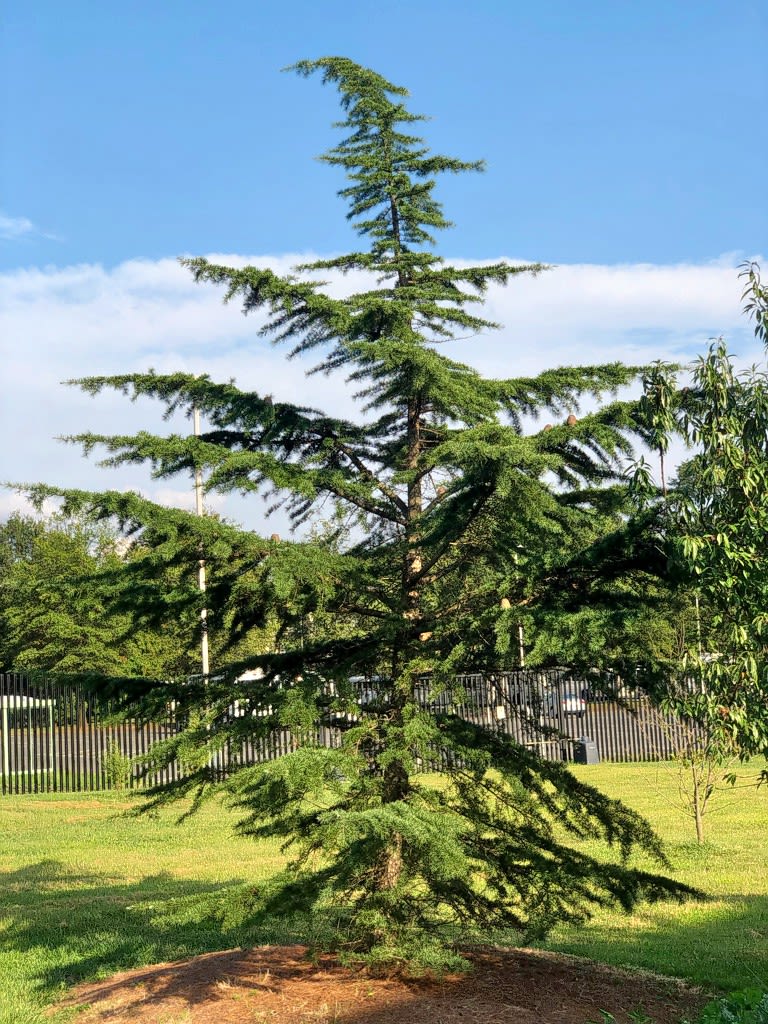
The drooping architecture of a Himalayan cedar
The drooping architecture of a Himalayan cedar
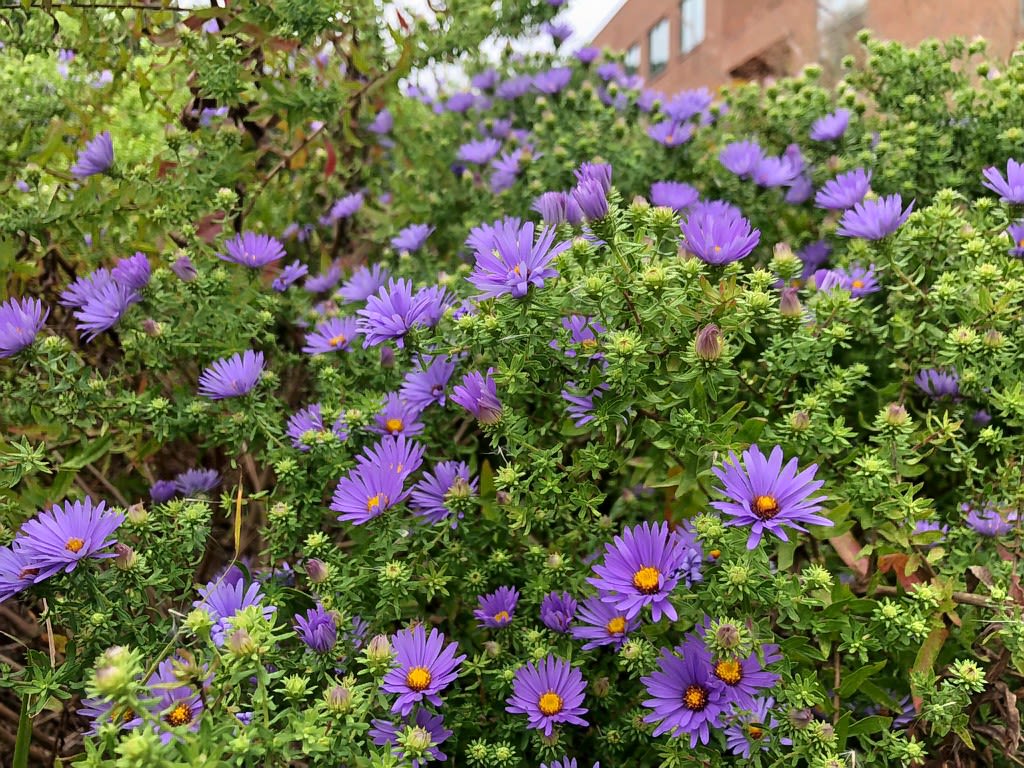
A variety of aster called ‘October Skies’
A variety of aster called ‘October Skies’
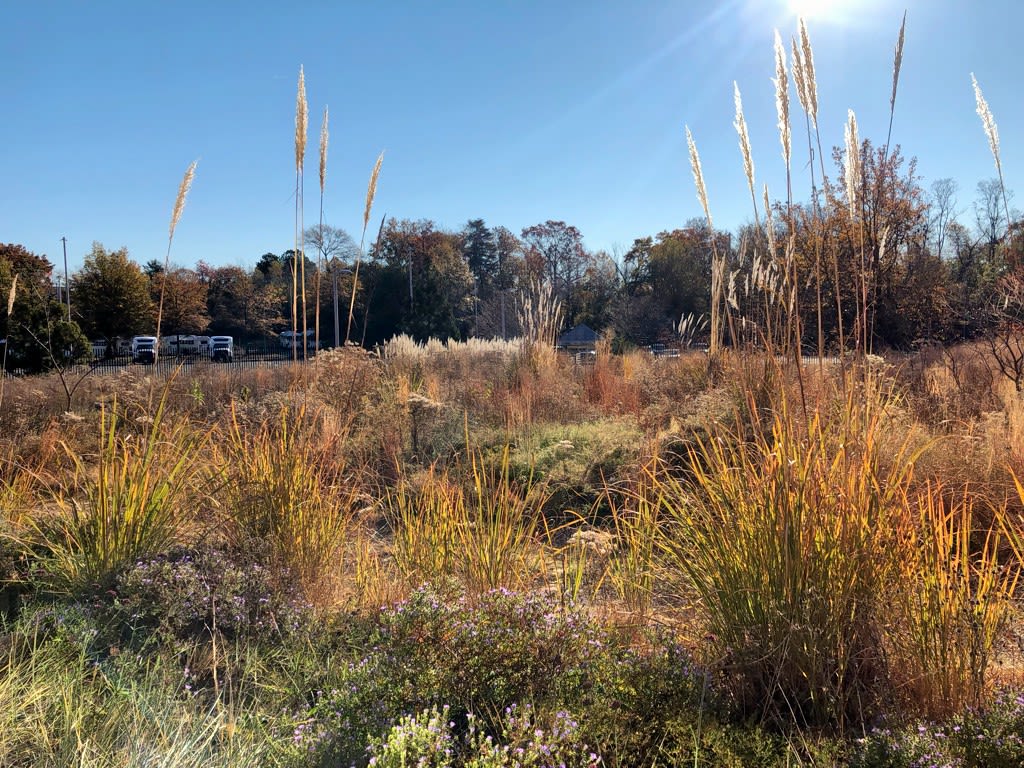
Ravenna grass in late fall, early winter
Ravenna grass in late fall, early winter
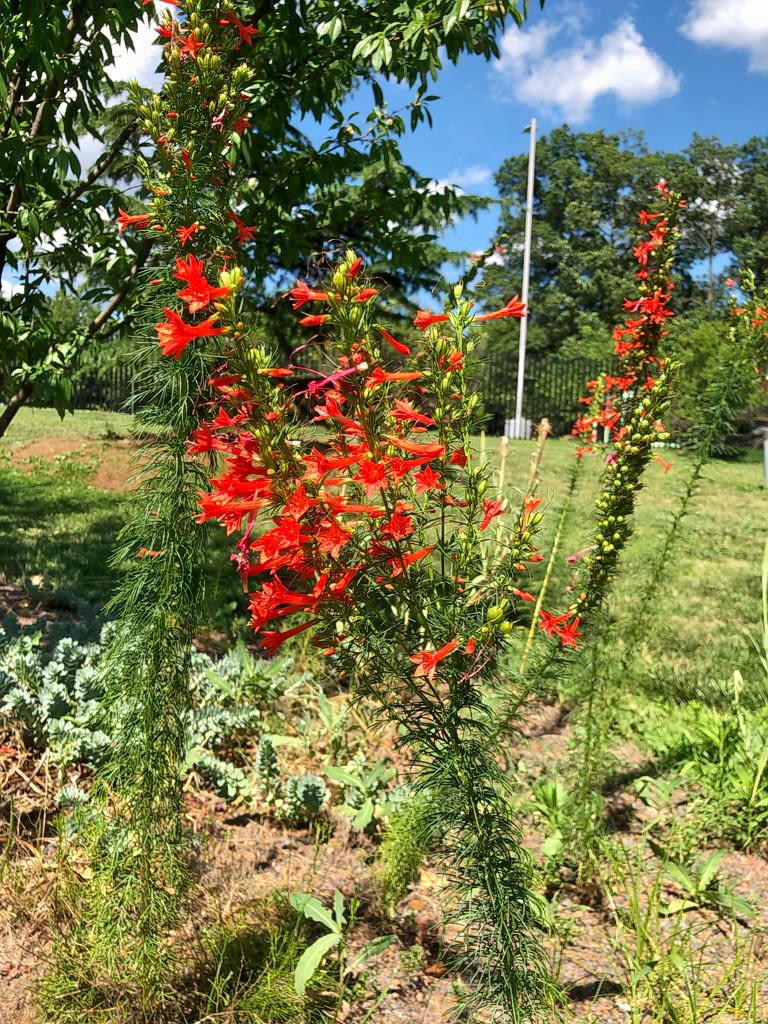
Texas blazing star setting the Wash ablaze in early summer
Texas blazing star setting the Wash ablaze in early summer

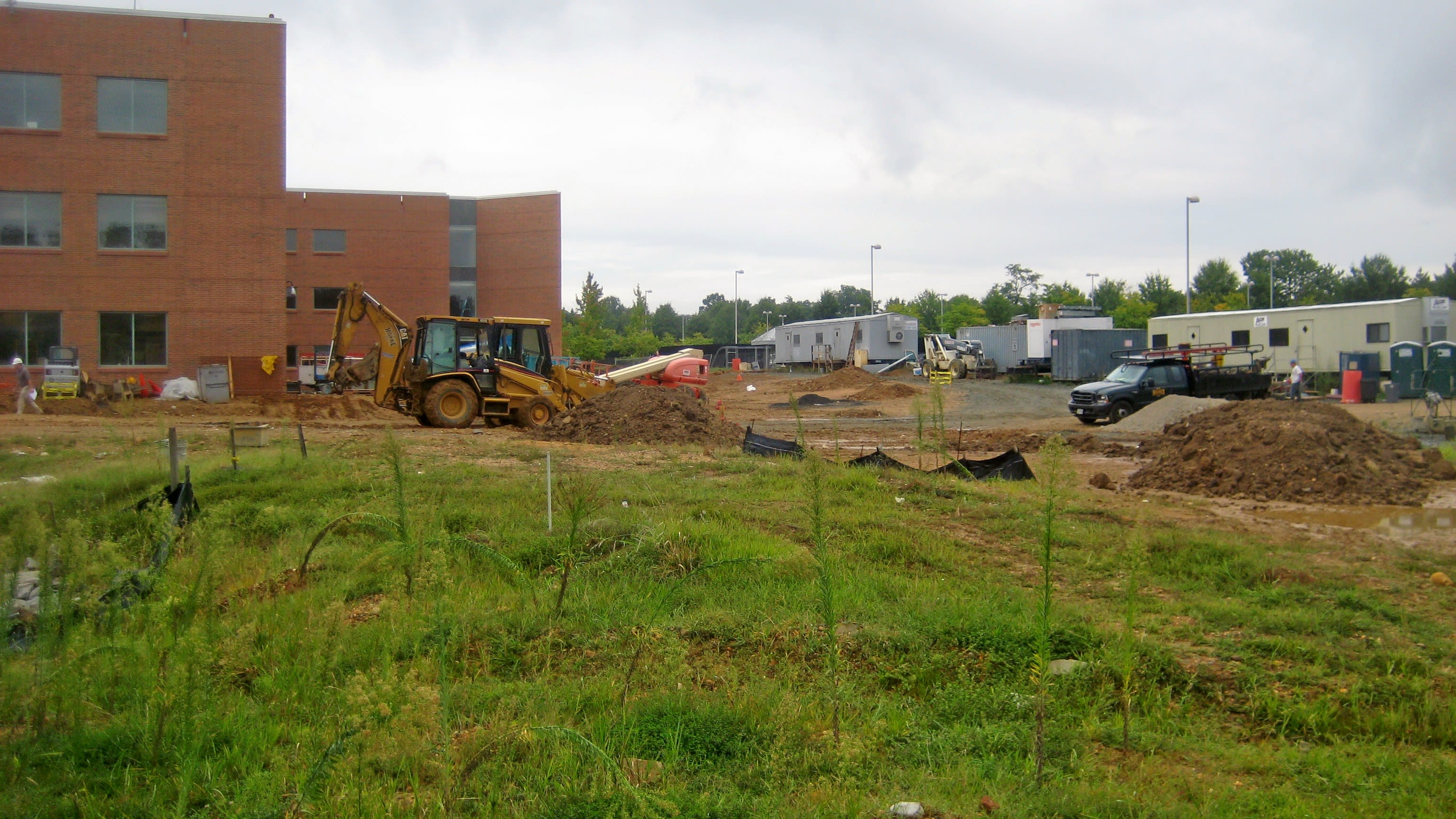
The construction site for the K building
The construction site for the K building
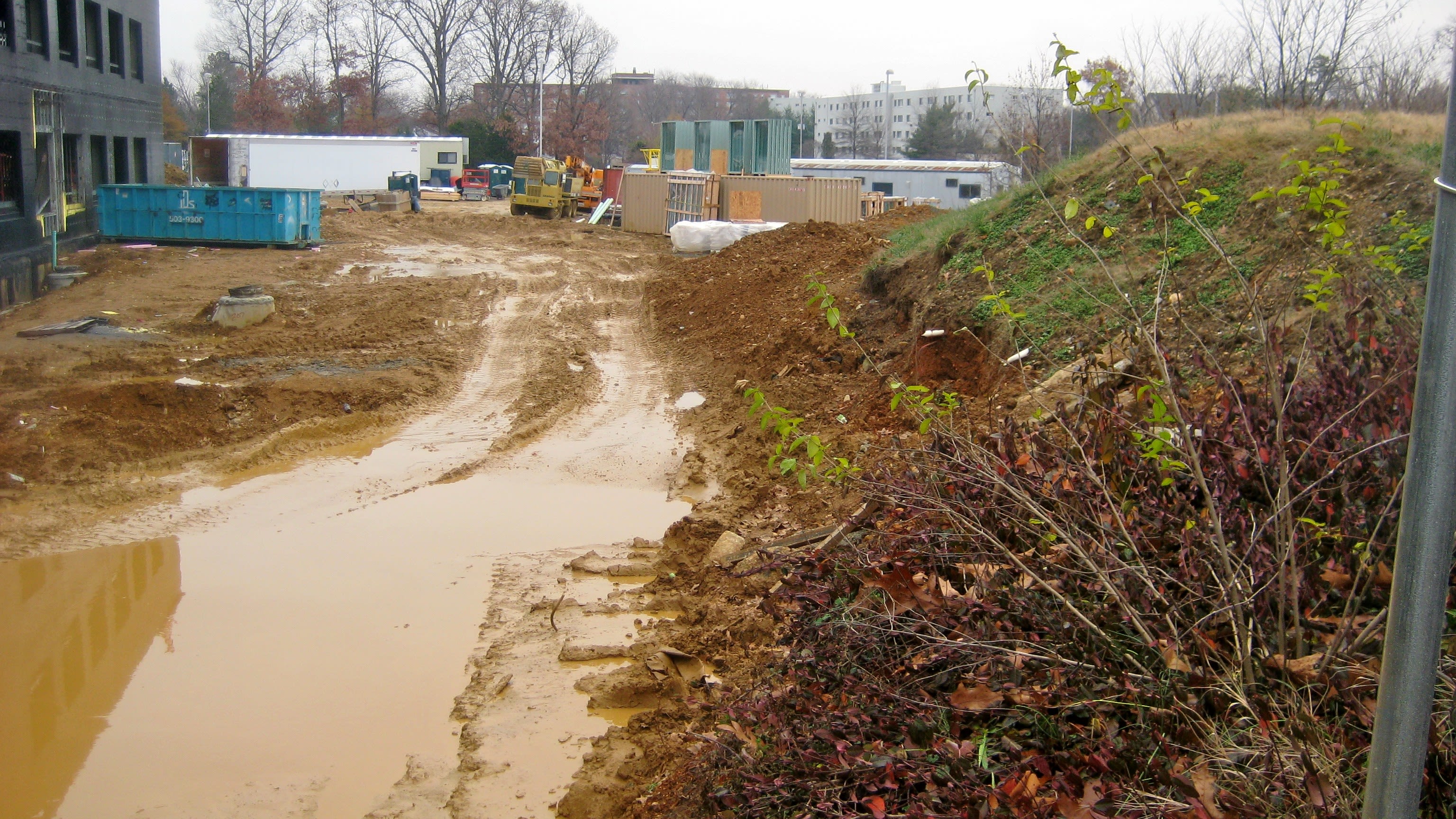
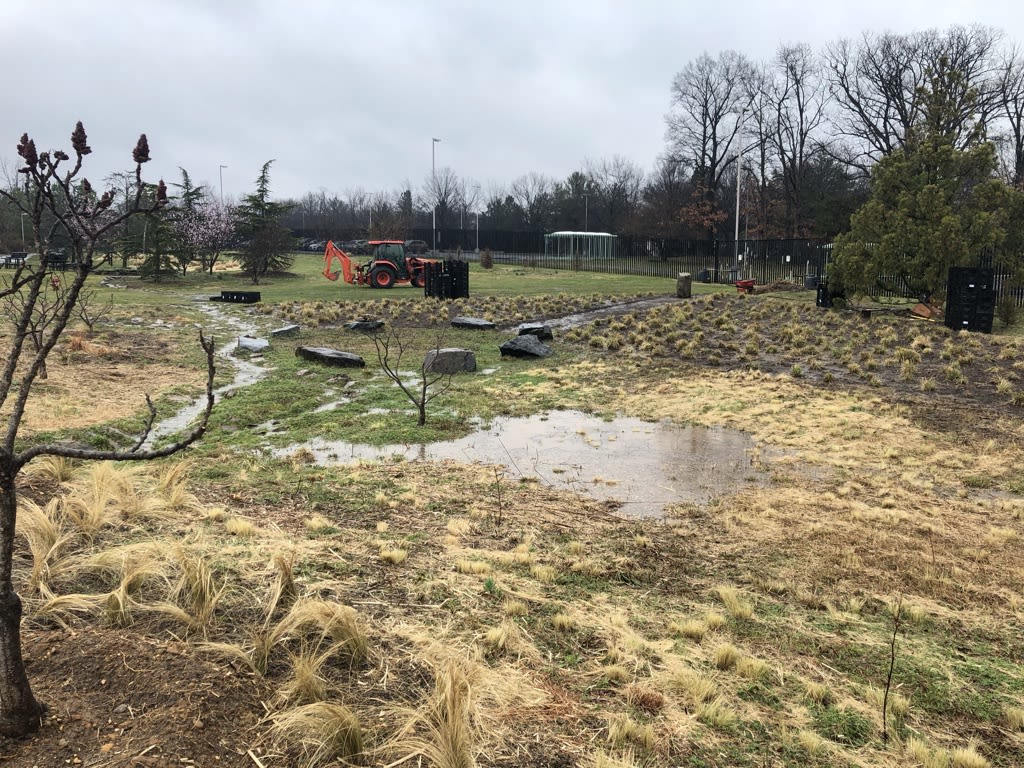
Compacted soil and flooding caused by construction machinery
Compacted soil and flooding caused by construction machinery
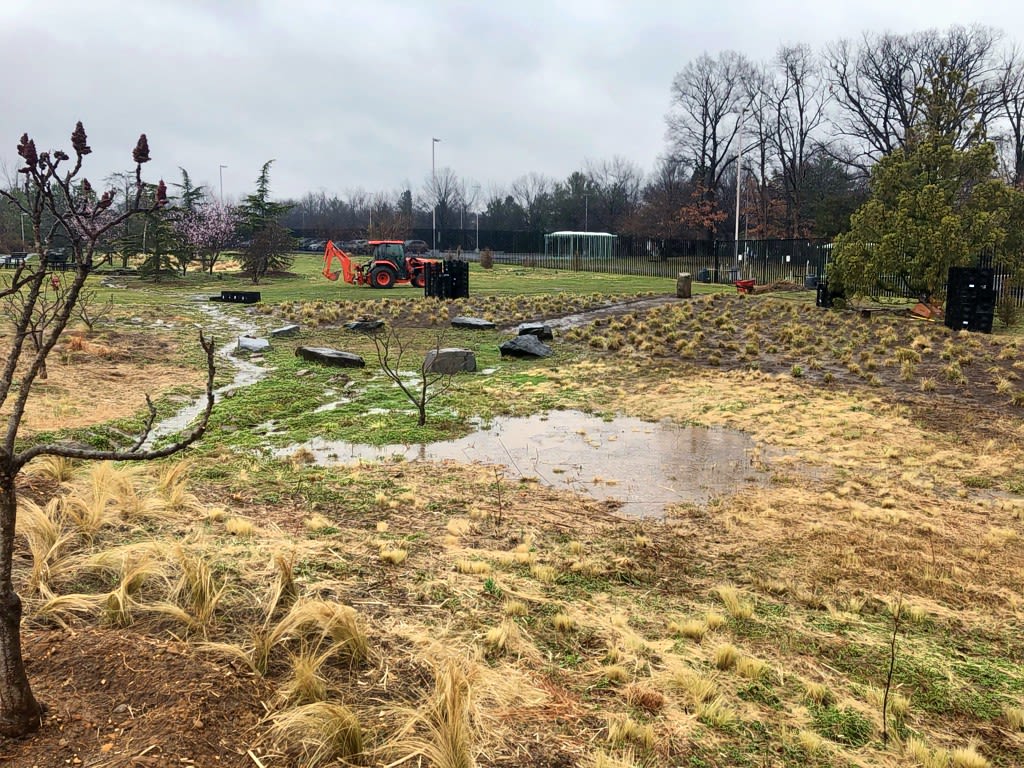
Efforts underway to control flooding and further plant the Wash
Efforts underway to control flooding and further plant the Wash
Through The Years
On Friday, June 18, 2010, then Secretary of State Hillary Clinton presided over a ribbon cutting ceremony at NFATC to formally dedicate the completion of a facility expansion project that added space for critical language and technology training as well as for the full range of interagency professional and leadership development courses. The expansion added a new section to the F Building, the K Building, and a Childcare Center wing.