The Campus Green
The Grounds at NFATC
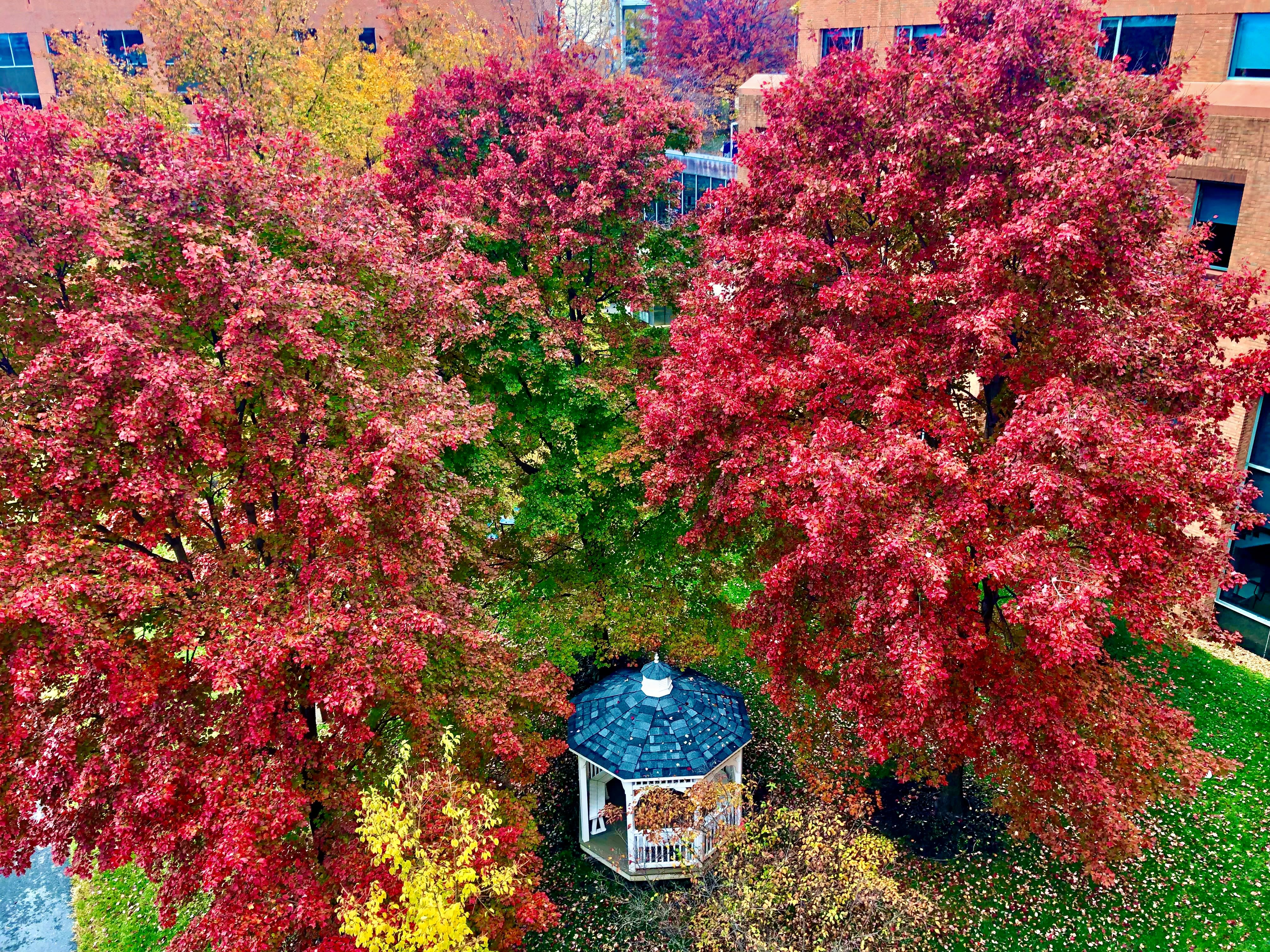

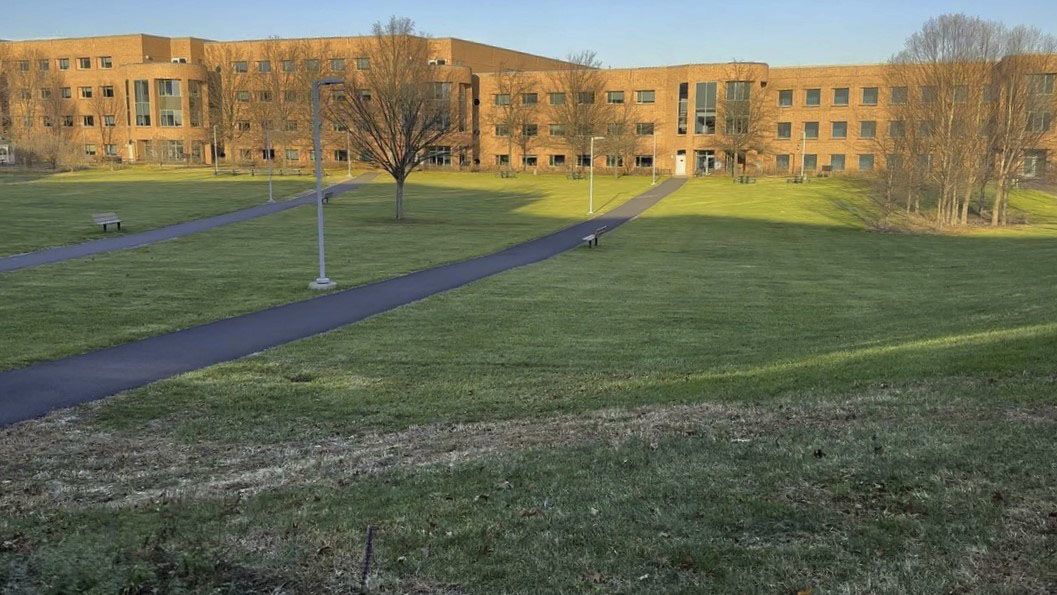
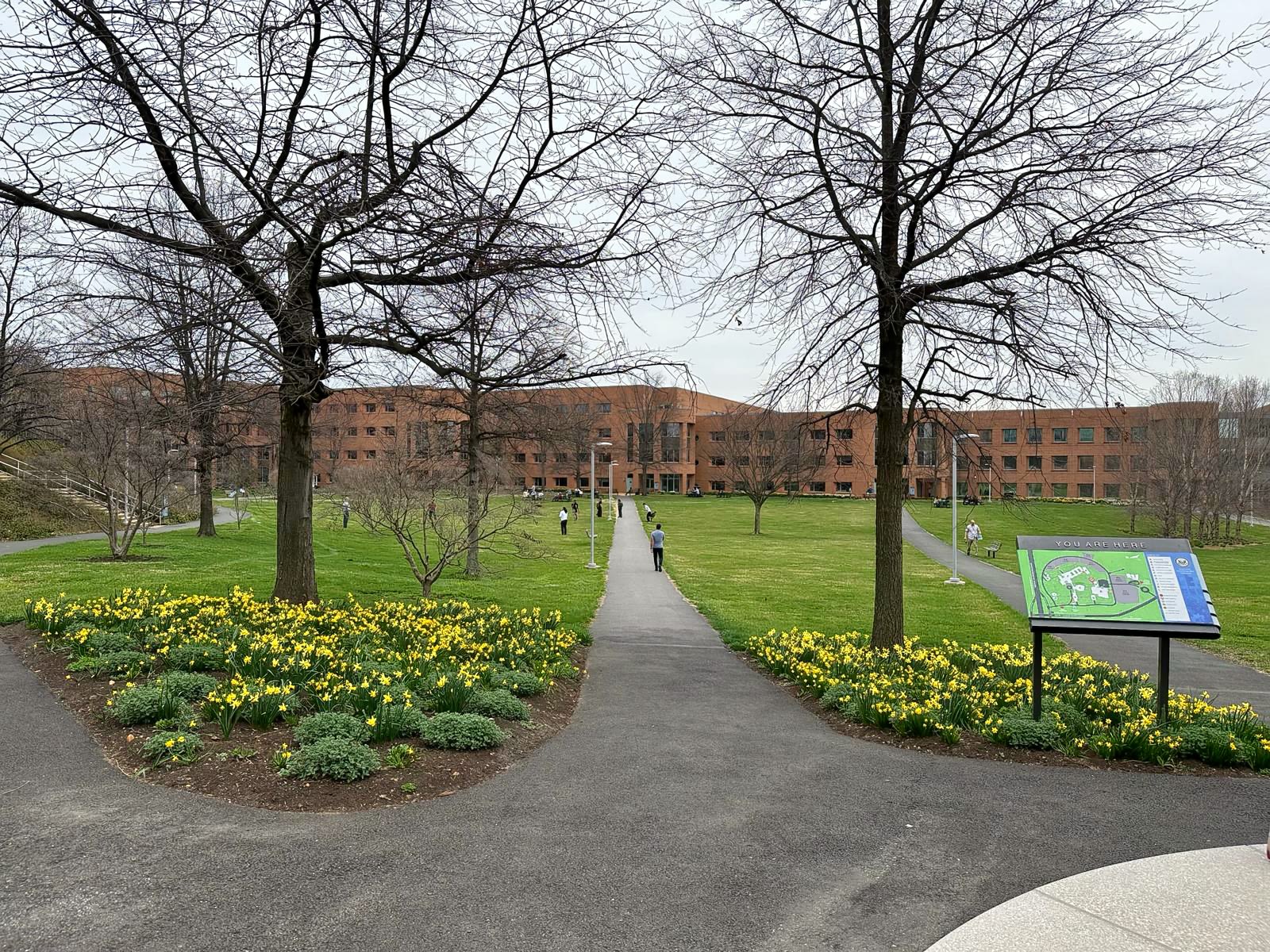
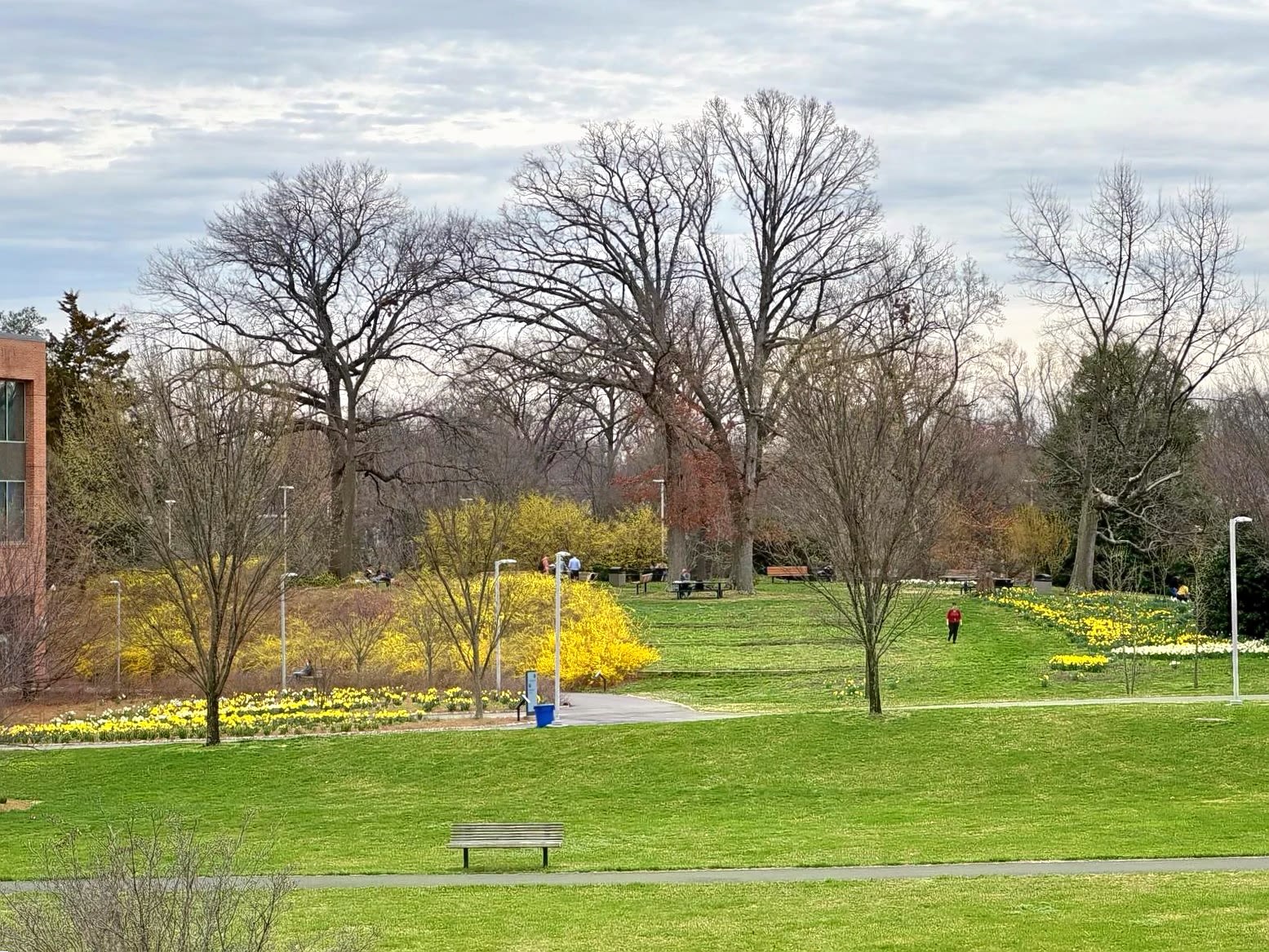
This two-and-a-half-acre lawn functions as the hub of social life on campus, welcoming visitors who enter through the Visitor Center, inviting those grabbing lunch in the C Building to enjoy a picnic, and providing a relaxing outdoor space for those working inside the F, K, and B buildings to take a break. If you head toward the F Building, you'll find picnic tables and a charming gazebo nestled under the shade of trees.
Whether you're looking to catch up with colleagues, enjoy a peaceful moment outdoors, or simply take in the beauty of the campus, the Campus Green is the perfect spot.




Horticulturist's Tour
Listen to NFATC Horticulturist, Darren DeStefano, talk about lawns, their high resource demands and history, and how we, as a society, can be more responsible with incorporating lawns into our landscapes.
Select the play button to listen to the audio as you follow along with the transcript below.
The Campus Green is a two-and-a-half-acre turf stand composed of various species of fescue and Kentucky bluegrass.
It's the only section of campus that's irrigated and requires an excess of 100,000 gallons between the months of July and September. It's mown at least 32 times a year on weekly cycles. It's aerated, over-seeded, and fertilized with pelletized chicken manure in November, with spot seeding done in March. There are no chemical pesticides or preemergents applied. All this adds up to being the most intensively managed space on campus, with mowing being the single largest component of the landscape management budget.
So, how did we get into all this? The concept of the lawn can be traced to Le Nôtre, the garden architect of Louis the 14th at Versailles. He used lawn to display wealth and power. At the time, arable land was required for growing of crops and pasture for animals. It was an extreme luxury to cultivate vast fields for pure ornament.
Send that trend across the channel to the chalky fields of the UK and the new concepts of sports, and you get the foundation of a cultural shift. Exported to the shores of America with our ample space and our burgeoning suburbia, and you end up with a national obsession. Fortunes have been built on lawns in America, and not just lawns, but single weeds like dandelions that grow in lawns.
So, what's been lost in this lawn fever? Habitat for insects, birds, mammals. There's also the runoff from all of the chemicals that are applied as both fertilizer and pesticide, that pollute waterways.
With all that said, what's a lawn good for? Lawns are the places where we play and socialize. The Campus Green is the most traversed section of campus. It provides negative space, vistas, and air. We don't need to eliminate lawn. We need to just consider how we manage it.
Lawn looks best when it's used in a geometric form with bounds and edges, where we take care of one medallion, one piece where we truly extend the effort. Whereas the ground cover of the remainder of the site, we can slack off on all of the fertilization, irrigation, aeration, mowing, and establish a difference between what's really turf and what's just ground cover.
Through the Years
The low-rise red brick buildings of the F Building that are beyond the Campus Green curl around courtyards and spread across the rolling hills of what used to be the U.S. Army's Arlington Hall Station and, before that, the Arlington Hall Junior College for Girls.
Architect Alan Greenberger of Mitchell-Giurgola in Philadelphia and Sasaki Associates of Alexandria designed a modern version of a castle: not with ornaments but in the shapes of ramparts, battlements, and dry moats. Glass bridges at several levels provide indoor passage. Towers—some semicircular, some square, where the wings change direction—are designed to be places to practice informal diplomacy.
The Sasaki and Mitchel-Giurgola collaboration was selected in a nationwide architectural competition hosted by the General Services Administration.