
Polaschik Pond
The Grounds at NFATC
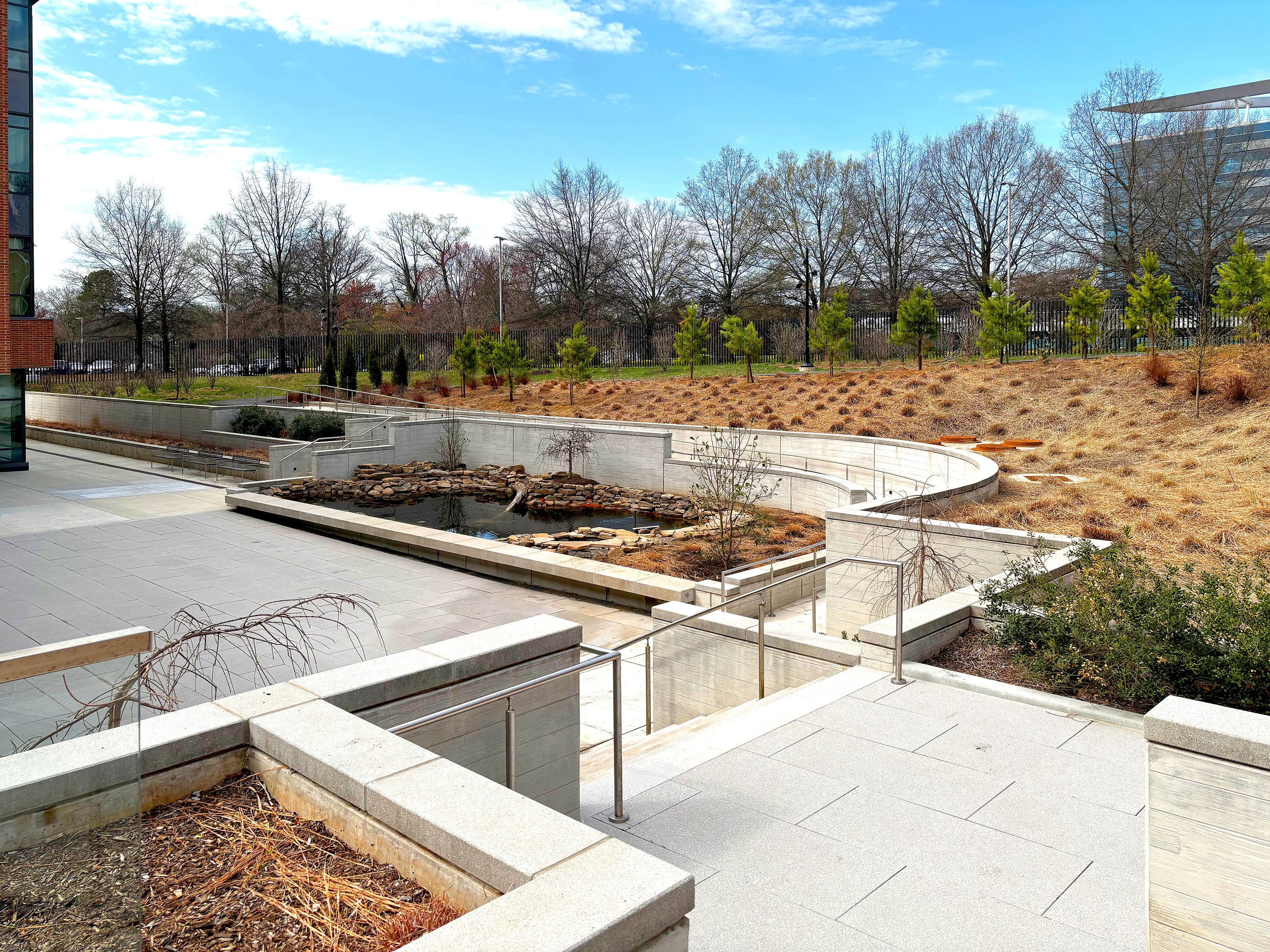

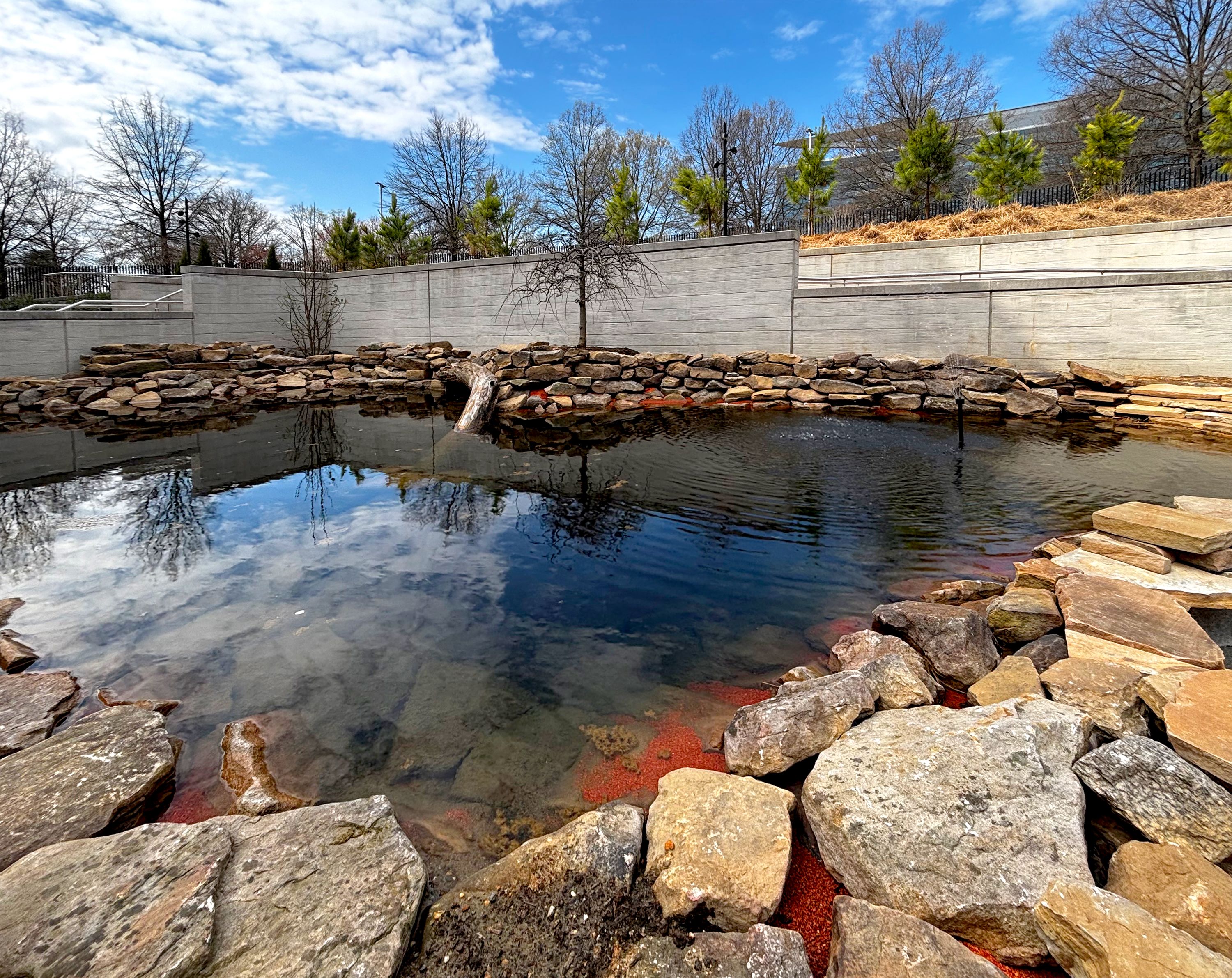
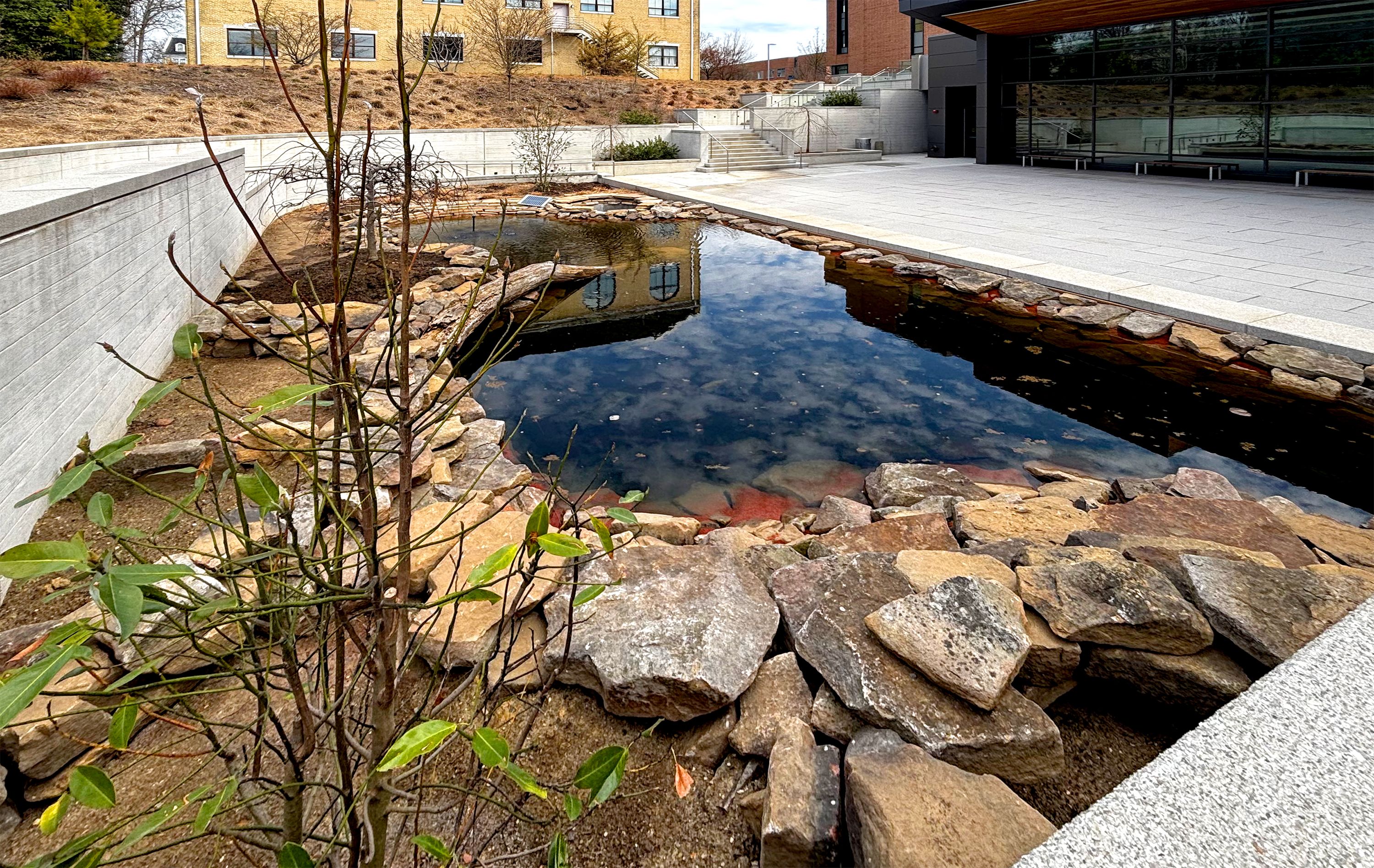
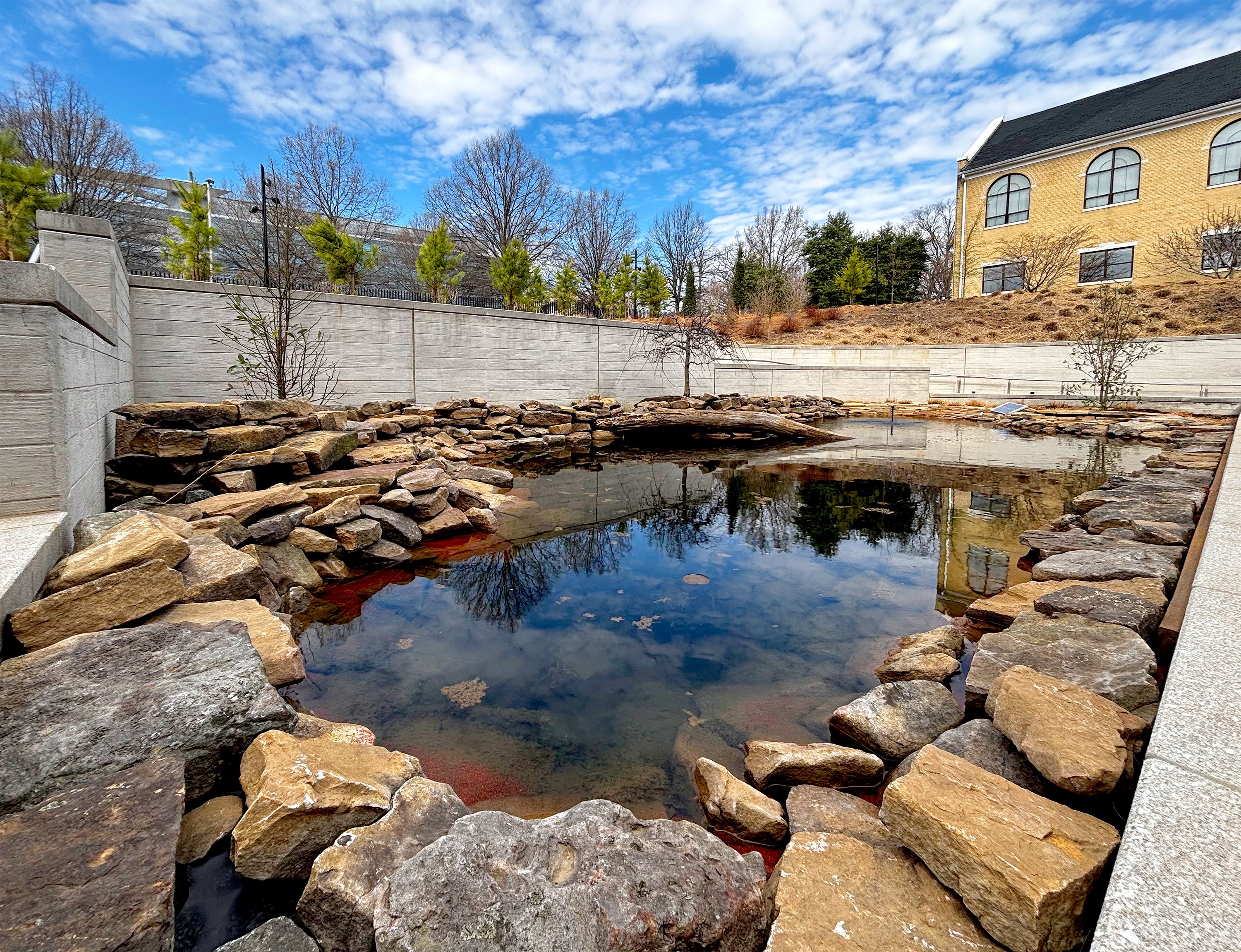
This pond is dedicated to Ambassador Joan A. Polaschik. She served as the Director of NFATC from 2022 to 2025, following her role as the Acting Deputy Director and Dean of SPAS from February 2020 to 2022. Before coming to NFATC, Ambassador Polaschik's diplomatic career focused on the Middle East and North Africa. She served as Acting Principal Deputy Assistant Secretary of State for Near Eastern Affairs (2017-2019), Ambassador to Algeria (2014-2017), with previous assignments to Libya, Jordan, Tunisia, Azerbaijan, and Uzbekistan. She also spent the 2019-2020 academic year as a Senior State Department Fellow at Georgetown University’s Institute for the Study of Diplomacy, teaching courses on U.S. diplomatic statecraft and North Africa.






Horticulturist's Tour
Listen to NFATC Horticulturist, Darren DeStefano, talk about the process and material used to reveal the pond.
Select the play button to listen to the audio as you follow along with the transcript below.
Welcome to Polaschik Pond.
The process begins not by creating something, but by revealing what’s already there. A probing for form, reading the terrain, and ultimately, understanding the nature of things. This process unfolds gradually, then suddenly.
(Scroll to follow along with the audio.)
I puzzled over this bed behind Building B for a year or so. It was created to be a focal point, set beyond the wall of windows, as the backdrop to both the largest meeting room on campus, and the largest patio. There was a lot of potential energy there, but it was unrealized. The soil level of the bed was low, and it was made worse by an oversized drainage structure. But standing atop the ornamental staircase, looking down, I could see the pond already.
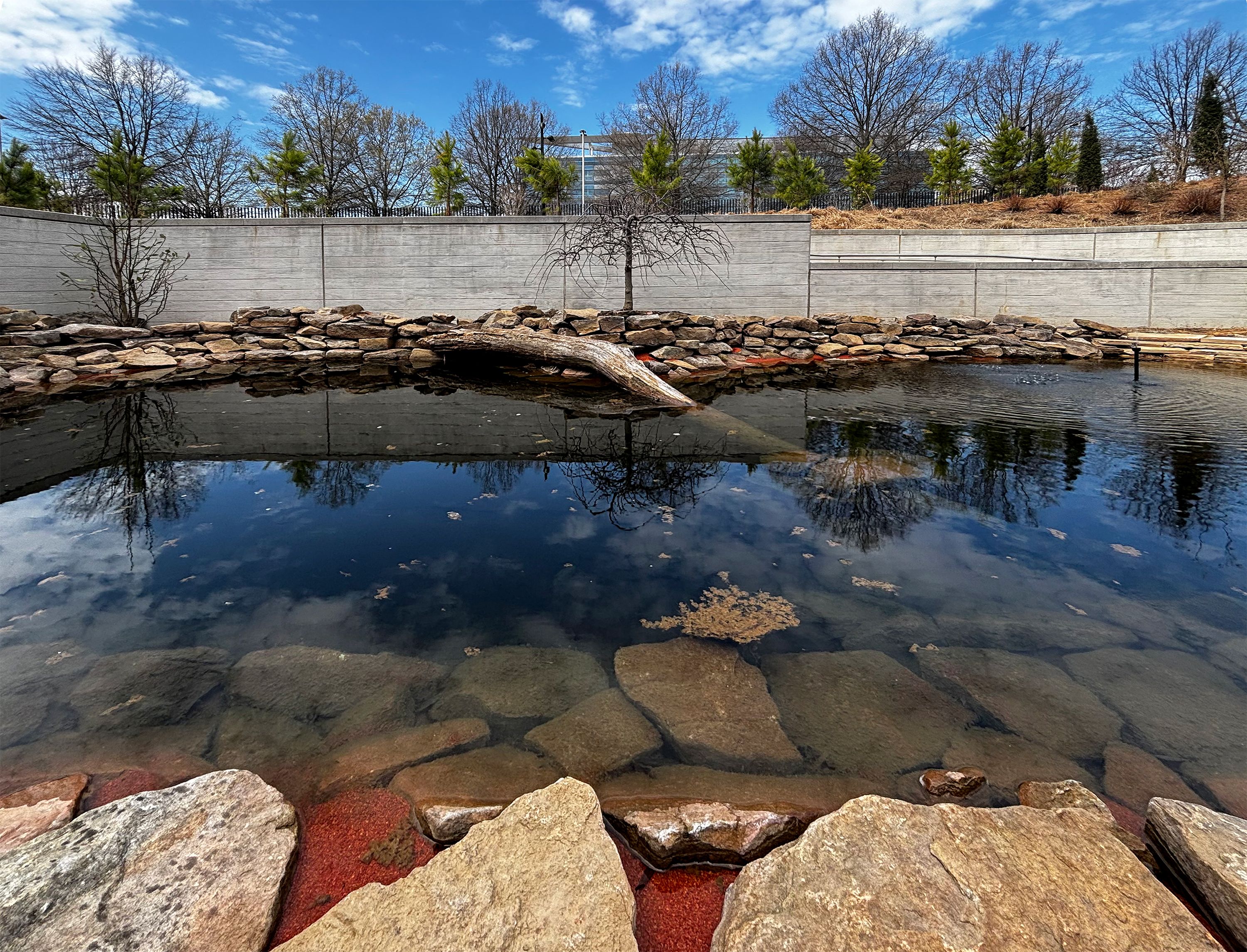
When we began digging, the soil proved sandy. The deep subsoil of the site—and it was free of debris—it was easy to push aside in order to find the form. We didn’t remove any dirt; we just shifted it. Then we set about gathering materials: excess stones from The Wash, shards of flagstone from Navy Hill, cinder block, a solar pump that was displaced from HST, and the one purchase—a rubber liner.
So we lined the basin and began stacking stones to support the sides. We had filled it with water. We were moving fish from the other pond on campus, and taking excess lilies from the pond in the HST courtyard.
By the time we set the last stones, we looked around and felt like it had always been there. And that’s when we knew we were done.