
The Green Roof
The Grounds at NFATC
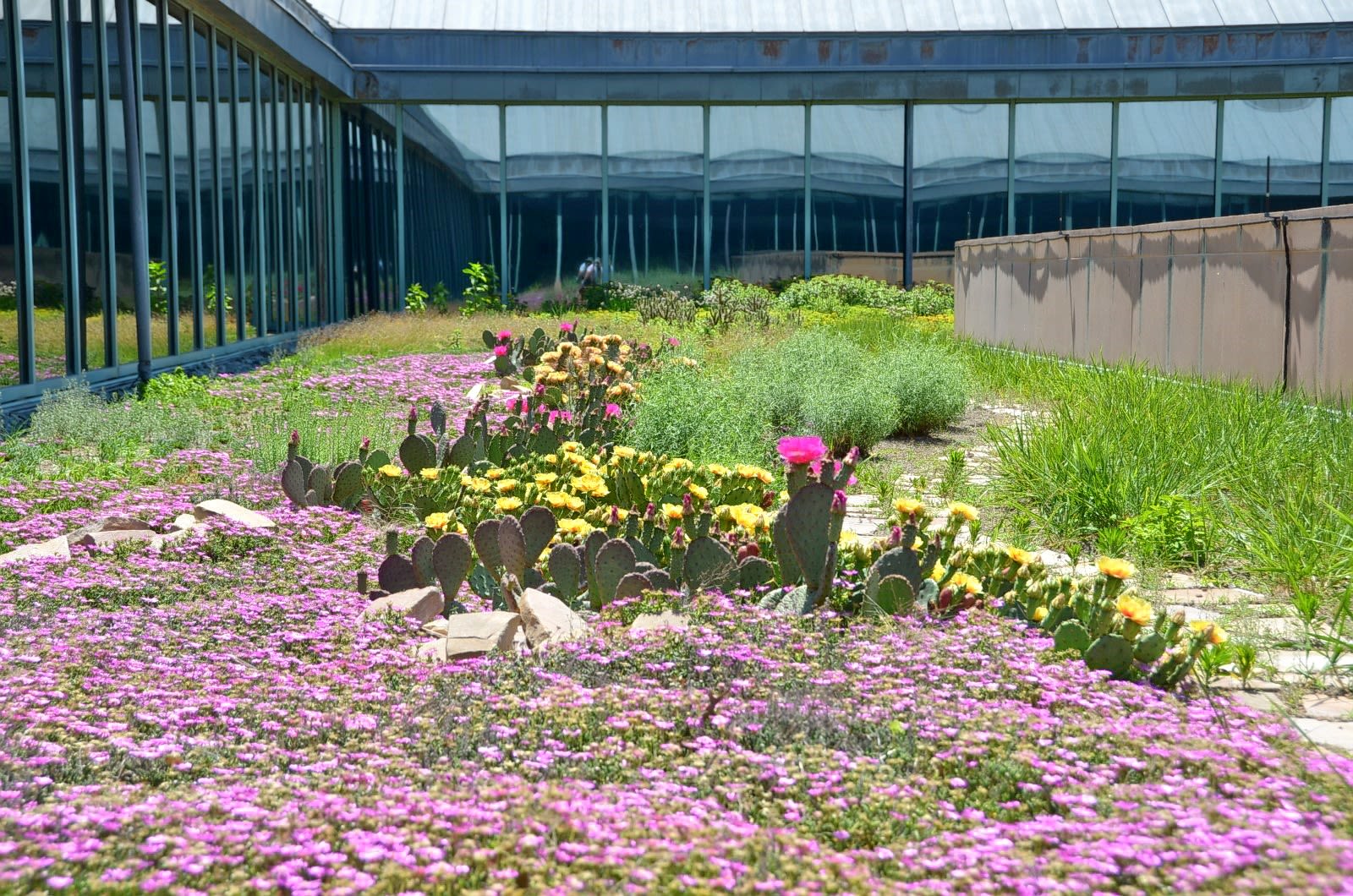

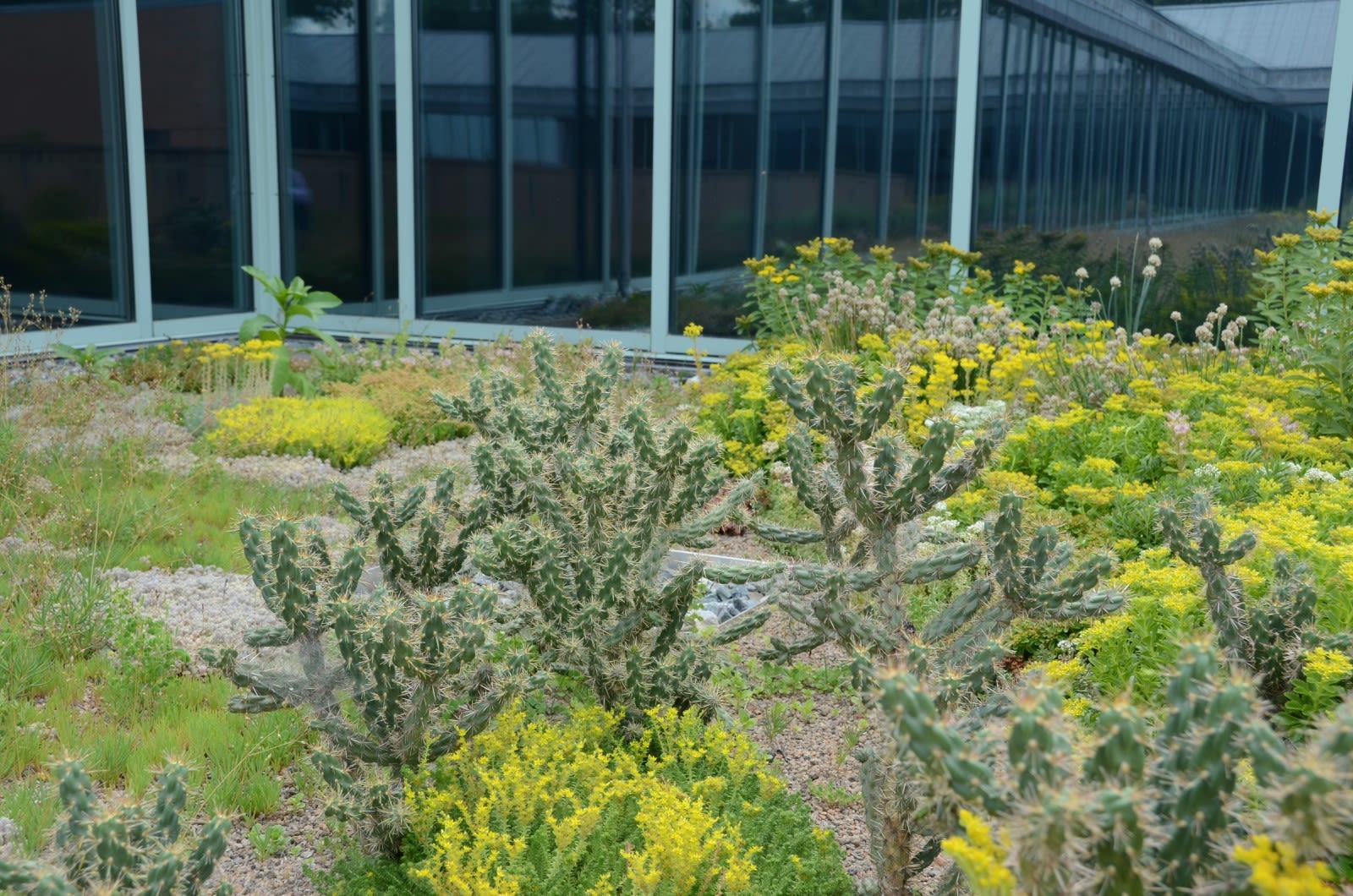
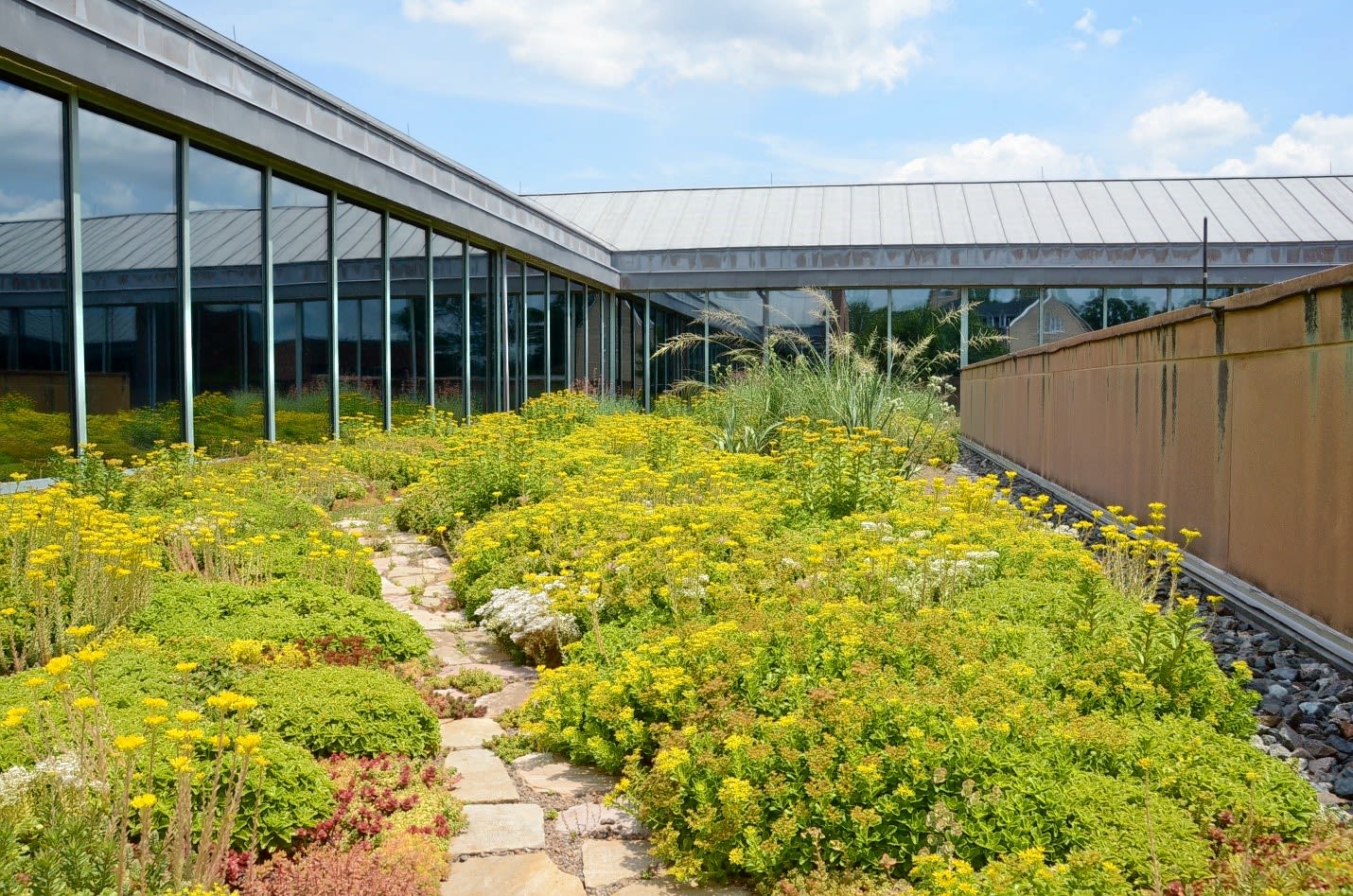
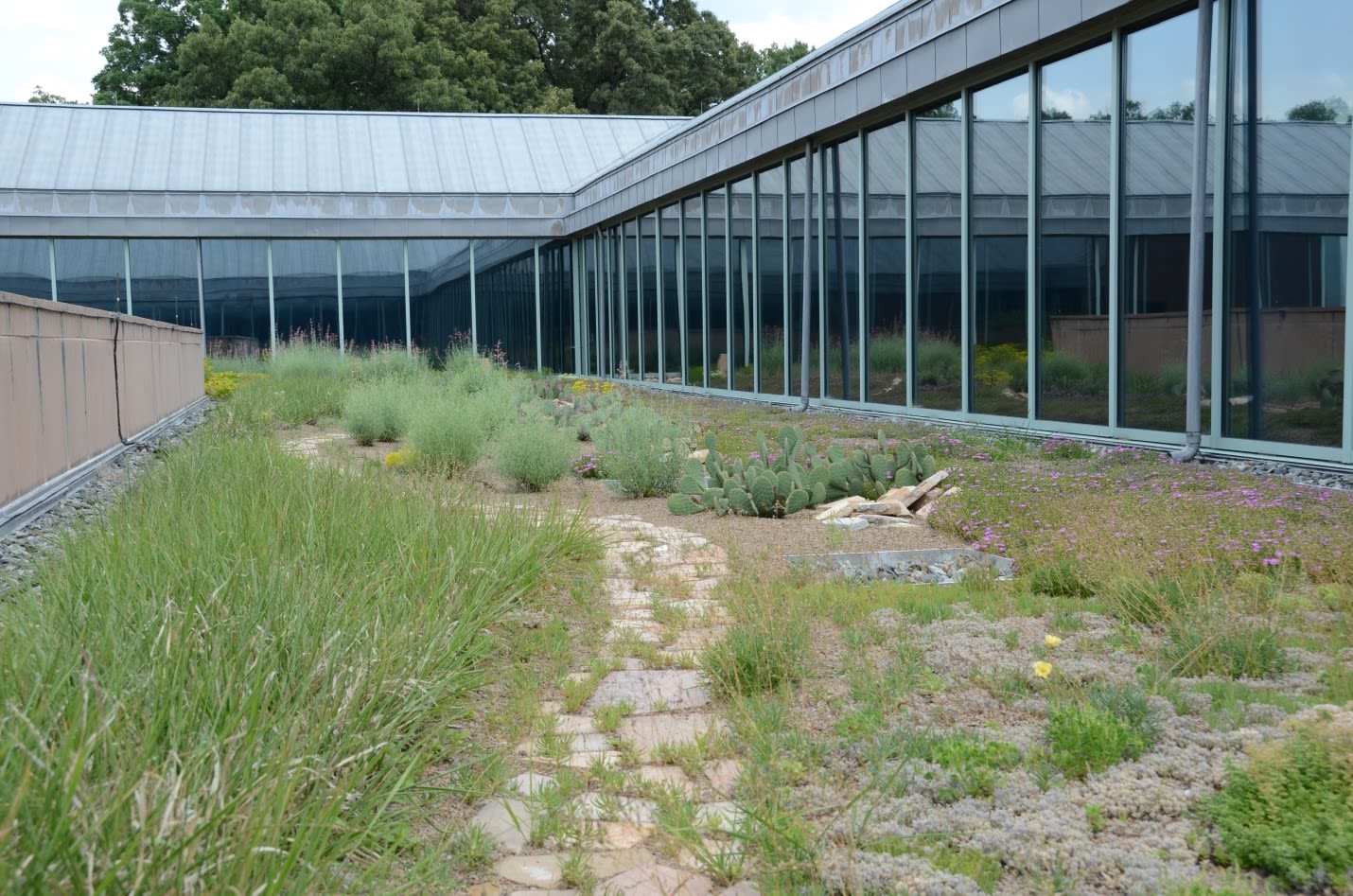
This garden is a celebration of innovative design and sustainability. Retrofit over the Grove Atrium in 2013, the Green Roof incorporates unexpected elements. Its design sought to develop three individual environments including hardy cacti, grasses, alliums, and a selection of rarified succulent accents underpinned by the meadow mixture of sedum developed at Emory Knoll Farms—the United States’ leading green roof nursery.
Among other benefits, the Green Roof absorbs stormwater, greatly reducing the amount that goes down the drain—a direct result of its plantings and construction. The roof ballast was stripped away and replaced by a drainage layer over the membrane and a blended substrate of expanded shale, slate, and six inches of compost.
All year, the floor-to-ceiling windows along this three-leg corridor of the F Building provide ideal viewing, which is atypical for green roofs.





Horticulturist's Tour
Listen to NFATC Horticulturist Darren DeStefano talk about green roofs, their ecological benefits, and the construction and design of NFATC’s Green Roof.
Select the play button to listen to the audio as you follow along with the transcript below.
Welcome to the Green Roof.
A green roof is actually a layer of expanded aggregate on top of the roof that is of a certain depth sufficient to handle absorbing the majority of rain that falls on the roof. And there's a planted layer on top of that aggregate that drinks up the water and utilizes it to grow.
It's not a new concept; it's been around for a long time. And, you know, you could say that growing plants on structure could be dated to the Hanging Gardens of Babylon. But modern green roofing is generally considered to come from Germany, and it really comes out of the 1970s and 80s.
(Scroll to follow along with the audio.)
I had built a number of green roofs before I took this one on, and I had developed a strong relationship with Ed Snodgrass of Emory Knoll Farms, which is the oldest green roof nursery in North America. And we had developed some interesting plant palettes together. Comingling species rather than trying to plant drifts of single species, which was dominating the industry at the time.
And this roof offered a great opportunity. For starters, it's not actually on the top of the building. It has floor-to-ceiling windows that surround it. And it actually has different light conditions. So there's, you know, a sunny side and a shady side, and it allowed for crafting three rather unique palettes and planting it in a way that made it a lot more engaging to a viewer than kind of the standard green roof mixture.
Once that was done, a circulation path was laid down. And then I planted it all with plugs. So nothing but plants that were about the size of quarters. The original planting was done in March, and by June, the entire roof was coated with plants. It was no longer any exposed space.
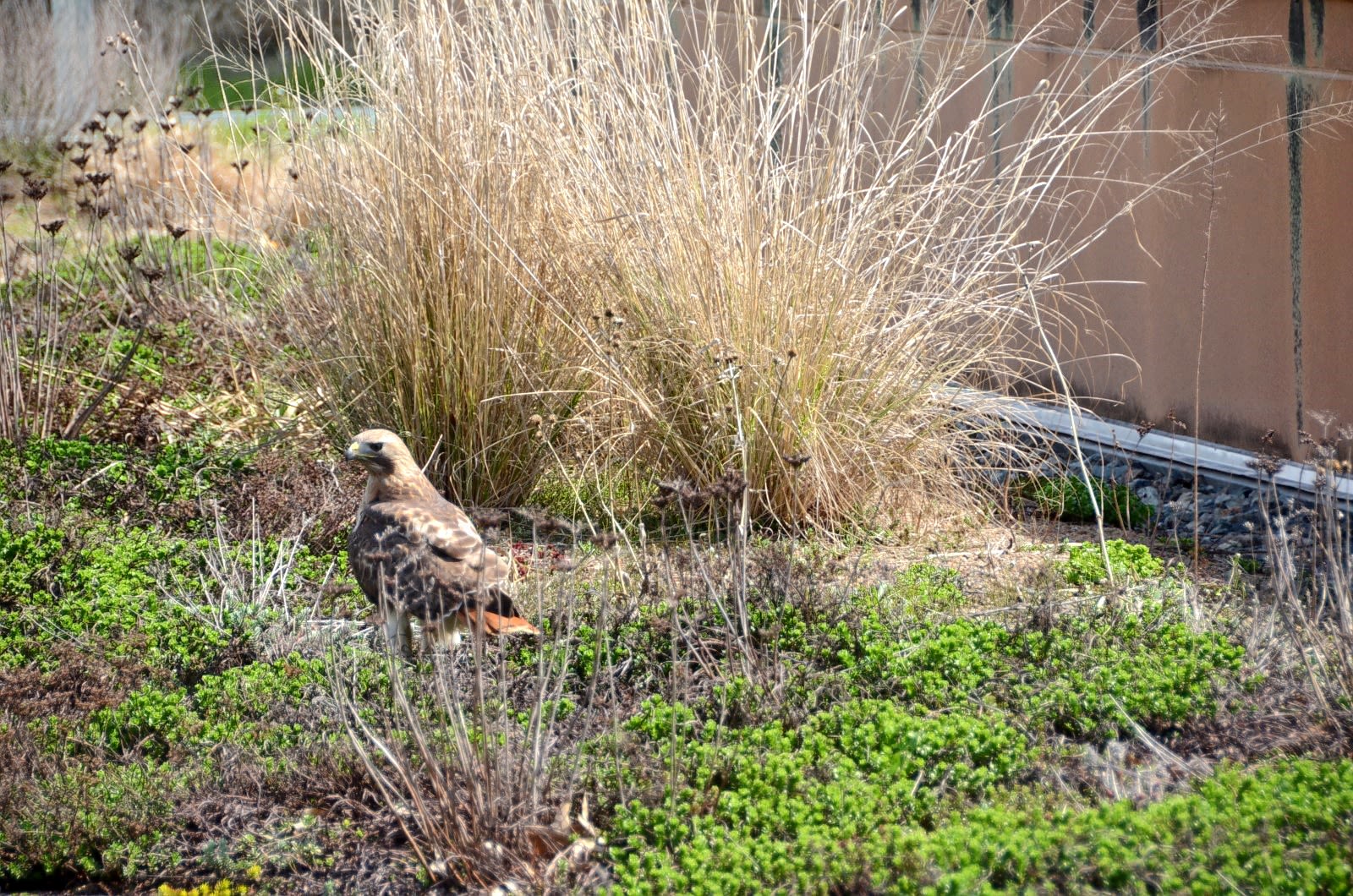
And then the work gets underway. When it rains, the roof absorbs, prevents rain from going into the rain gutters, provides habitat—it's a place that you often see the hawk—and provides a lot of visual interest.
The plants themselves are really fascinating. I mean, sedum as a group is completely fascinating. They're native to these craggy mountain tops and environments around the world. And they are incredible specialists. And it's really a beautiful composition when they are mixed together and they flower.
More important is the ecological benefit of the green roof. I mean, you're reducing the heat that comes into the building. You're reducing the cold, right? You're reducing the heat that's going out of the building. It's like this insulative layer on top. You're almost completely resolving any stormwater problem because you're retaining all of that water up on the roof. And then you're providing a habitat for bees, and birds, you know, can always be seen in a space that used to be completely sterile.
It's actually a practice that seems to have curtailed a bit in recent years, unfortunately, because the maintenance seems to prove too sophisticated, which is for me difficult to understand because it's one of the easiest spaces to maintain. We visit this roof maybe four times a year in order to do weeding. Other than that, there's very little done. I mean, it takes no additional water, there's no fertilization, and it just keeps on humming. I mean, at this point, this roof is a decade in, and it's never seen any additional investment.
It also extends the life of the roof. So the membrane that's underneath of it is far more protected with this insulative layer over top of it. And mitigating the fluctuations in temperature really helps the seams remain together. So there's a lot of reasons to practice green roofing beyond aesthetics. I hope it becomes a more significant component on campus in the future.
Through the Seasons
Select each of the images below to zoom in and learn more.

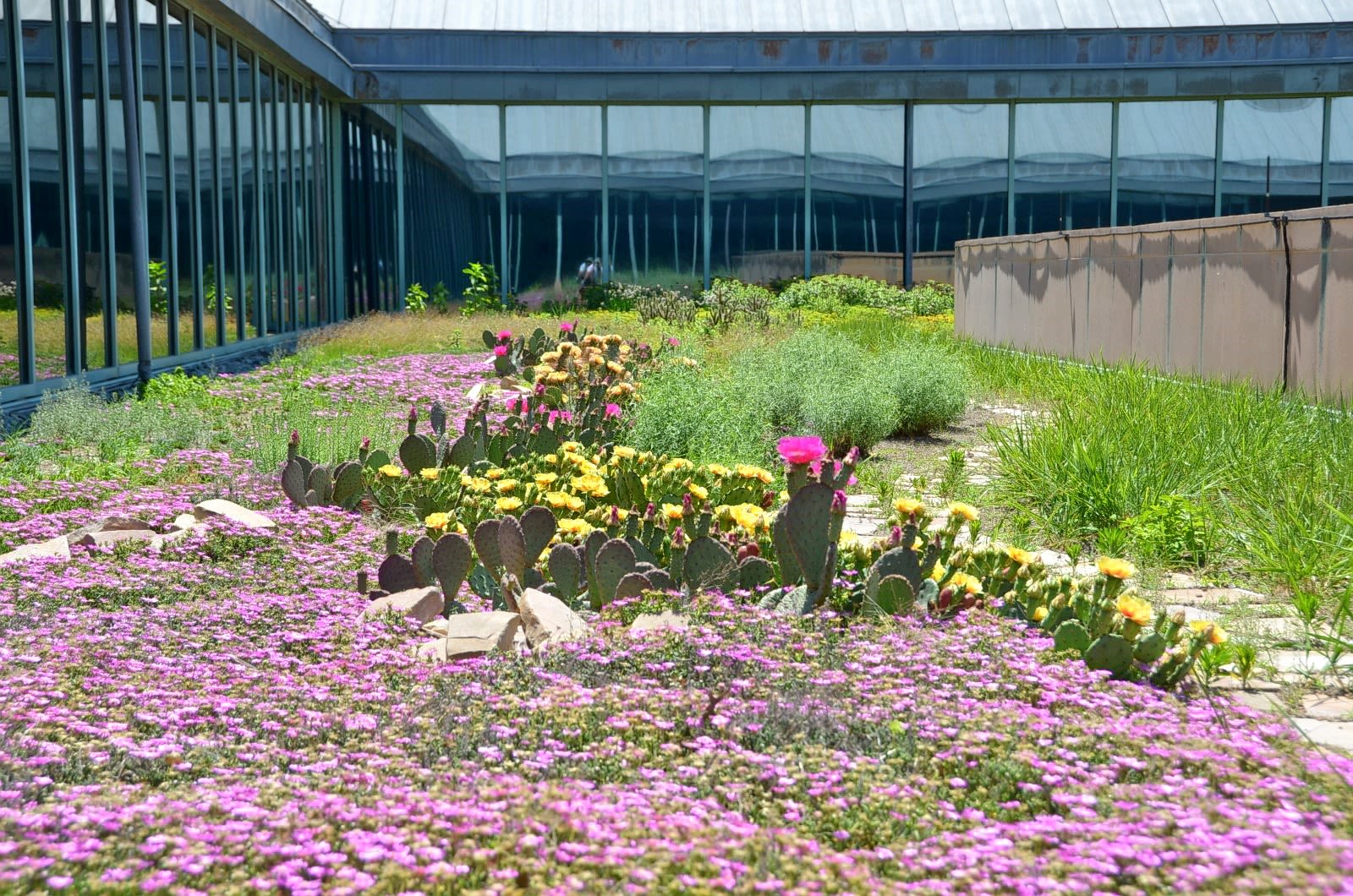
Swaths of the Green Roof in bloom, including the prickly pear
Swaths of the Green Roof in bloom, including the prickly pear

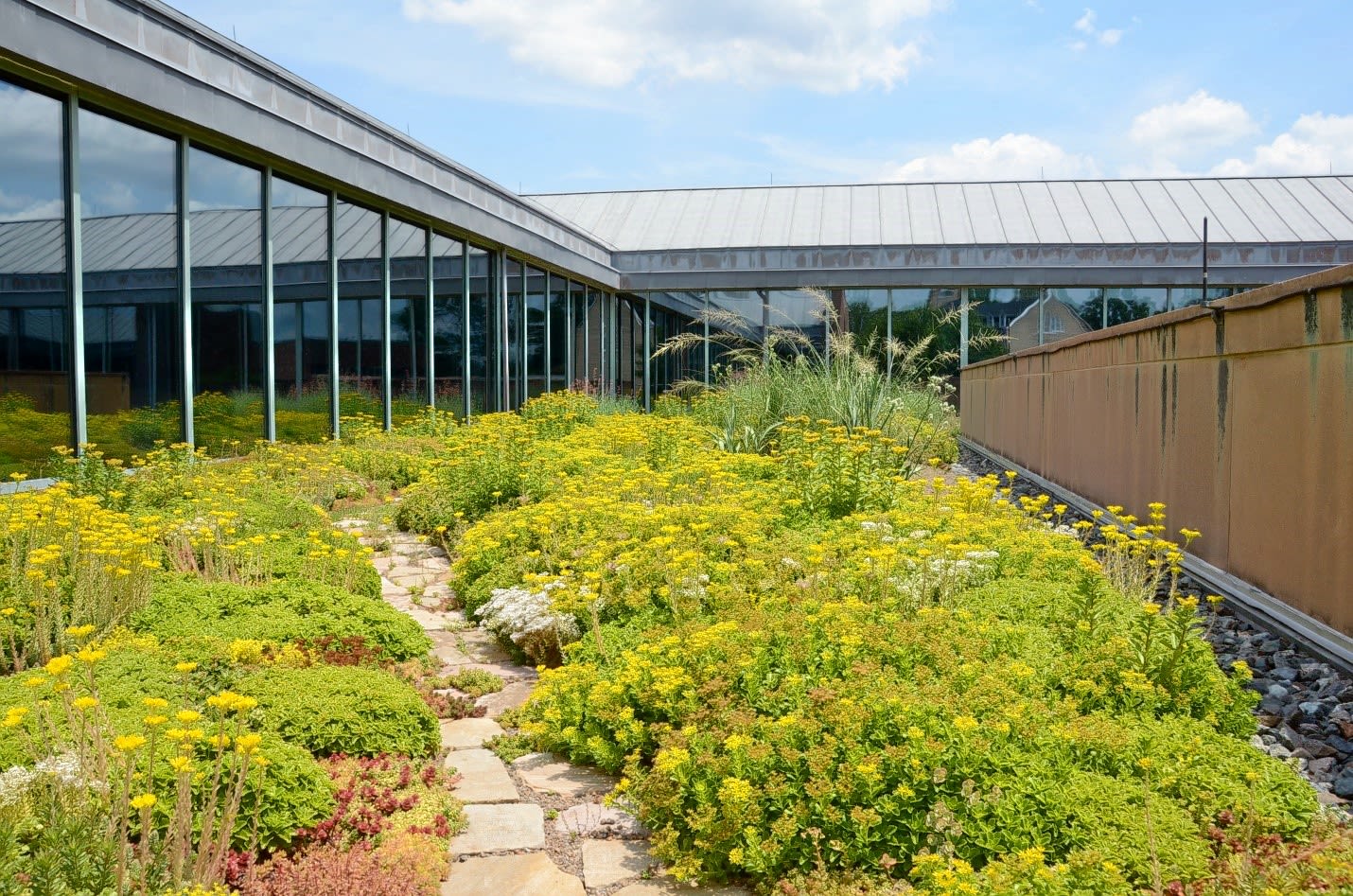
Sedum in bloom
Sedum in bloom
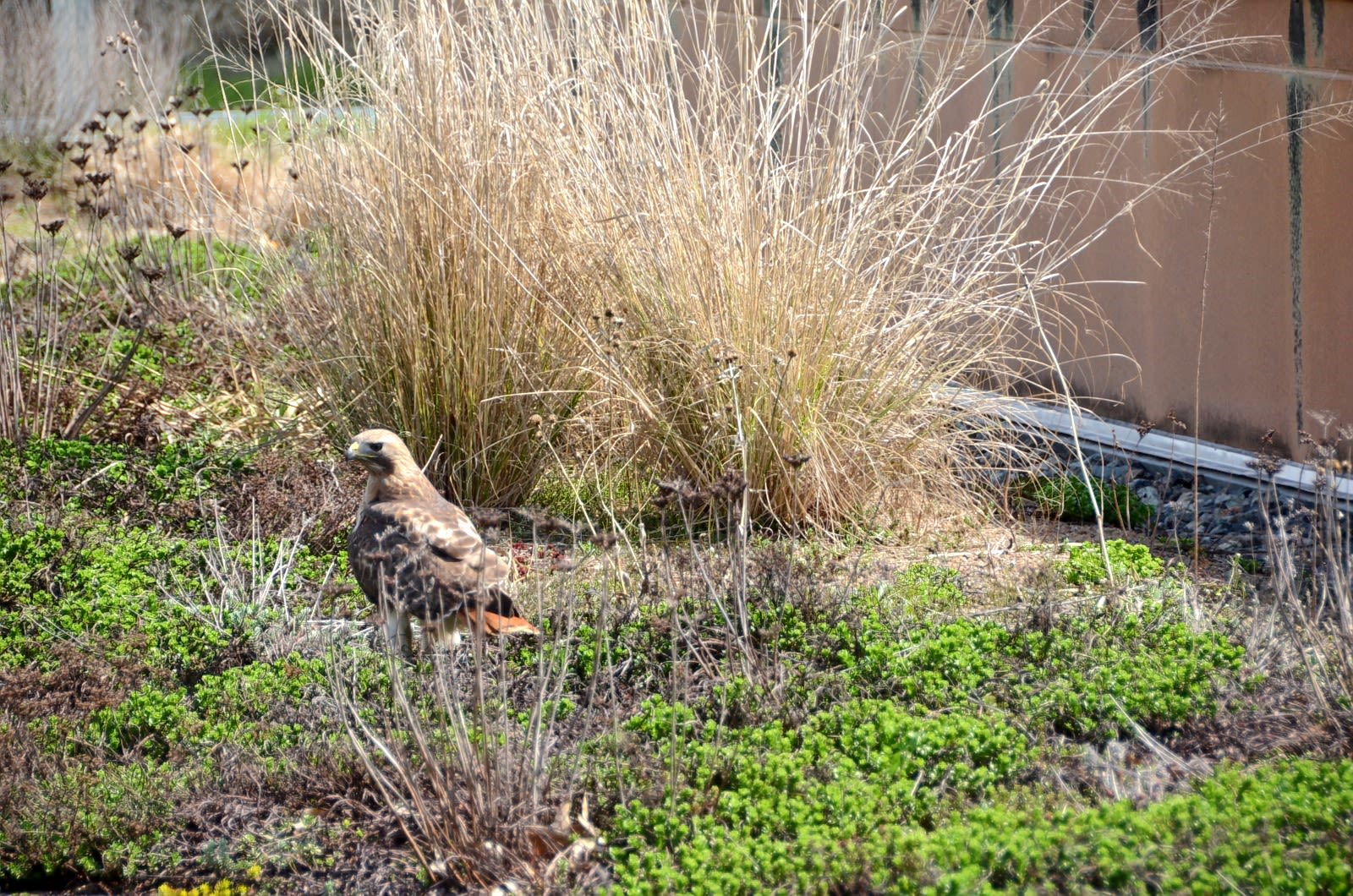
NFATC’s resident hawk visiting the Green Roof
NFATC’s resident hawk visiting the Green Roof