
The Pond
The Grounds at NFATC
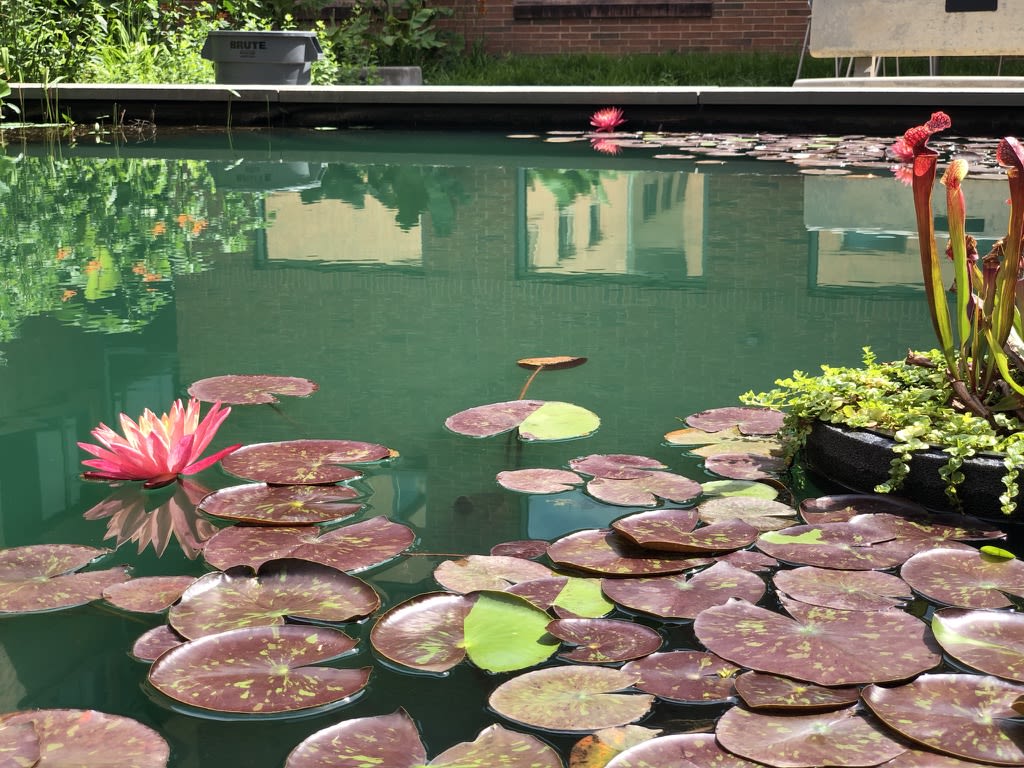

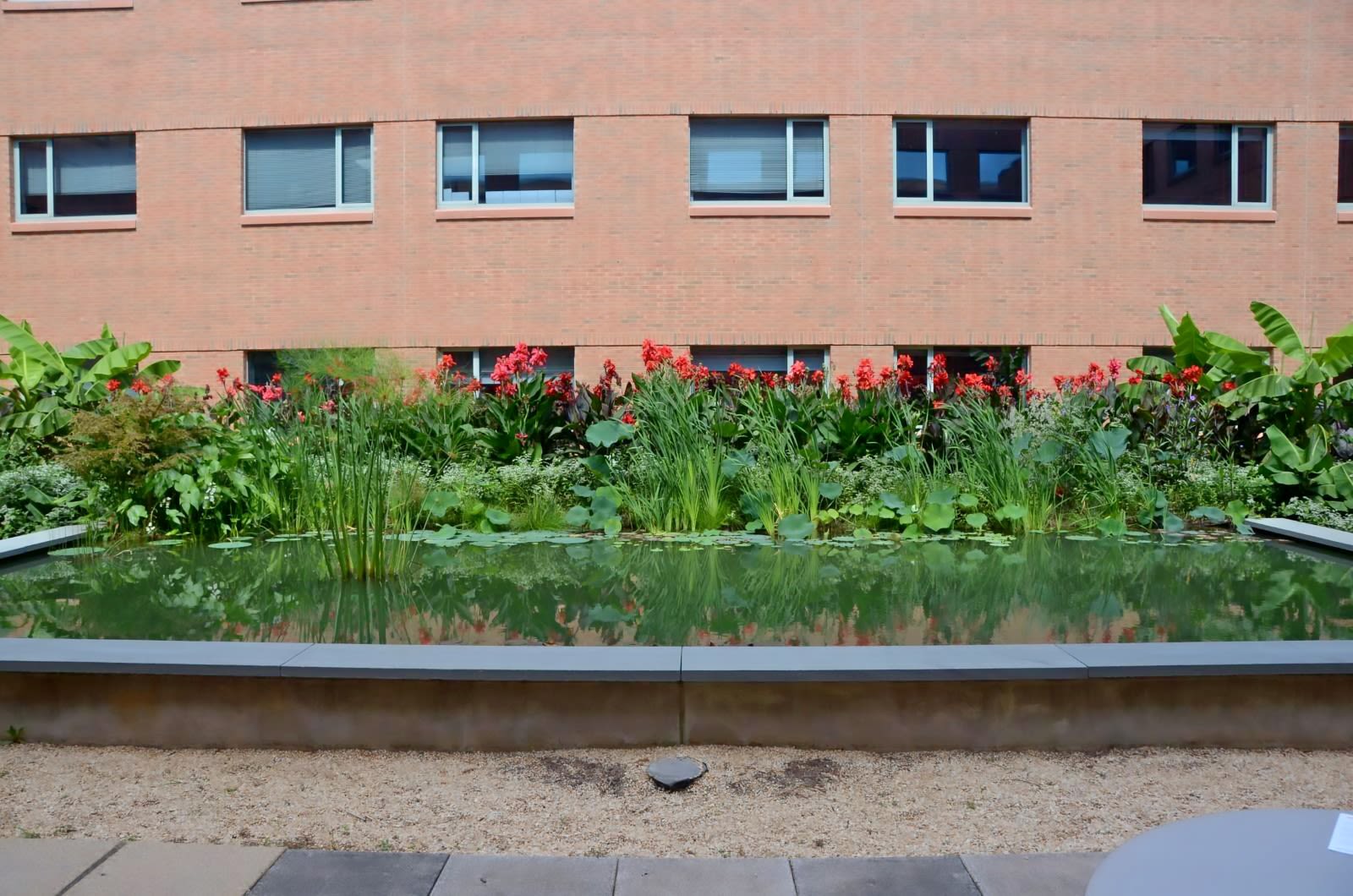
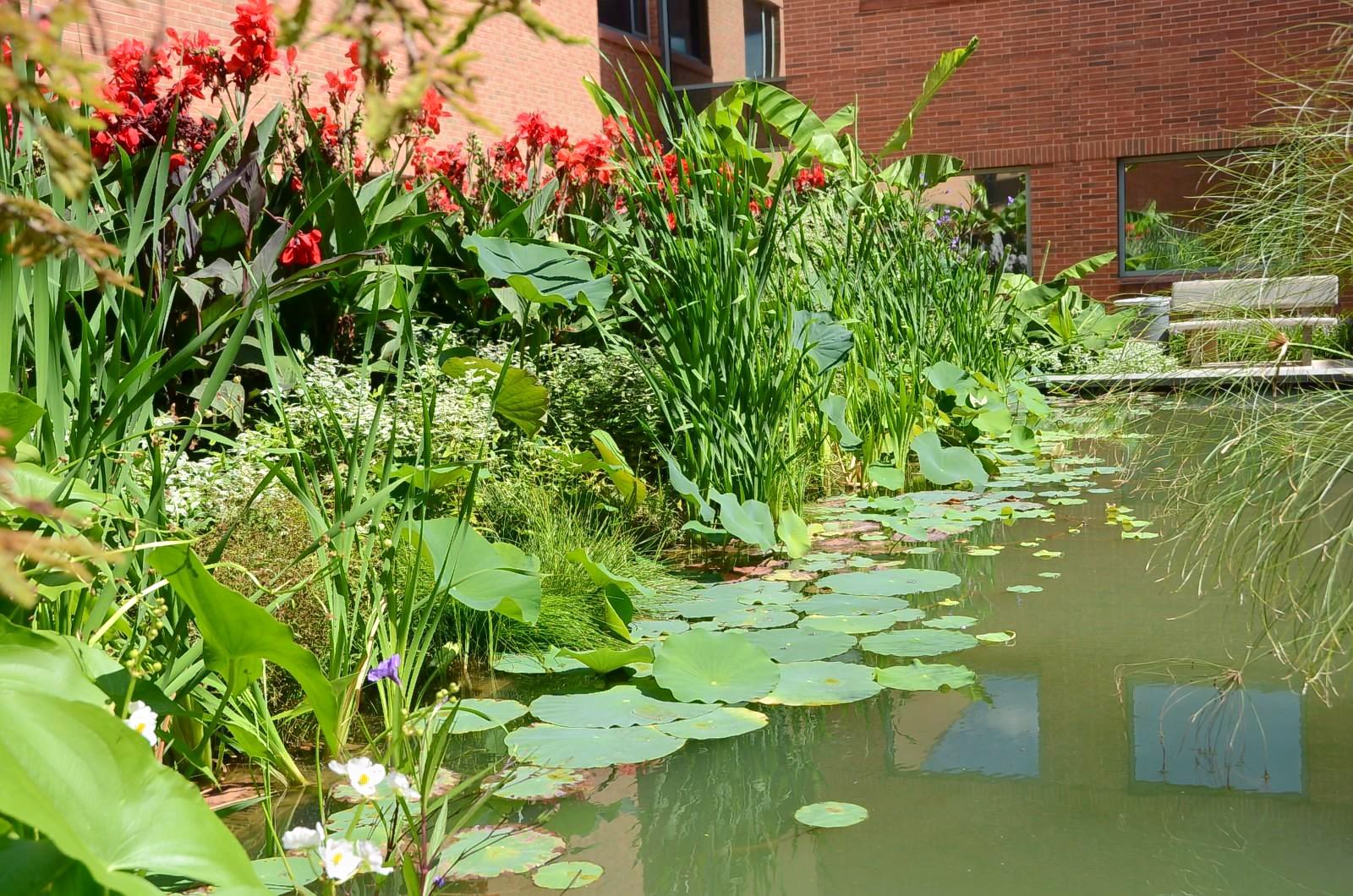
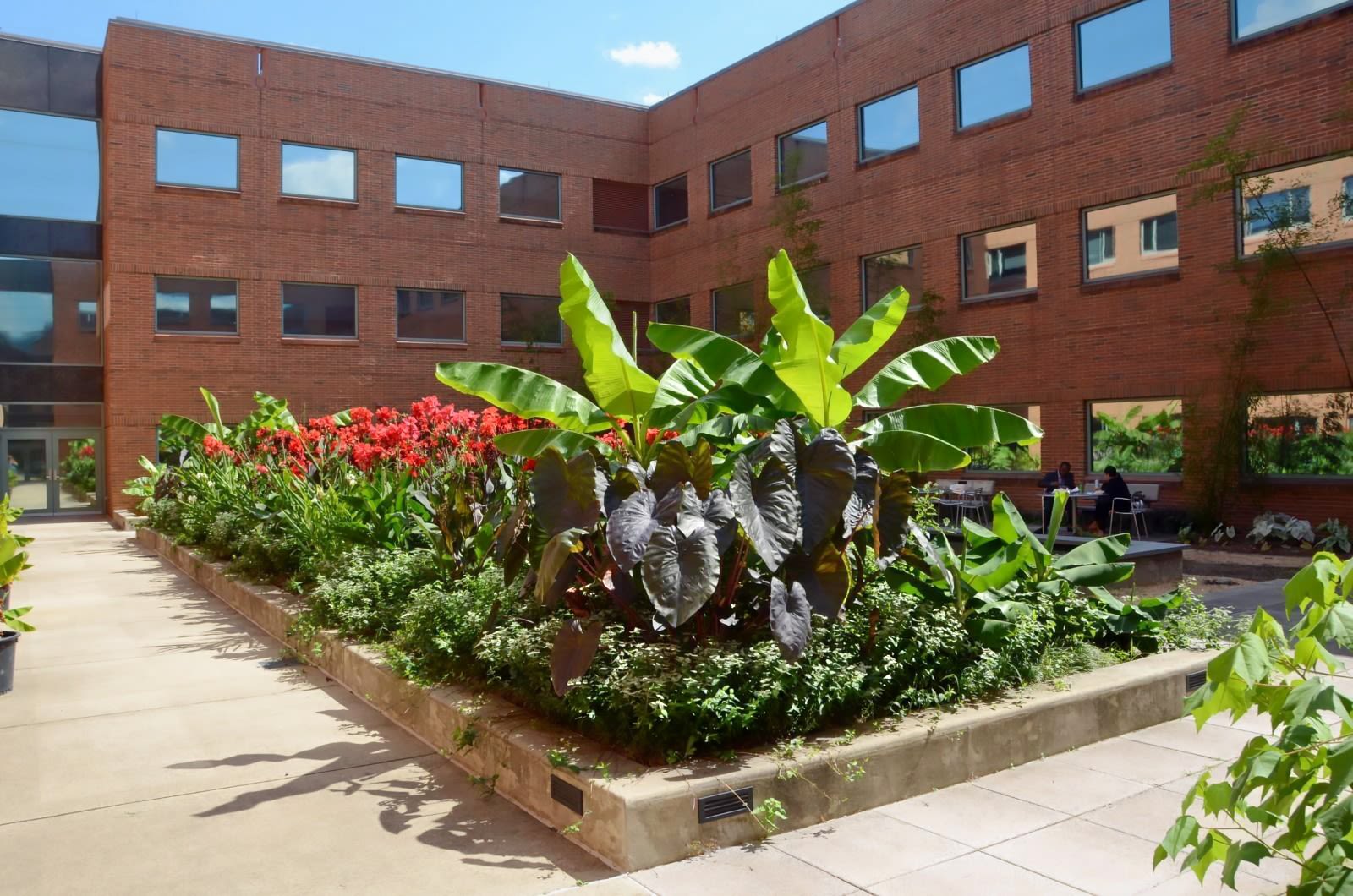
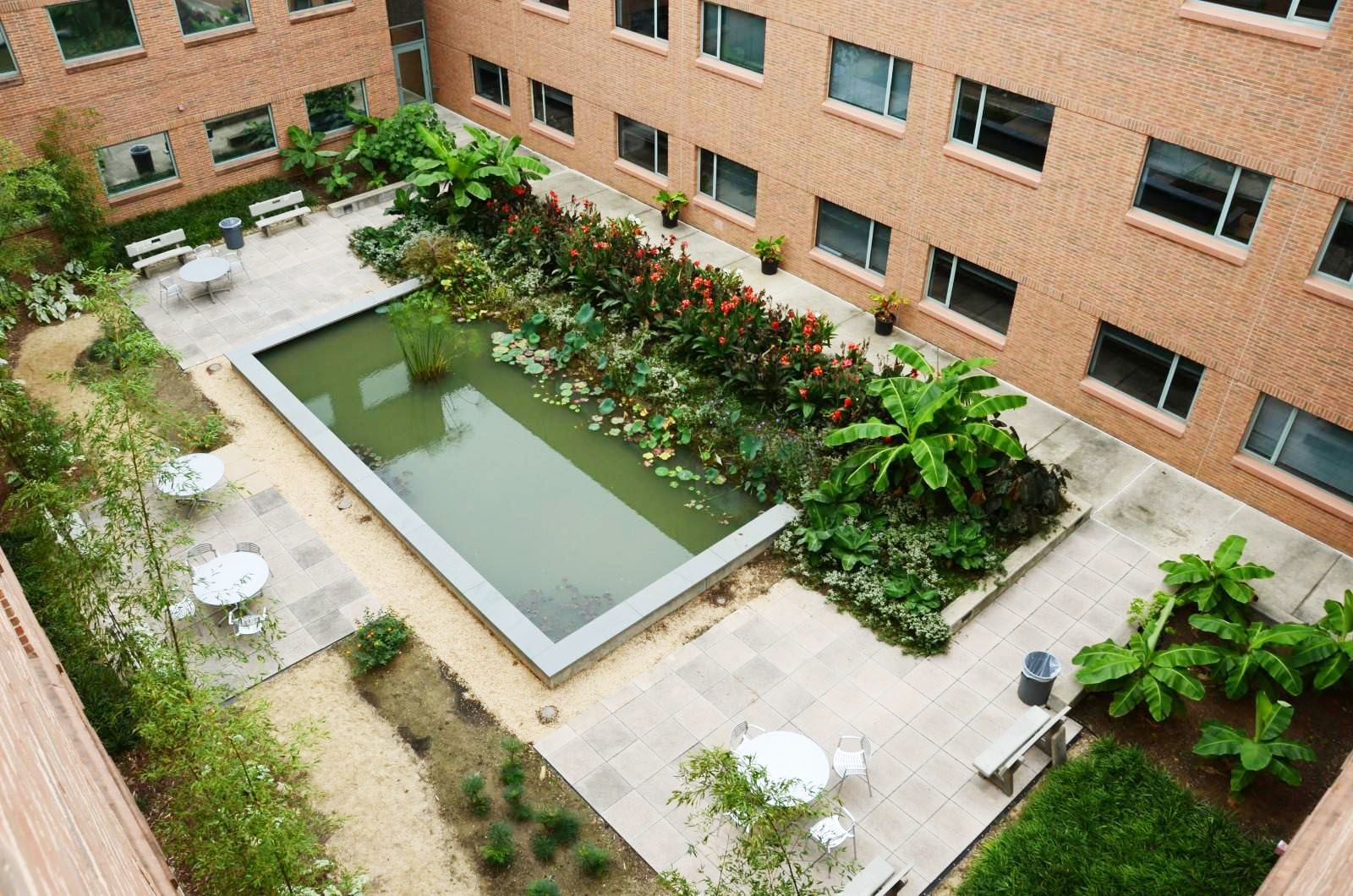
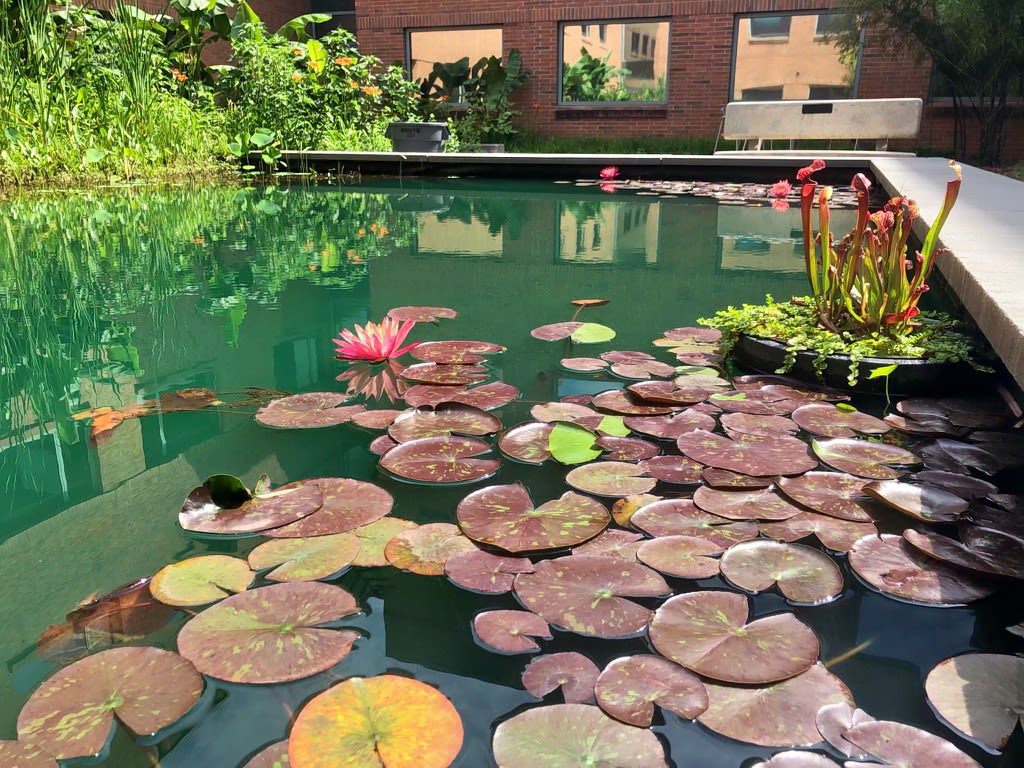
Located in a courtyard in the F Building, the Pond is a microclimate that takes you right out of the federal Washington, DC, setting and sends you to the tropics. Once a dour, unused courtyard, this garden now features a biologically balanced pond—not needing any mechanized equipment, just fish and plants—and plantings of Japanese fiber bananas, showy ginger, lotus, hibiscus, pitcher plants, cannas, and water lilies.
Use this space to tap out for a moment, whether to meet with a friend, picture yourself in the tropics, or simply be by water.












Horticulturist's Tour
Listen to NFATC Horticulturist, Darren DeStefano, talk about the development of the Pond and the several ways it completed the overall design of the grounds at NFATC.
Select the play button to listen to the audio as you follow along with the transcript below.
Welcome to the Pond.
It’s a favorite space on campus once it’s discovered. It’s a little bit hidden. But I like walking down the perfunctory federal hallway, turning the corner, and finding myself in this space. It’s surprising.
I mean, in a lot of ways, you don't feel like you’re in a federal building any longer. And it can be that you’re no longer in Washington—that you've managed to find your way to the tropics, at least for a moment.
(Scroll to follow along with the audio.)
So, I like coming in here in order to get my head out of the federal mindset. And I like staring at the water. I mean, there’s something about water that's really compelling. It always brings an audience. I had this idea in my head that if you don’t have water, it’s not a garden, and I didn’t have any water and I wanted to resolve that.
And when I looked at the courtyard, I mean, I saw this raised rectangular central planter that seemed like it was a pool. I just wanted to help it realize what it wanted to become and naturalize it—take away all of the hard corners.
So, we removed all the vegetation from the courtyard, and then we dug out the planter, and lined it and then we dumped back over dirt to create a continuum between the soil and the pond.
And anyone who’s got a pool knows that if you have a hard edge, a bunch of creatures will get caught in the water and they'll die in there. They need to have a way out. So, it was important to create this one side with the continuity, but it was also useful so that we didn’t have to get rid of a bunch of soil. It would have been very difficult to get all of that soil out of the courtyard.
Once the pond was lined, we filled it with water and introduced a bunch of water lilies and let it sit for a couple of weeks before we brought in the fish. And I think I introduced about a dozen fish that quickly became a breeding population. And the pond found equilibrium pretty quickly.
There's no mechanical equipment involved—no pumps, no filtration. It’s completely biologically balanced. And that’s this ratio between fish and plants and sun and space. And you never feed the fish. They obtain all of their nutrition from insects and algae, and the plants utilize the waste that the fish produce in order to grow.
And I periodically dye the pond to allow, first of all, protection for the fish so that birds can’t simply spot them easily and eat them. And second, so that algae is blocked in the late spring when it tends to bloom. If you dye the water black, you’ll discourage algae and you’ll create a far better mirror reflection than the dull color the water would generally take at that time of year. Later in the summer, the water will work to becoming crystal clear.
One of the great things about working with a courtyard is that you don’t have sightlines to the larger landscape, so you can grow a collection of plants that would really feel out of place if they were outside but can create a completely different feeling when they’re contained by walls on the inside. So that was part of my rationale in selecting a rather tropical palette.
I wanted to incorporate these plants in order to move towards the goal of a global garden where diplomats that were being dispatched around the world could have some notion of types of vegetation that would exist there, or at least things of cultural significance before they left.
And the courtyard really allowed me to grow plants that are at the margin of the hardiness zone. So, the microclimate of the courtyard allows you to grow things that would generally prefer a bit warmer climate.
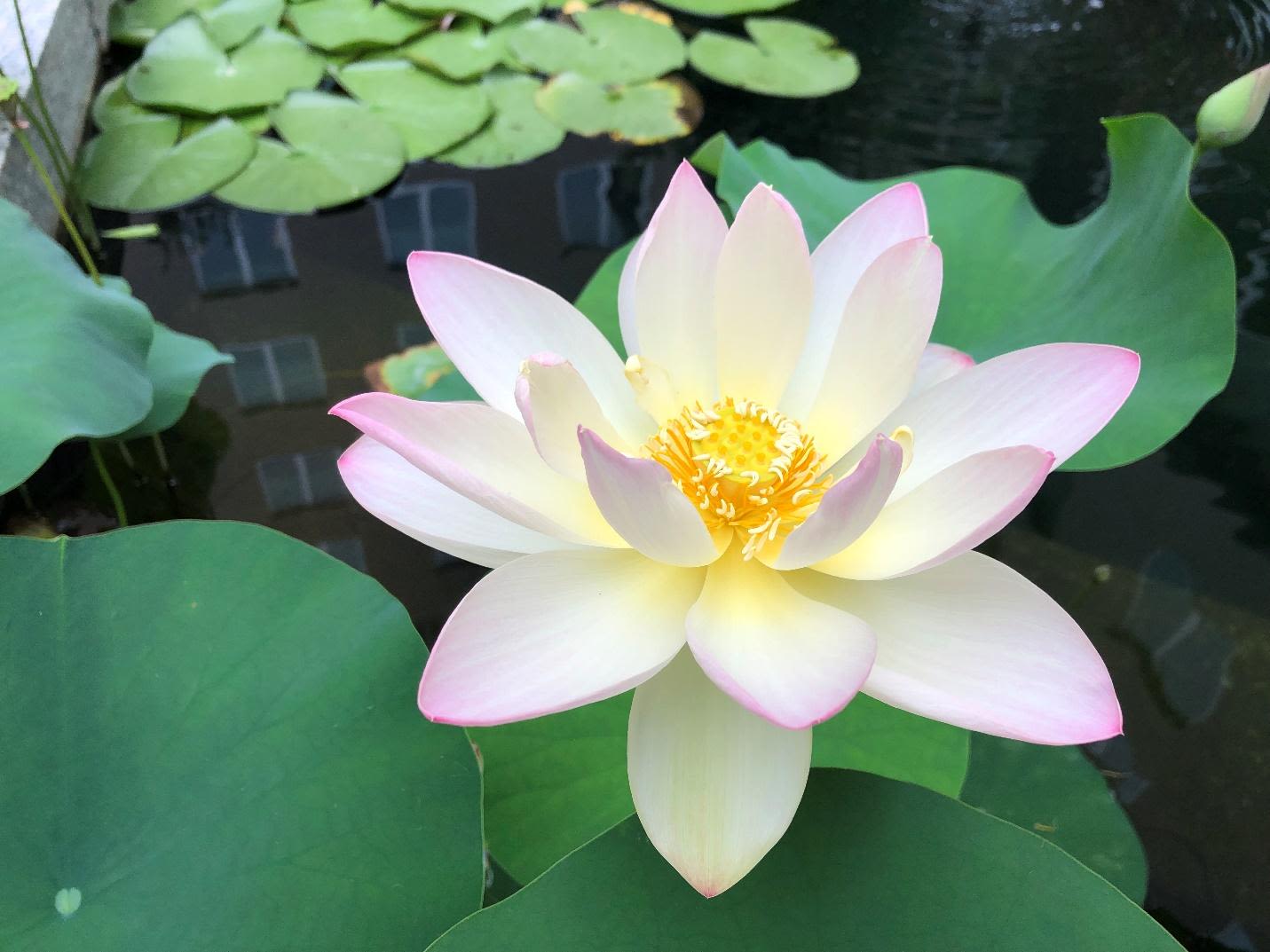
I focused on growing lotus because this is one of the most culturally potent plants that really exists. It bears a lot of religious and cultural significance, especially in Southeast Asia. And I really created the pond in order to cultivate it and celebrate it.
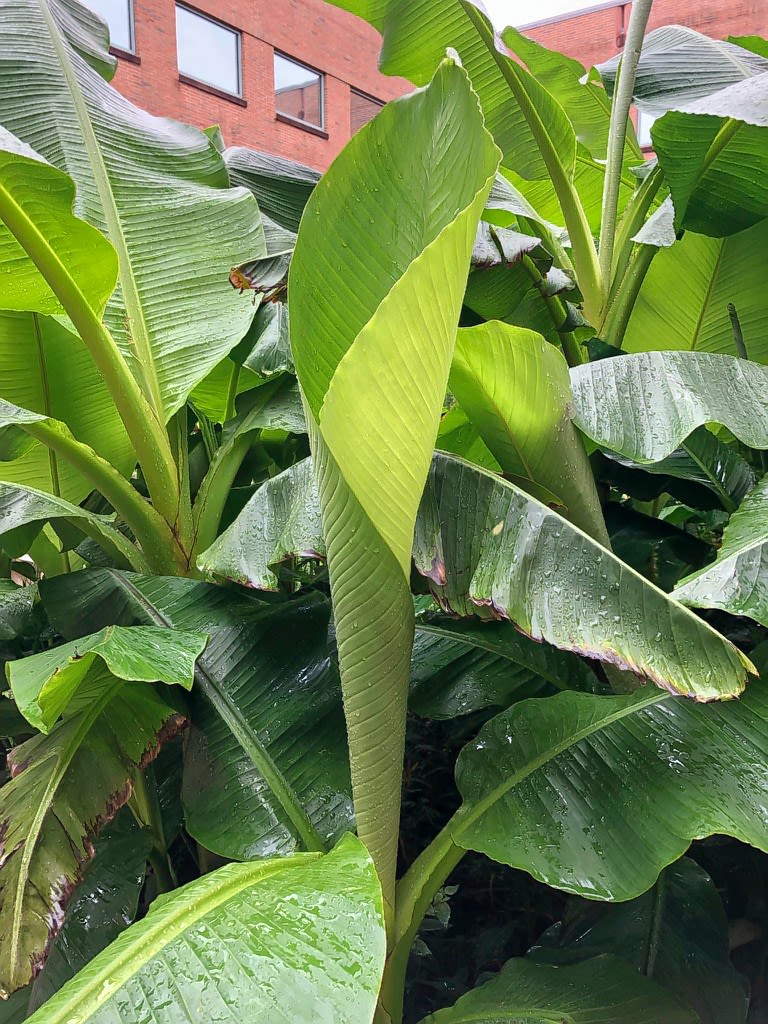
But I also decided to plant bananas, which have become a pretty dominant element of the space. Also, a really key plant to Southeast Asia.
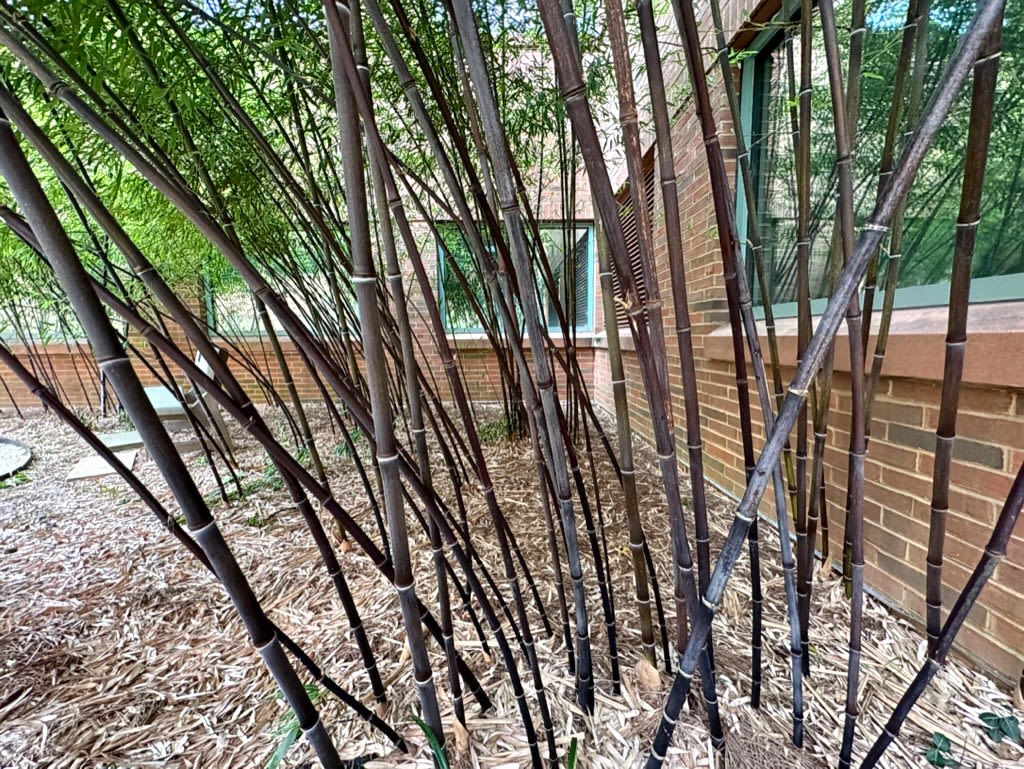
I put in black bamboo that I knew was growing in a stand, and I actually had to have it dug. It's generally not for sale. You'll see that the canes are all black, and we strip away the lower foliage to expose that color, and it creates a beautiful effect.
Featured Plants

'Wanvisa' Water Lily
'Wanvisa' Water Lily
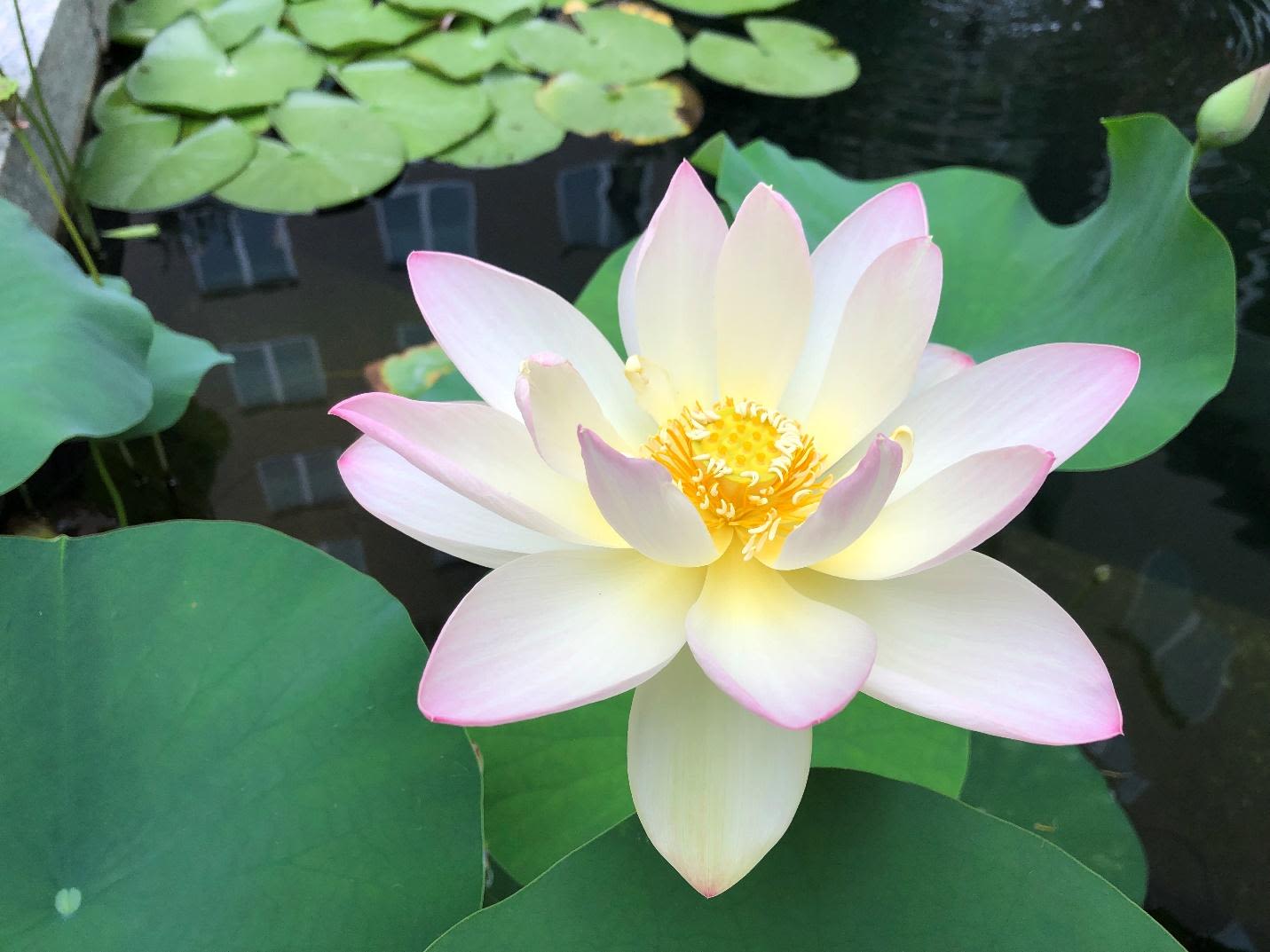
Sacred Lotus
Sacred Lotus

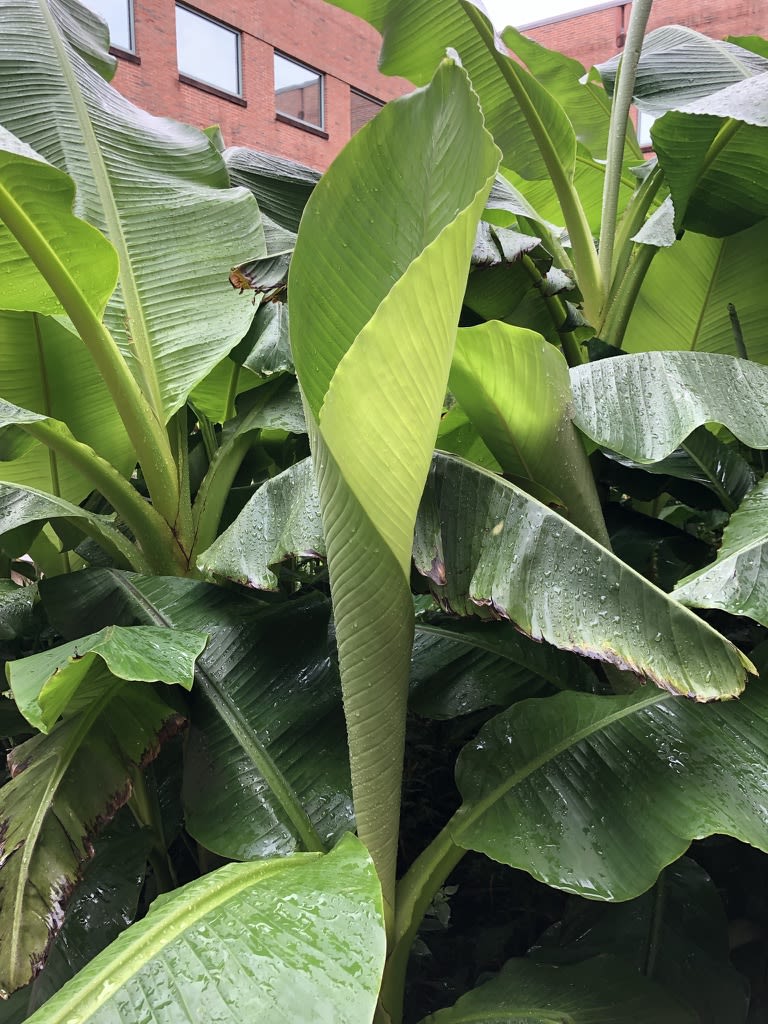
Japanese Fibre Banana
Japanese Fibre Banana

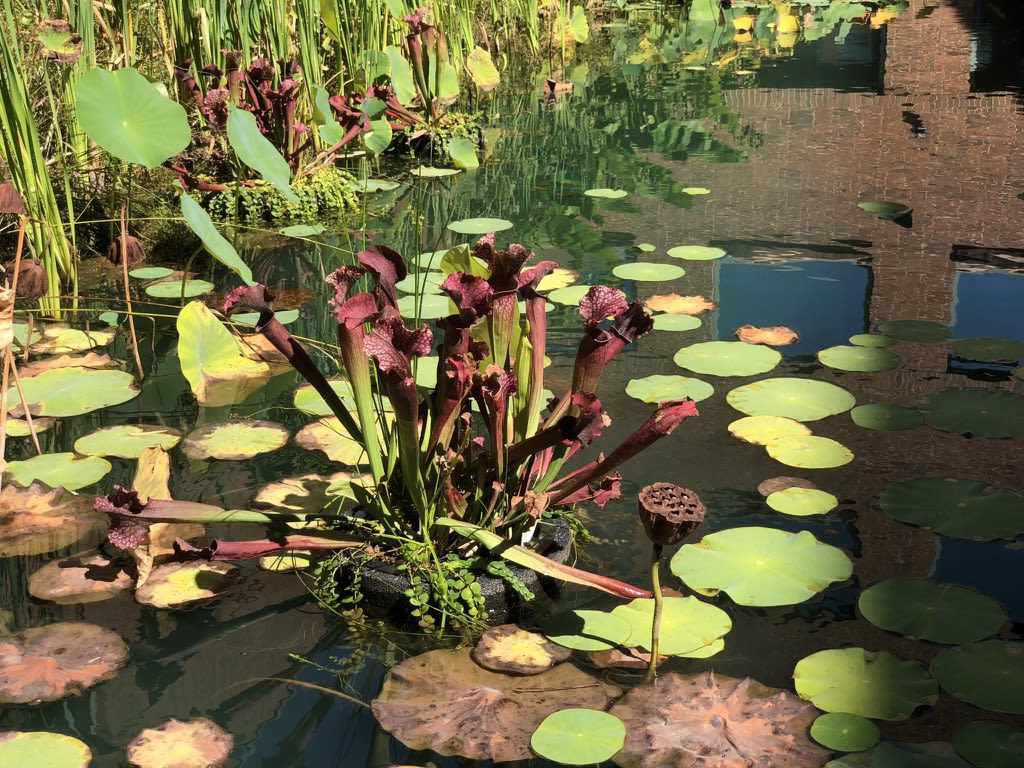
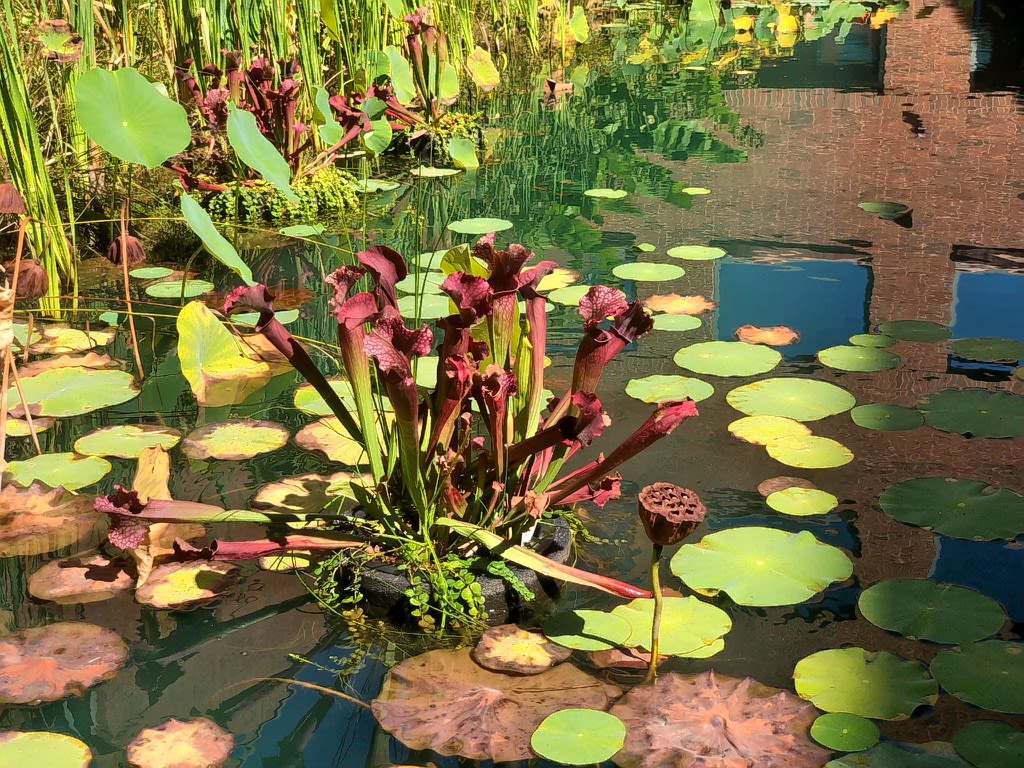
White Trumpet Pitcher Plant
White Trumpet Pitcher Plant
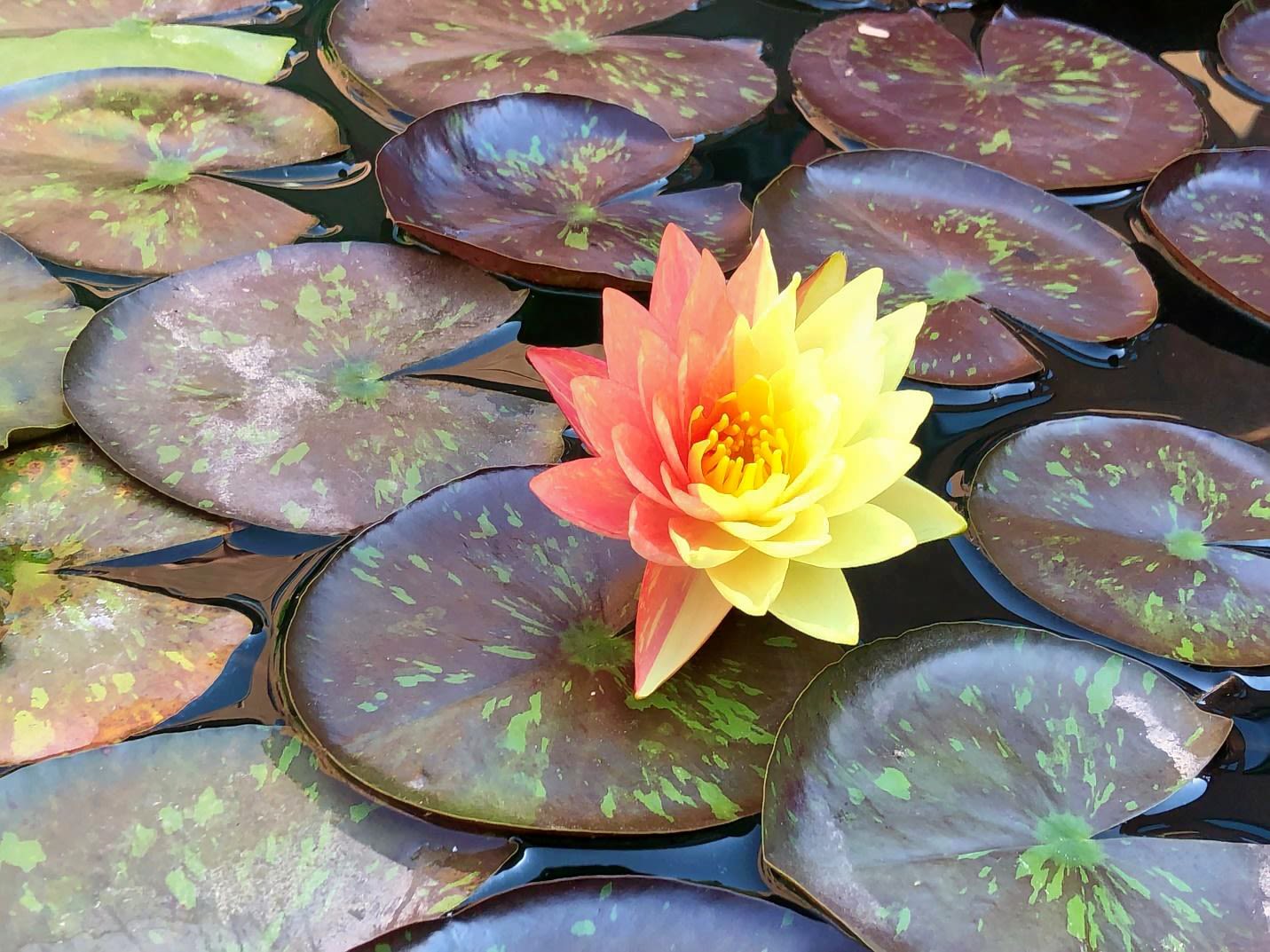
'Wanvisa' Water Lily
(Nymphaea ‘Wanvisa’)
‘Wanvisa’ is a hardy member of the water lily (Nymphaceae) family. Water lilies are rhizomatous aquatic plants of about 70 species that live in shallow waterways in both temperate and tropical conditions. They were particularly revered in ancient Egypt where they grow along the Nile, often depicted in temples, although their botanical name pays homage to the nymphs of ancient Greek mythology.
‘Wanvisa’ is of hybrid origin, deriving from an unintentional mutation recognized and cultivated in 2010 by Dr. N. Nopchai Chansilpa of Thailand. It exhibits deep maroon marbled foliage and apricot blooms speckled with touches of buttercream. While the mutation that gave rise to ‘Wanvisa’ is stable, it does periodically express reversion, resulting in blooms that are partially solid yellow—a real treat.
The remarkable blooms of ‘Wanvisa’ first appeared on the Buddhist holiday of Visakha Bucha, commemorating the birth, life, and death of the Buddha, thus the name: Wan (name) Visa (Visaka Bucha).
Sacred Lotus
(Nelumbo nucifera)
Sacred lotus is a rhizomatous semi-aquatic perennial in the lotus (Nelumbonaceae) family. It is native to floodplains and river deltas in Southeast Asia, where it serves as the national flower of India.
In late spring, foliage emerges as floating pads akin to water lilies, but is then followed by sturdy stalks that lift large, cupped, waxy green leaves well above the water’s surface. Spindle-shaped flower buds tinged with pink rise above the aerial foliage and unfurl into large fragrant pink and white flowers that last several days, opening and closing with the cycle of the sun. Yellow turbinate capsules at the center of the blossoms enlarge and perforate, bearing nutlike seeds—these harden to durable woody structures, which are themselves ornate.
In natural settings, lotus grow in massive colonies, and their annual bloom is a natural rite that draws people from around the globe. The lotus motif is sacred in South Asian cultures and conveys deep religious symbolism, rising from the muck to produce an exquisite bloom. It is the embodiment of the human condition in the Buddhist and Hindu faiths and symbolizes rebirth.
Japanese Fibre Banana
(Musa basjoo)
Japanese fibre banana is in the banana (Musacaea) family and is native to Southeast Asia where it is cultivated exclusively for its foliage, as its fruit are inedible.
Bananas are often referred to as trees, but are actually herbaceous perennials with large pseudostems formed by overlapping leaves that create a sturdy trunk but lack wood. Japanese fibre banana is surprisingly hardy and tolerates winter temperatures as low as -10°F by dying back to the ground with its root system remaining viable. In late spring, foliage begins to emerge, forming a small stem that rapidly yields increasingly larger rolled leaves from its center, unfurling in dramatic fashion. They can easily produce 10 feet of canopy in a single season.
The foliage of the Japanese fibre banana has myriad uses, from wraps for grilled foods to eating surfaces—the sheath of the leaf is harvested and its long fibers extracted for use in textiles and paper. The specimens in the Pond courtyard were planted in 2017.
White Trumpet Pitcher Plant
(Sarracenia leucophylla)
White trumpet pitcher plant is a carnivorous rhizomatous perennial in the pitcher plant (Sarraceniaceae) family. It is native to sandy acidic wetlands and pine savannahs of Southeast Georgia and the Florida Panhandle.
Their otherworldly appearance made them exotic ornaments of Victorian Europe, with Darwin himself theorizing their carnivorous nature in his volume, Insectivorous Plants. Pitchers lure their prey into a specialized cylindrical leaf with a combination of aromatic nectar and striking coloration—once inside the “throat,” insects slide down and become trapped in a watery reservoir of digestive enzymes that reduces them into nutrients absorbed by the plant.
White trumpet pitcher plant is one of the largest species in the genus, standing over two feet. It boasts a pale cap highlighted by intense crimson venation and blood-red flowers that emerge in May and persist for over a month. They benefit from the mild protected conditions of the courtyard’s microclimate.
Through the Seasons
Select each of the images below to zoom in and learn more.
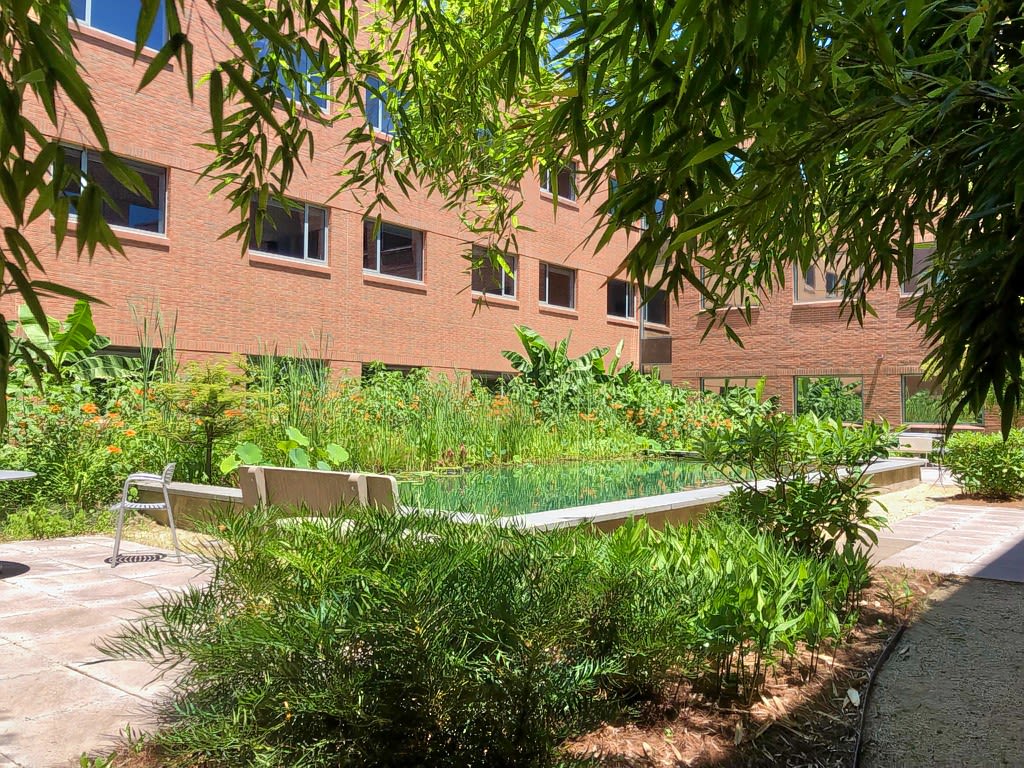
The view from a shaded spot in the Pond
The view from a shaded spot in the Pond
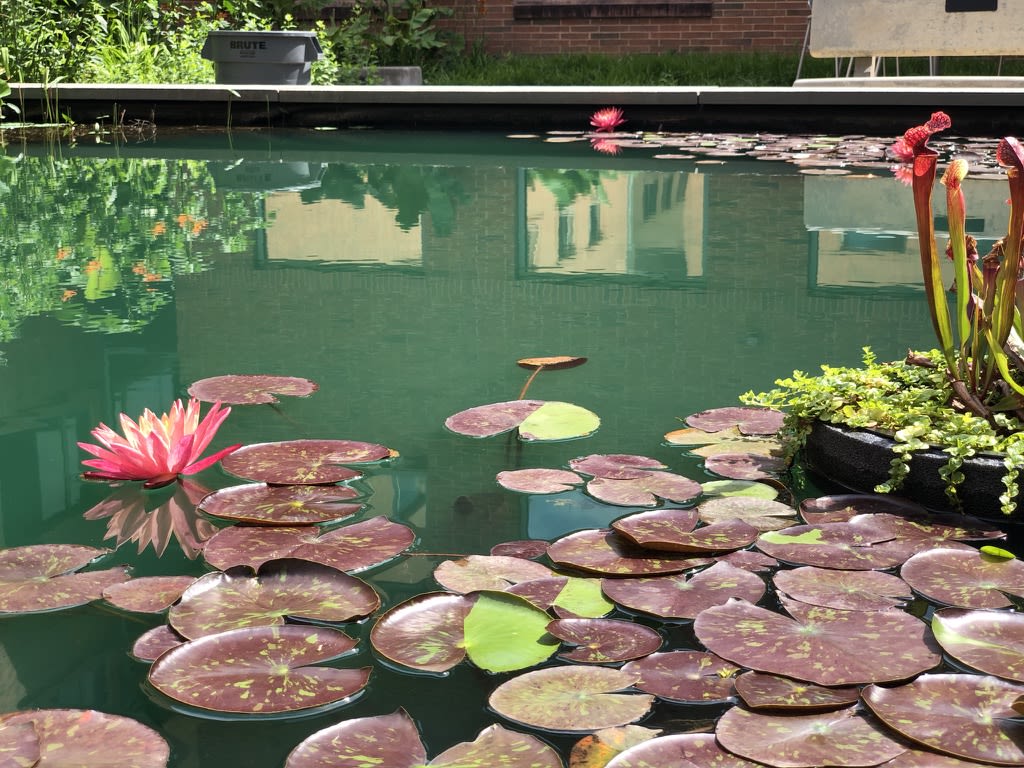
Water lily pads by pitcher plants
Water lily pads by pitcher plants

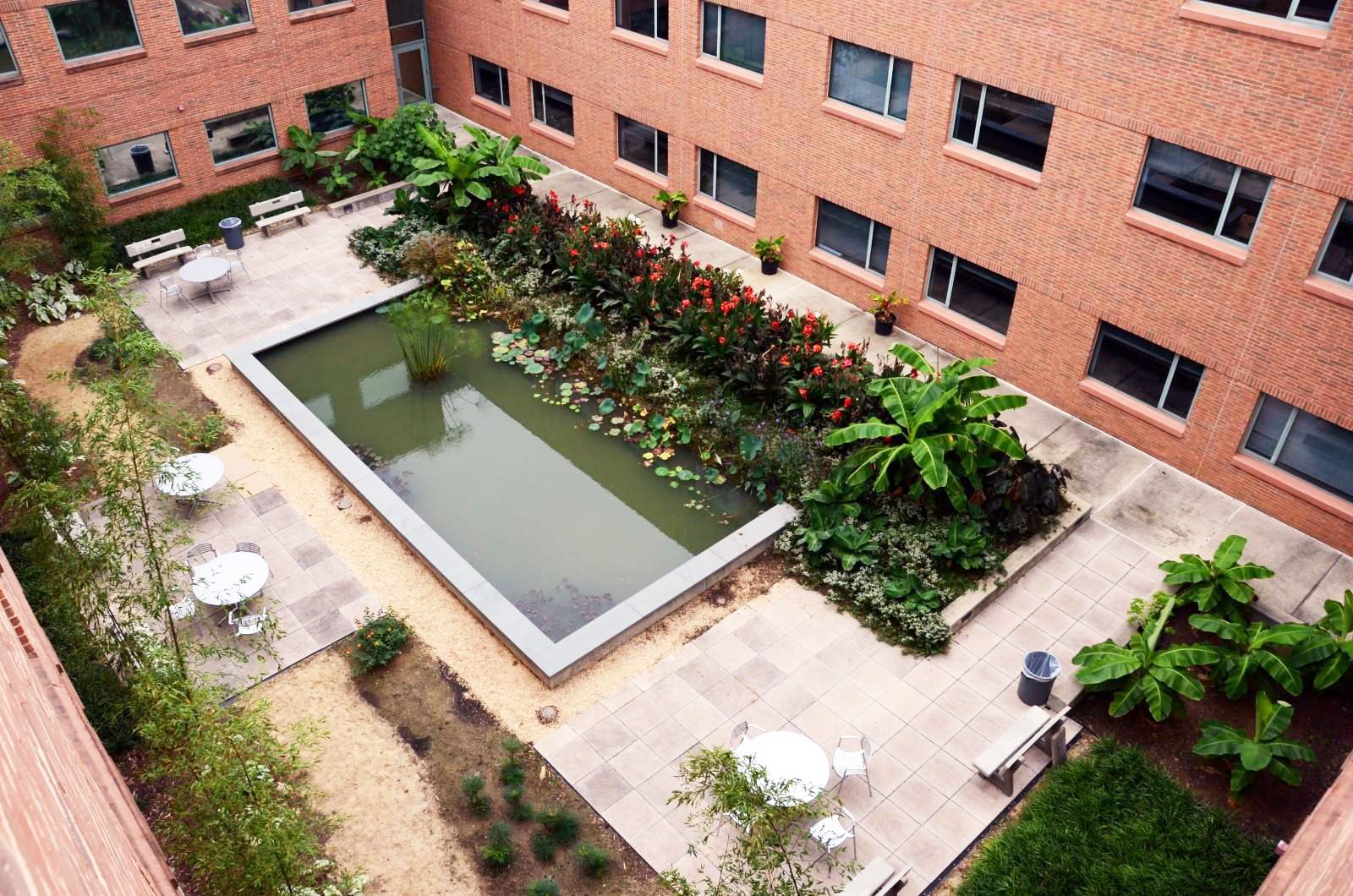
A bird's-eye view of the Pond
A bird's-eye view of the Pond
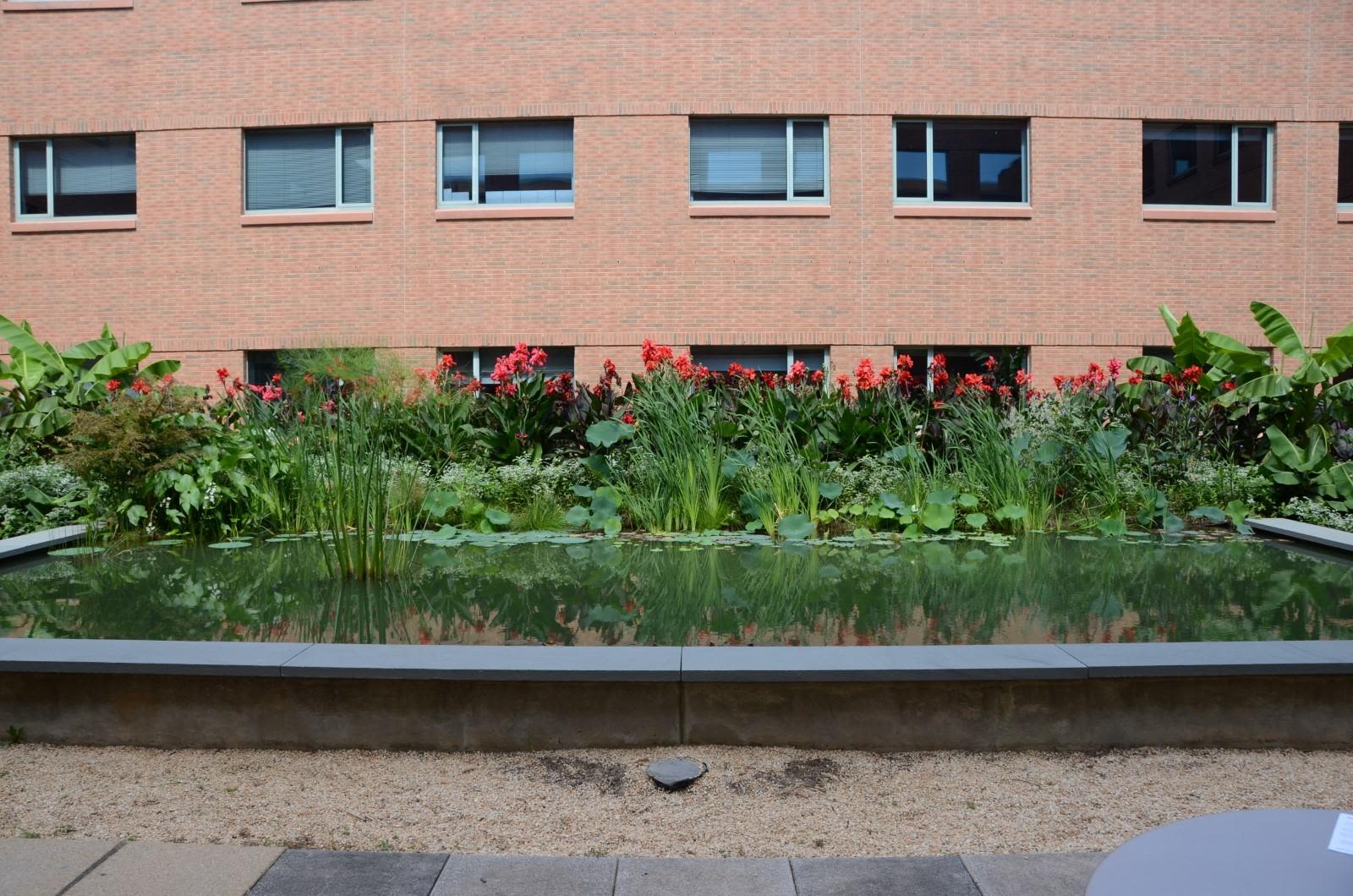
The pond with canna lilies blooming in the back
The pond with canna lilies blooming in the back
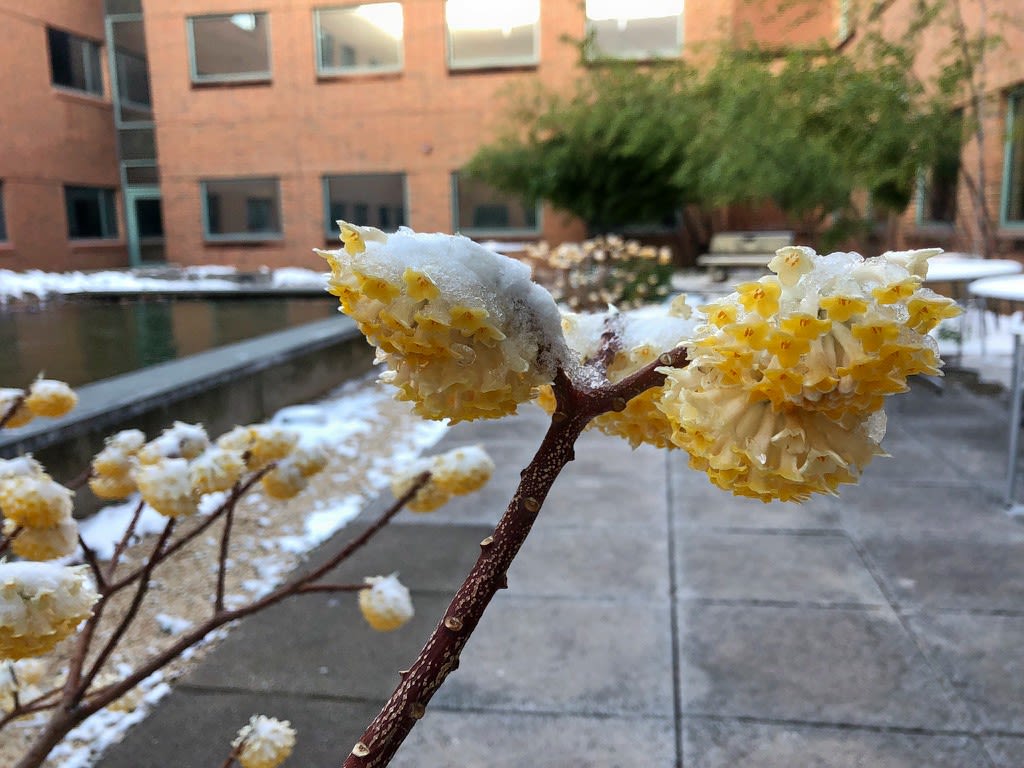
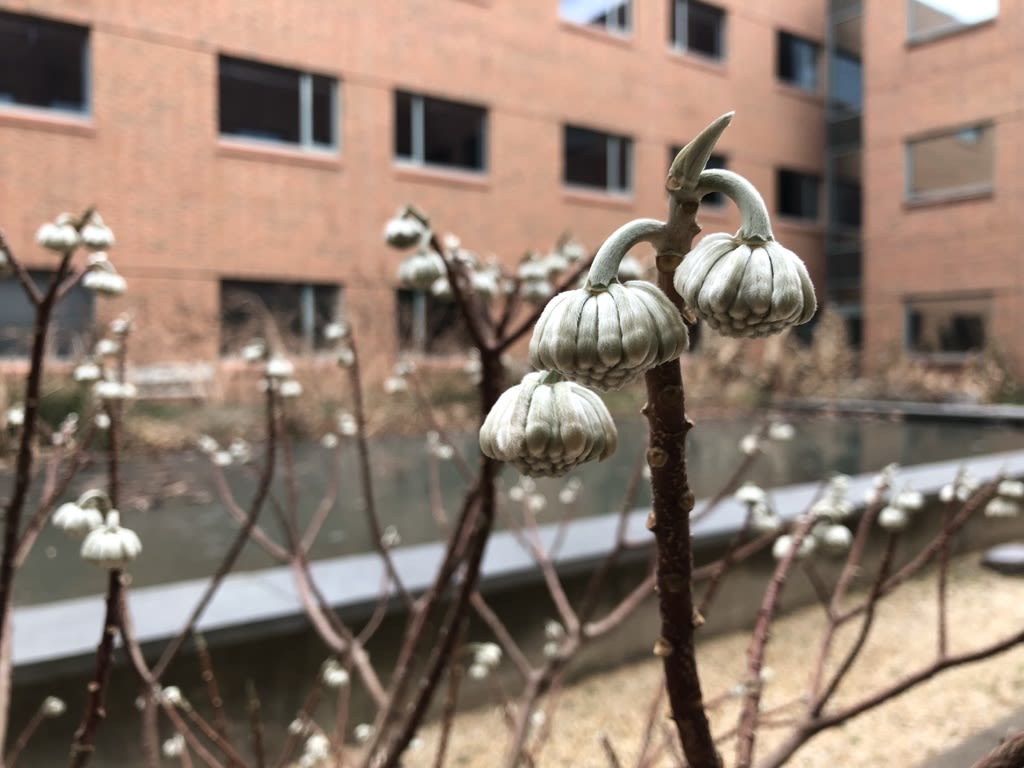
Paperbush in the winter
Paperbush in the winter
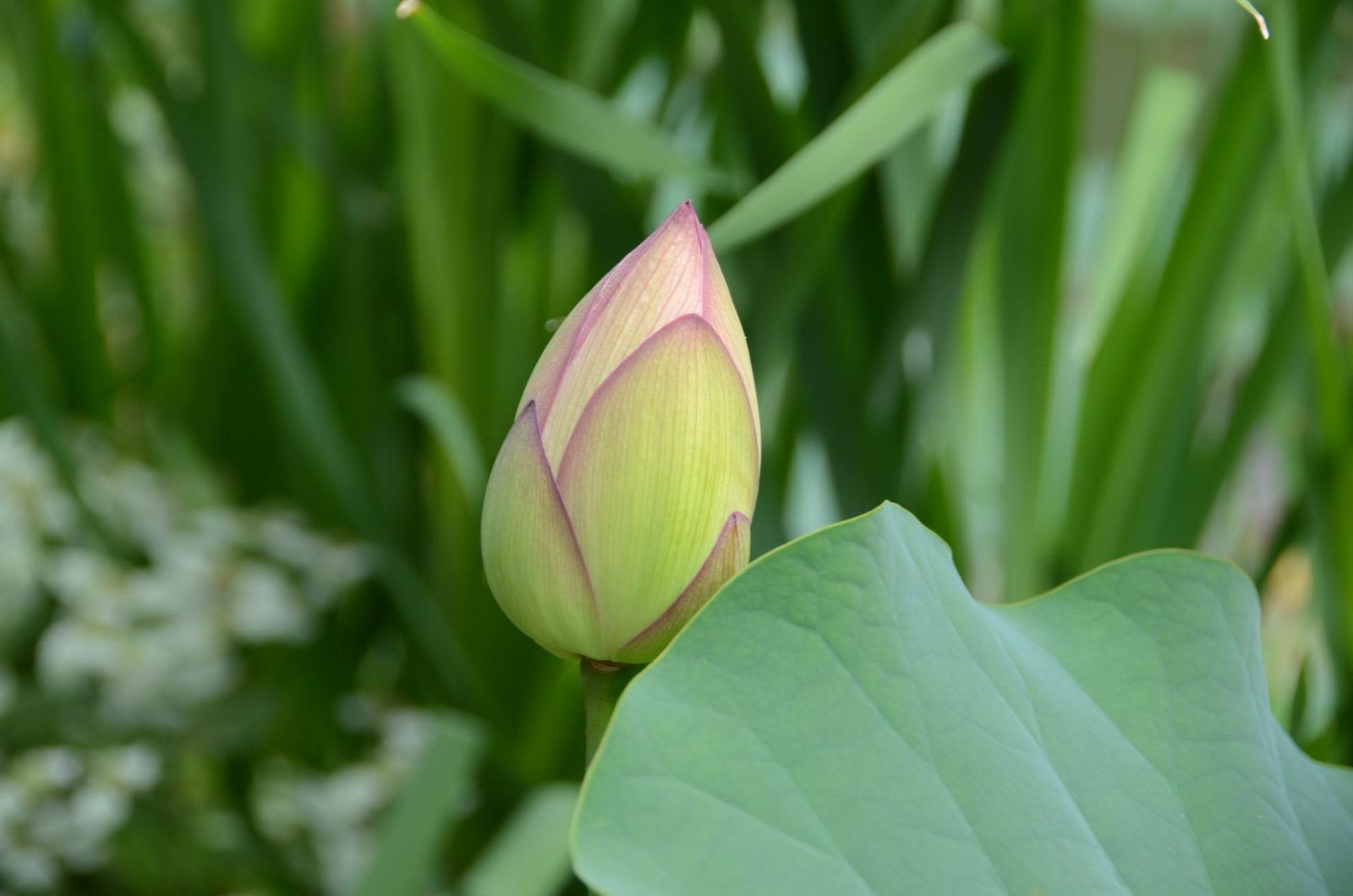
The spindle-shaped bud of a sacred lotus
The spindle-shaped bud of a sacred lotus

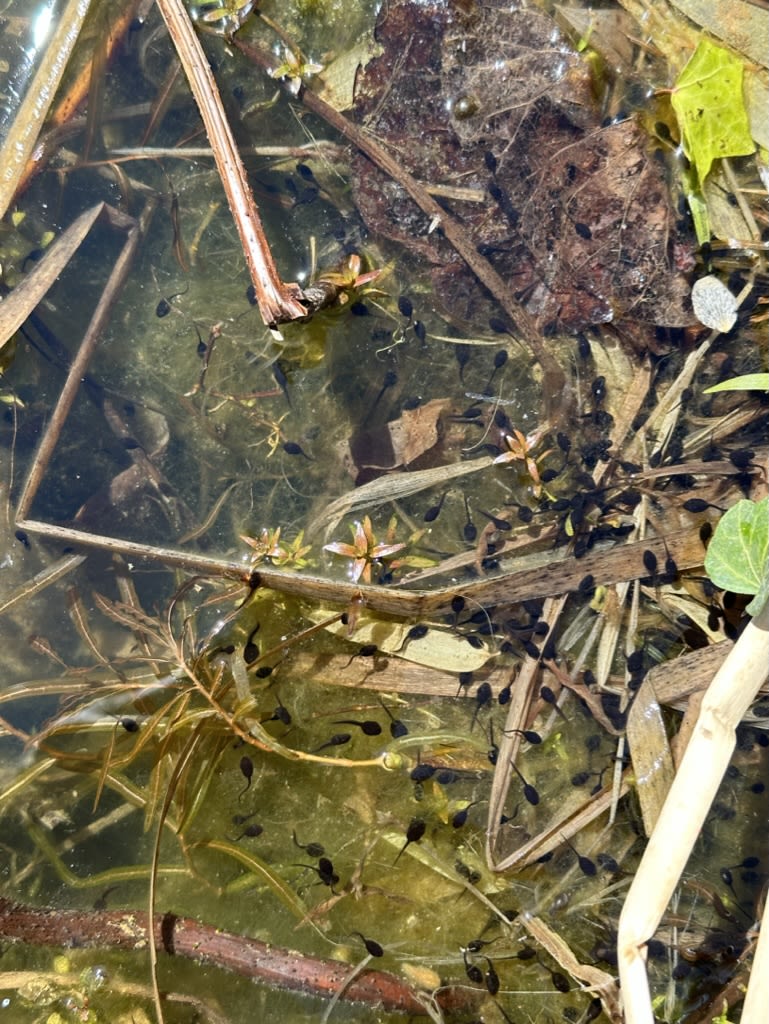
Tadpoles in the pond
Tadpoles in the pond