
The Cactus Roof
The Grounds at NFATC
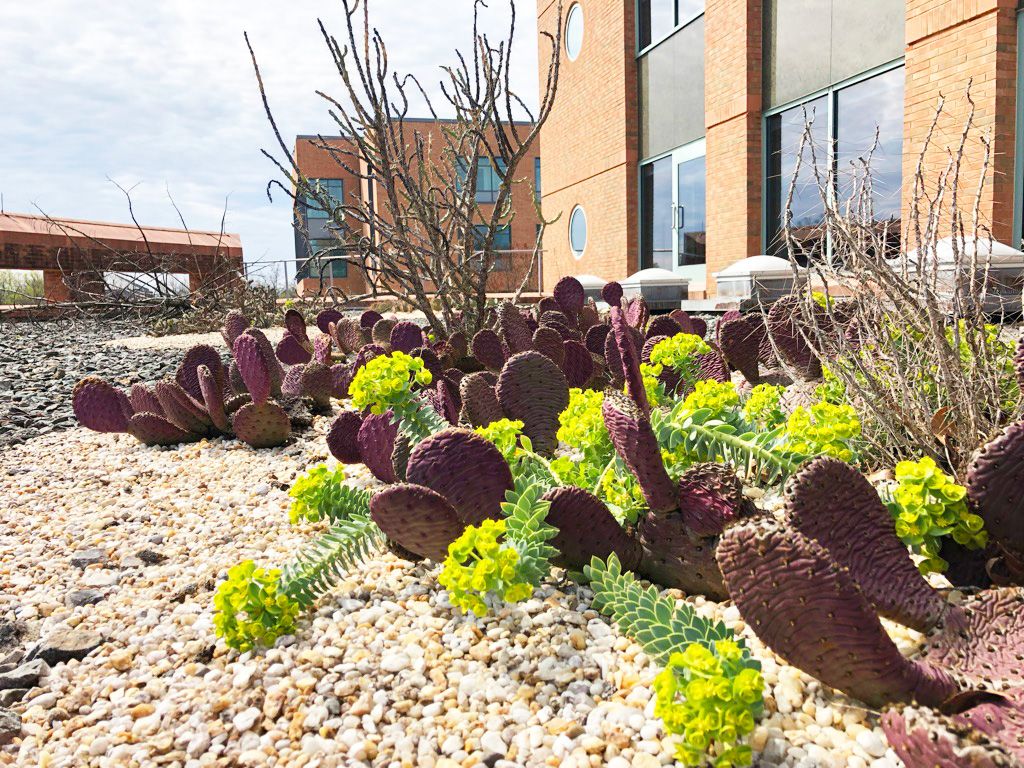

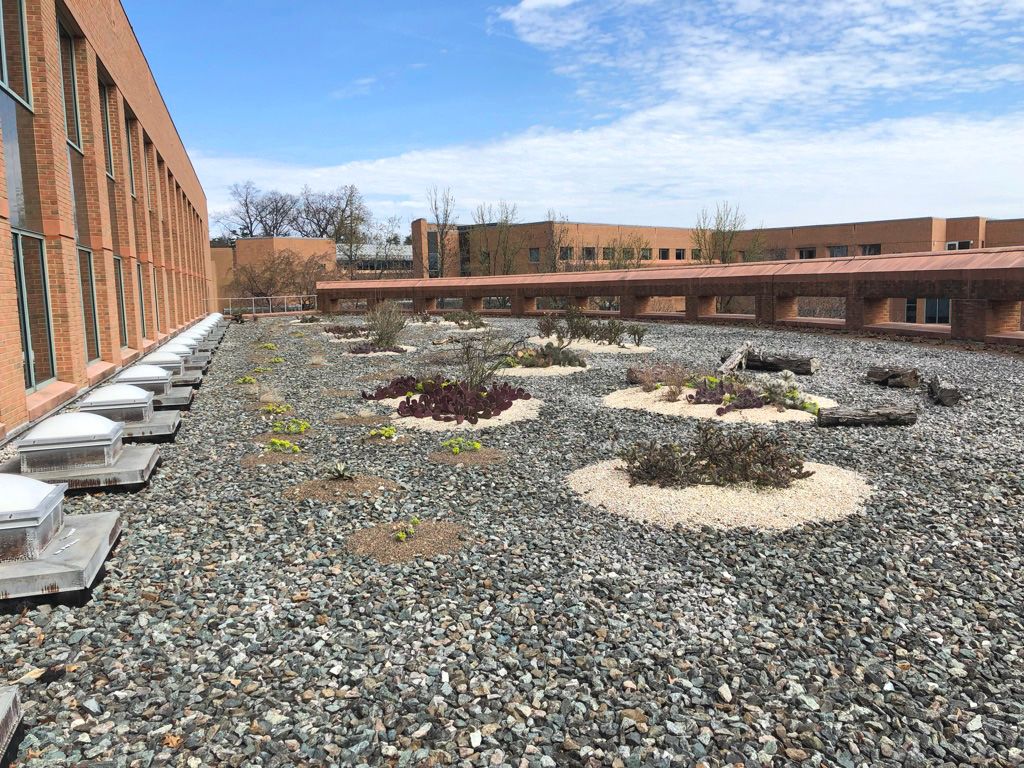
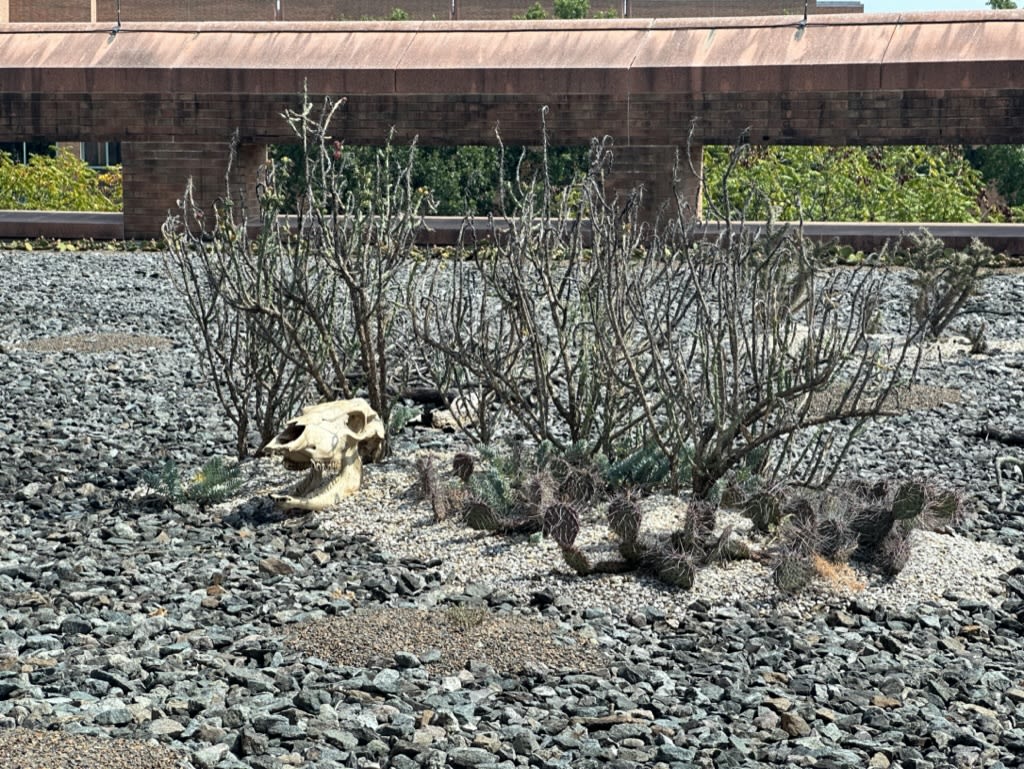
Sitting atop the Cafeteria, the Cactus Roof is the result of creativity in the face of budget and time constraints. Established in 2018, the concept was to create a green roof without removing the existing ballast, but rather utilize it to grow plants, significantly reducing the cost and effort of the endeavor.
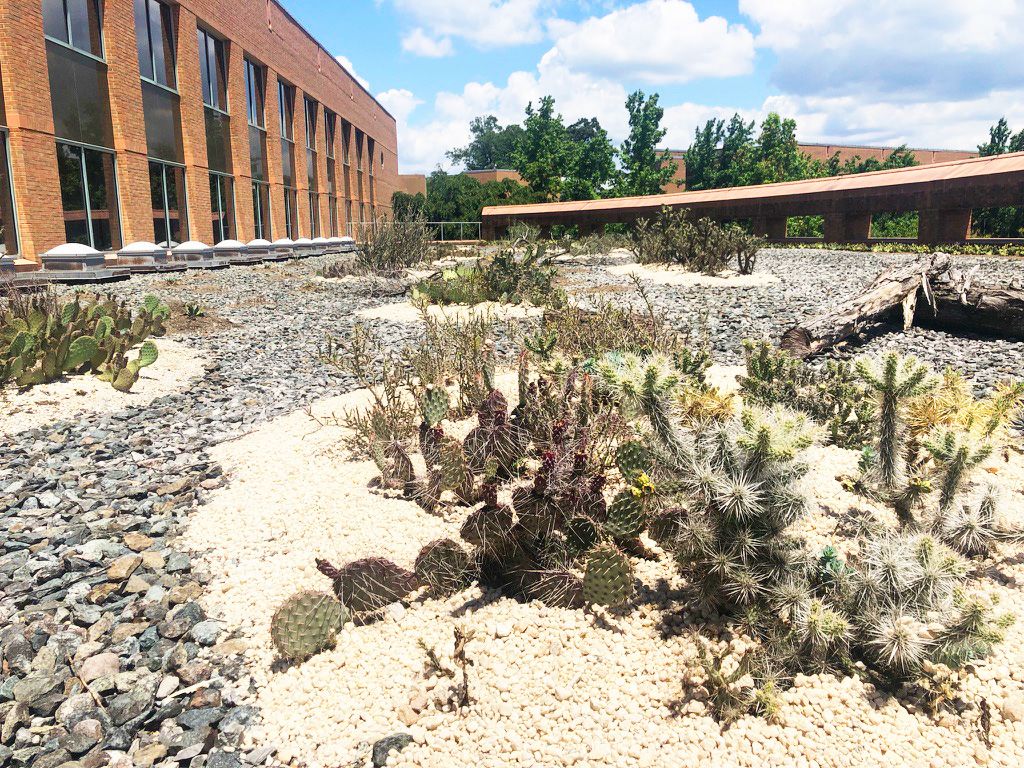
The Cactus Roof is designed to mimic the dry deserts of the West. Buff-colored pea gravel sets the stage, along with woodfall harvested from campus. A variety of cacti native to the high desert plateaus of Colorado, Utah, and Arizona was planted to mimic the environment, along with accents of aloe, euphorbia, and agave.
Enjoy what is likely to be the largest outdoor cactus collection for hundreds of miles.









Horticulturist's Tour
Listen to NFATC Horticulturist Darren DeStefano talk about how budget and time constraints forced him to get creative with the Cactus Roof.
Select the play button to listen to the audio as you follow along with the transcript below.
So this is the Cactus Roof. It’s the only true guerrilla garden on campus.
I really wanted to create a green roof on this space, but I was never able to derive the budget or convince anyone that it was a great idea. So, I set about trying to do it myself, by being creative.
So, in taking on the roof of the Cafeteria, I was reaching the end of my contract tenure on the site, and I had developed a relationship with Dominique Bain, who was with the Denver Botanic Garden(s). And we had talked for years about doing cactus roofs—roofs that have almost no maintenance requirement and no alteration from their current condition. The concept was to use cacti and to spread them out like you find them in their natural environment, and to actually use a whole bunch of different species that come from the high desert around Denver and Utah—Colorado and Utah—and see how well they would perform in Washington.
(Scroll to follow along with the audio.)
All of these plants were sent to me in a box. They were just cacti where pads had been just broken off, and then they were allowed to callus, and then they were shipped to me in Washington. And I got some bags of pea gravel and went out on the roof and poured around the pea gravel and slid in these cactus pieces.
After that, it was really just time and Mother Nature. See who was going to survive and if this concept had any merit. And in order to give it more of that desert feel, I thought I would incorporate a bunch of woodfall. So, I went around campus and gathered up different branches and sticks, and I hauled them up on the roof with ropes and I created a little scene out of it.
I really only saw the cactus for about six months, and then I was gone for two years. And when I came back, perhaps no garden had flourished as much under the sheer neglect of my absence as the cactus. It was really remarkable to see how much they’d grown and really how attractive the planting actually was, and how unusual. You know, that’s what I really like about it—is its novelty.
It’s probably the largest collection of cactus for a great distance. I mean, there are Cylindropuntia and Opuntia; there’s agaves and Hesperaloes. I mean, it is a fascinating collection of these species, and they produce these really dramatic flowers. I mean, when they flower, when the desert blooms, it really is spectacular to behold.
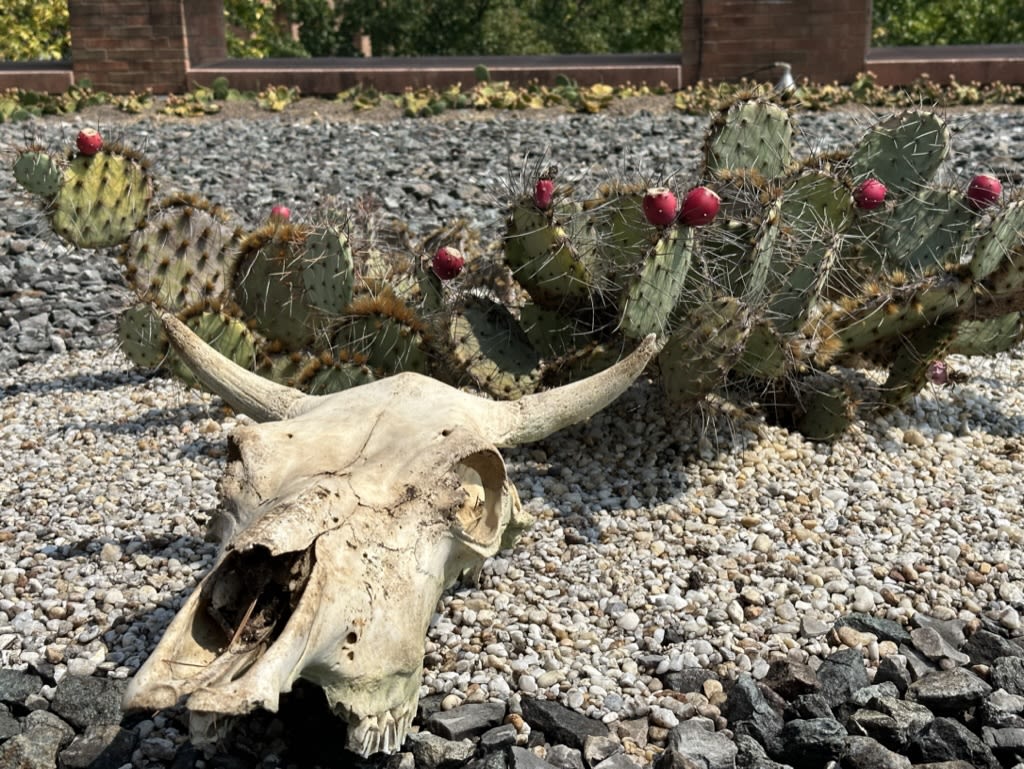
And you get the added benefit that they all produce fruit. Most of them are prickly pear, and they produce this really attractive fruit that’s quite persistent and is ornamental in its own right. I also really appreciate how the needles catch the light—that’s truly the beauty of a cactus. It’s actually in how the needle—the spine—can capture the incoming light and produce a halo around the plant. And they almost look, you know, like they’re a vision from a distance.
In reality, it was a crazy idea, but it was executed with nickels and dimes. It was something that was really off the wall and had no precedent for. And it was a real test balloon to put it out there and be like, 'Hey, if you’ve got a very low budget and you’ve got a roof that you do not have the ability to get the ballast off and convert to a green roof, is there a way to still get something out of it?'
And while it doesn’t have the same ecological benefit as a true green roof where the sponge absorbs all of the rainwater, you get this aesthetic benefit. And that aesthetic benefit can be significant. I mean, if you’re in a situation where you’re looking out that window and there’s nothing but a kind of brutal gray gravel, that doesn’t pick you up in any way. Whereas walking down that corridor and looking out the window and watching this desert scene kind of pass you by—it’s quirky.
Featured Plants

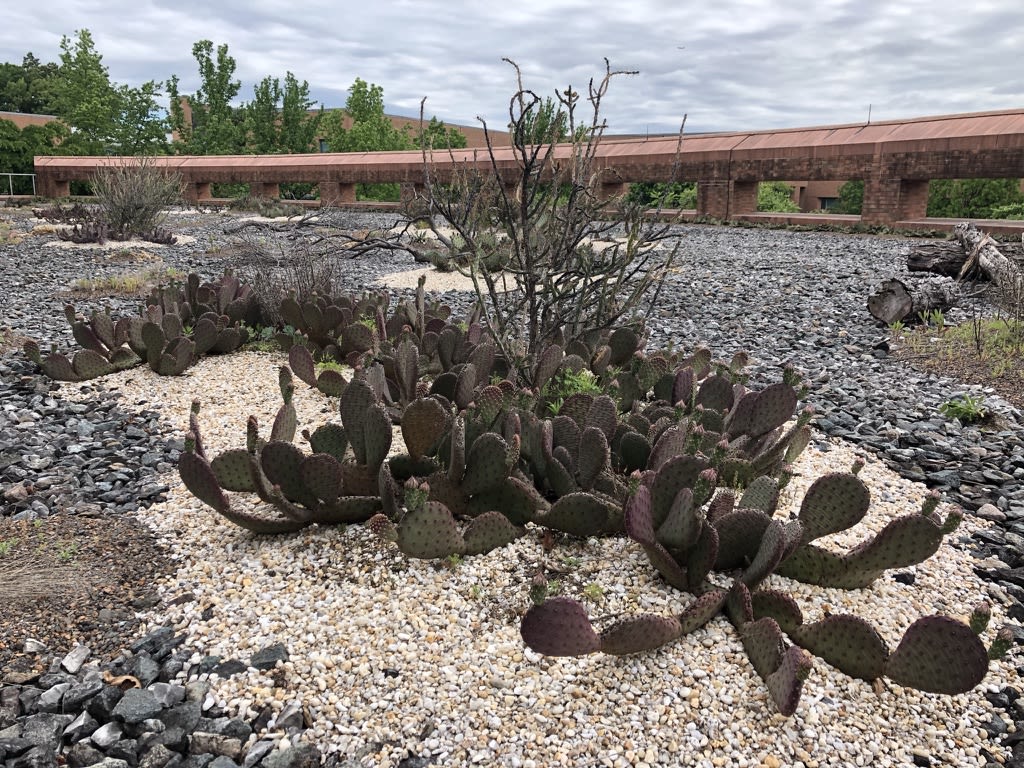
Prickly Pear ‘Coombe’s Winter’
Prickly Pear ‘Coombe’s Winter’
Prickly Pear ‘Coombe’s Winter’
(Opuntia aurea)
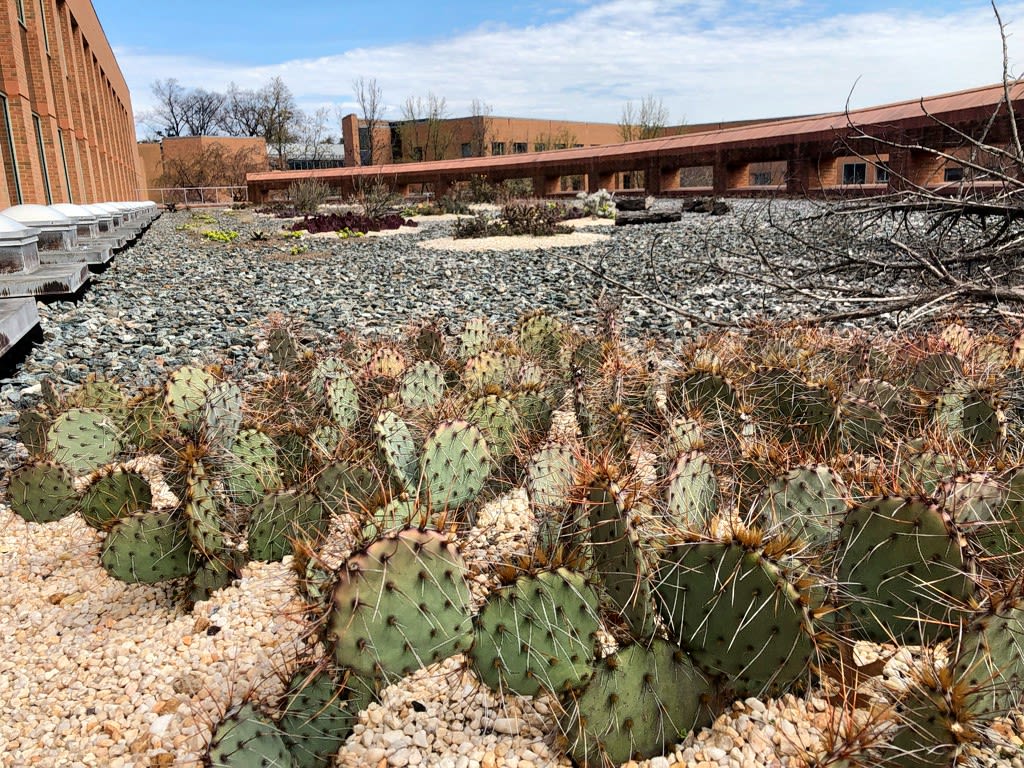
Prickly pear is in the cactus (Cactaceae) family and is native to high altitudes of southern Utah and northern Arizona.
Prickly pear are grown for the paddles (or nopales) and fruit (or tunas), which are consumed as food. They are also used to cultivate cochineal, a scale insect, to produce crimson-colored dye, a highly prized product in the cosmetic and food dye industries (think Campari).
It is featured on Mexico’s national flag. It is also considered one of the world’s worst examples of an invasive species, as is the case in Australia.
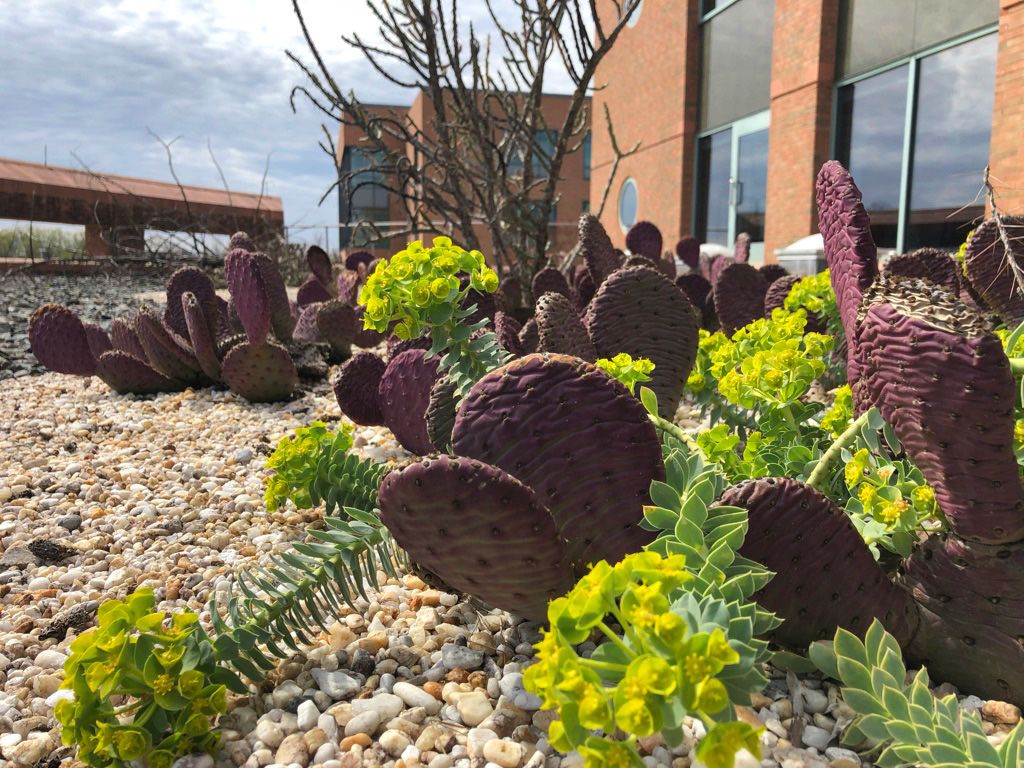
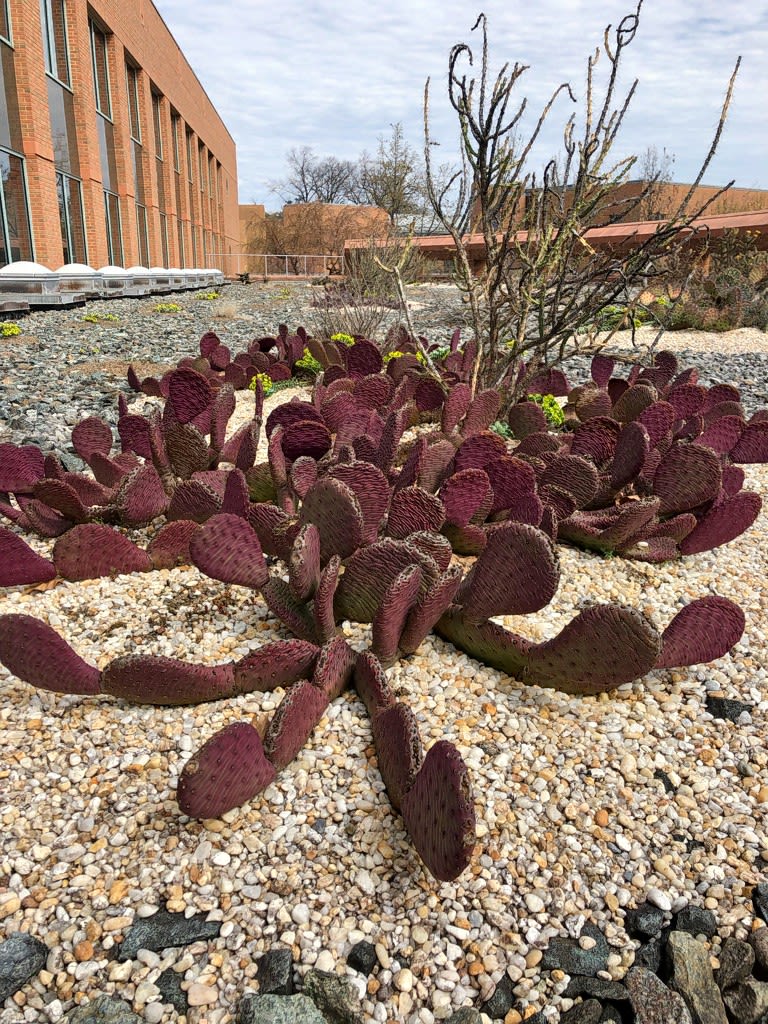
Prickly pear generally flowers yellow, but the selection on the Cafeteria roof, ‘Coombe’s Winter,’ produces magenta blossoms in late spring. Its pads turn a deep purple in the winter months.
Through the Seasons
Select each of the images below to zoom in and learn more.
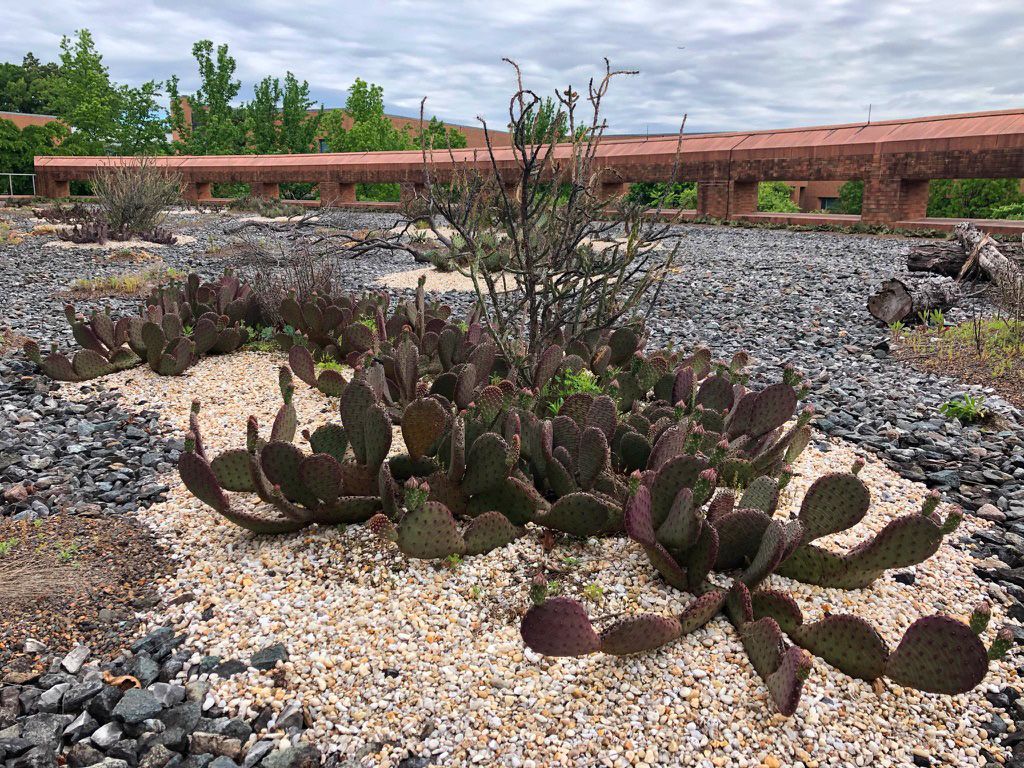
An outside view of the Cactus Roof
An outside view of the Cactus Roof
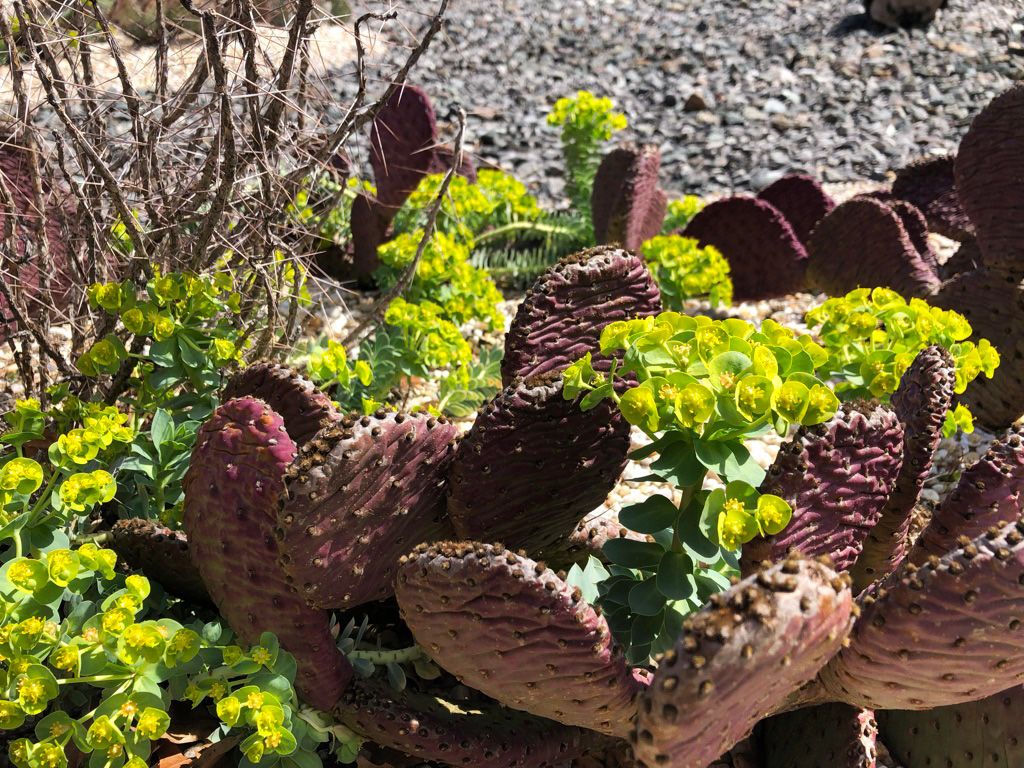
Blooming euphorbia mixed in with prickly pear showing its purple winter color
Blooming euphorbia mixed in with prickly pear showing its purple winter color
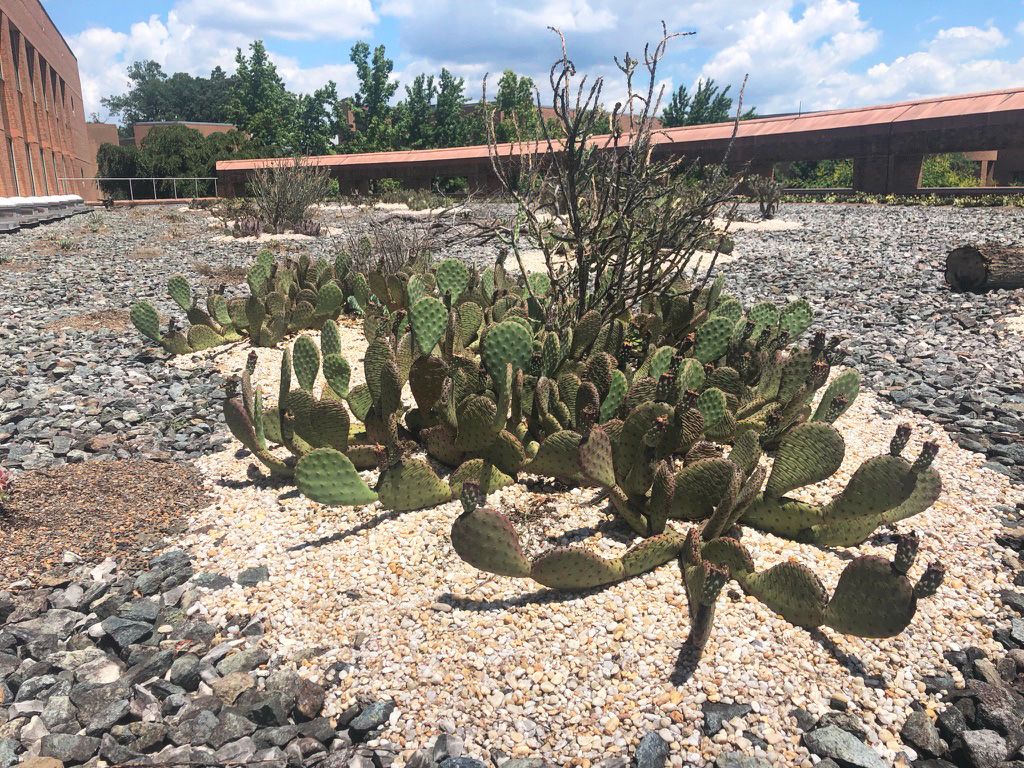
Prickly pear when colored green
Prickly pear when colored green