
Russell's Knoll
The Grounds at NFATC
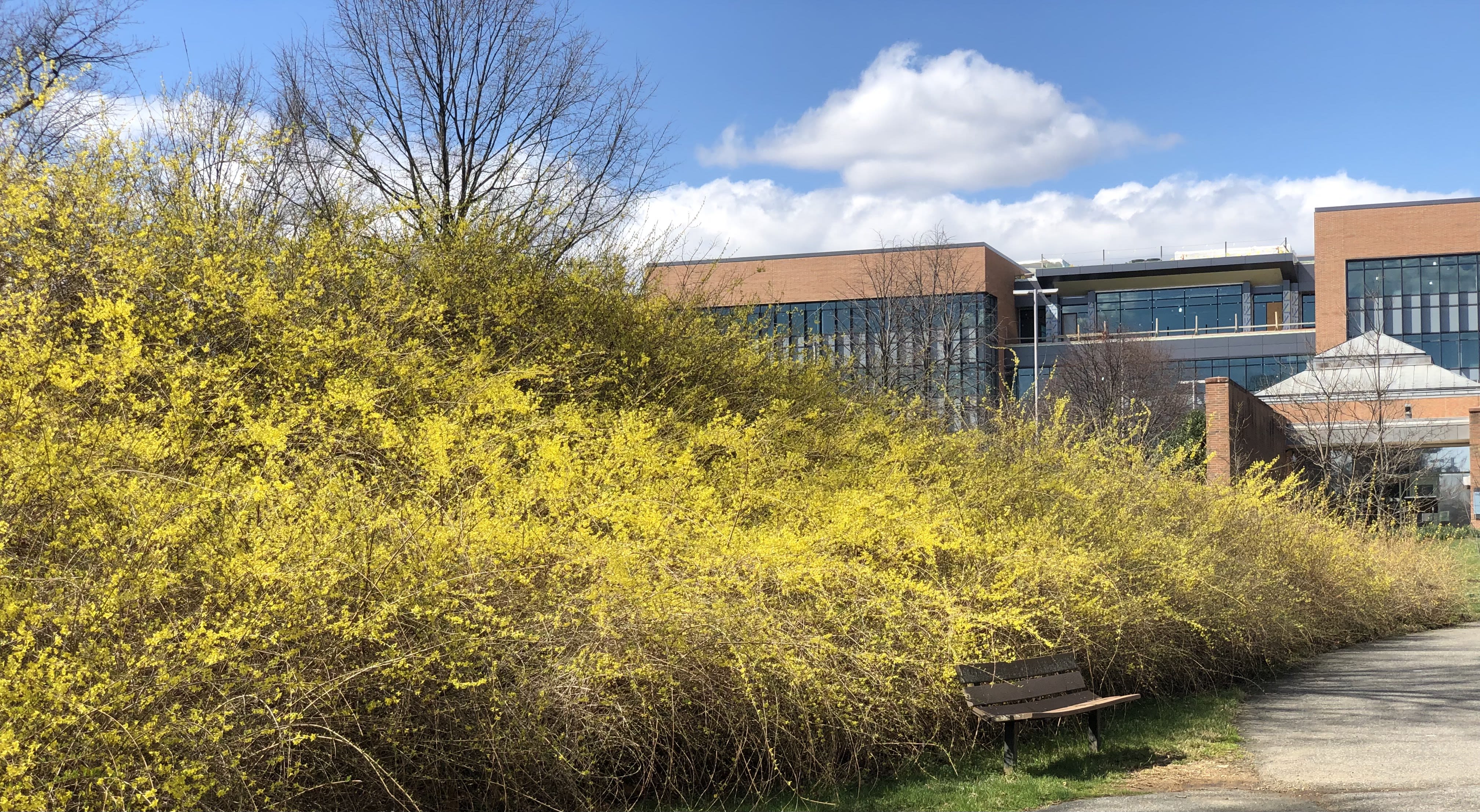

This garden is named after former NFATC Executive Director Catherine Russell, who requested that this historic slice of campus be retained when NFATC was being constructed.
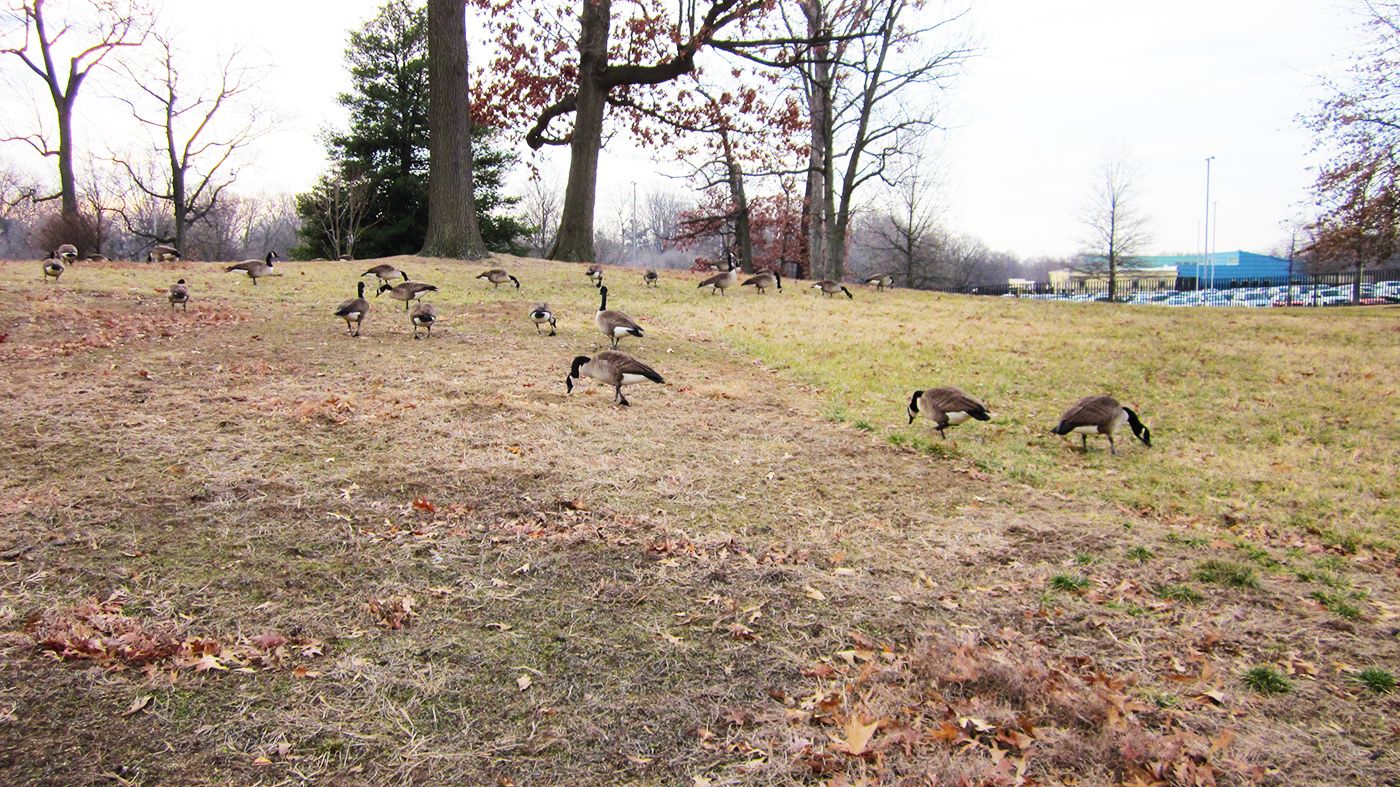
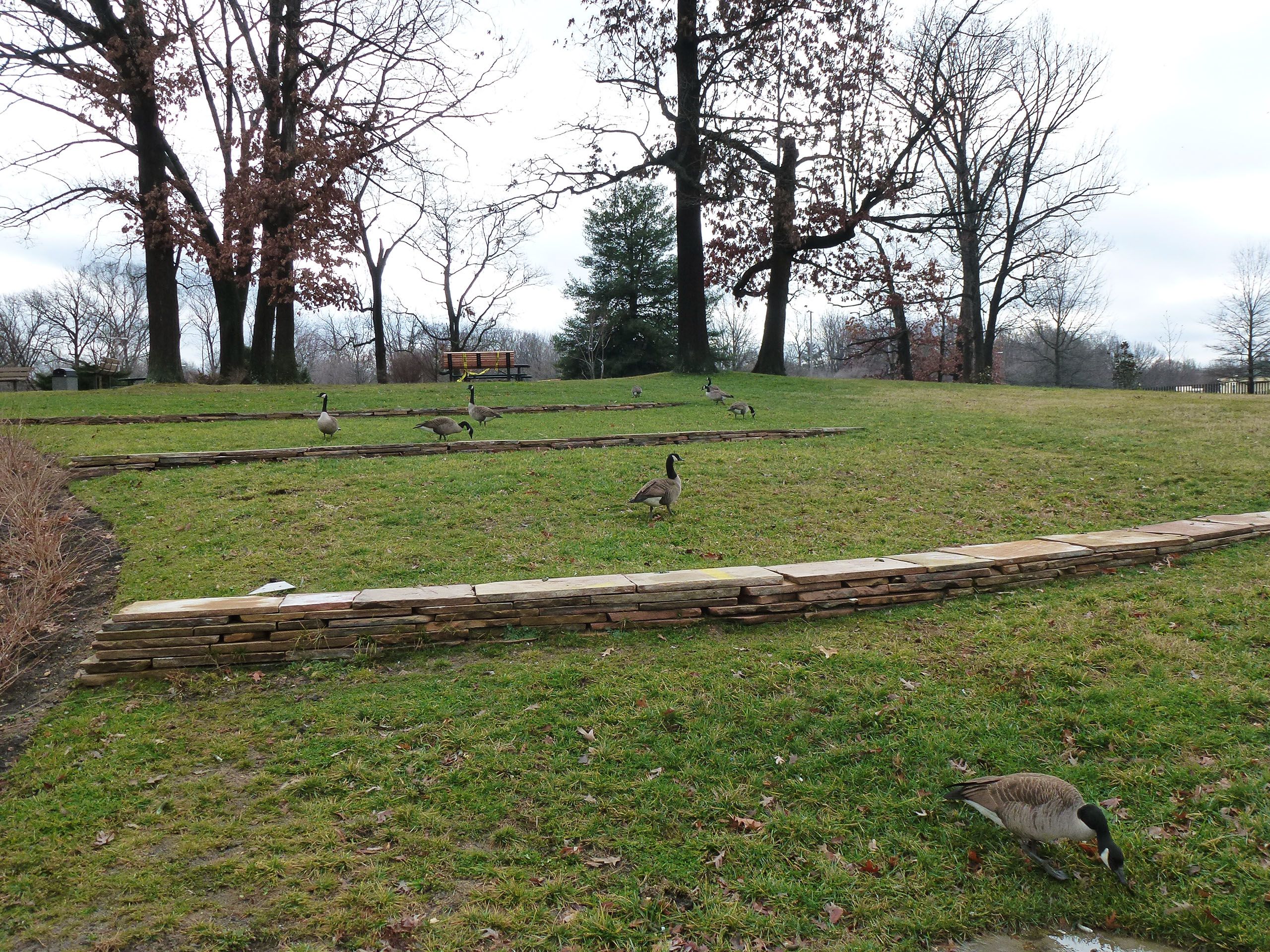
The gently graded western slope invites you to climb up Russell’s Knoll. At the bottom, in springtime, you’ll see a sea of yellow, with blooming daffodils on the western slope and a mass of forsythia on the steep north slope. Going up, there are three terraces dividing the hill. These were created with reclaimed flagstone used as a parking lot for 40 years at Navy Hill. (Look for the yellow stripes on some rocks.)
Trees and landscape plantings from previous eras await at the top: a group of mature oaks, including the finest red oak on the property, as well as American hollies and juniper. There, the Knoll offers the best views on campus, making it perhaps the most visited landscape feature at NFATC.







Horticulturist's Tour
Listen to NFATC Horticulturist, Darren DeStefano, talk about designing new additions to build on and complement the historic character of Russell’s Knoll.
Select the play button to listen to the audio as you follow along with the transcript below.
This is really a lesson in how not to mess things up—how to leave well enough alone and enjoy what you really have.
This is the Knoll. It's actually a small piece of native topography that was retained on the campus by Cathy Russell, who was the EX Director when the campus was being constructed in 1991. It's this small rise on campus and, it was cut into deeply by the construction of the K Building, which created this steep north slope. But at the same time, it created an overlook where you can look out across the campus green.
(Scroll to follow along with the audio.)
But the prize of the Knoll is really the great trees that are atop. I mean, it's the best red oak on campus as well as a gathering of an old juniper and a couple old hollies. These are all plantings that predated any development on the site. And you really feel that presence when you're up there.
For my part, it really is the power of a line. Right? How to take this native piece of topography ...
... and then just add a small line of stones—actually, three—in order to define the western slope and frame it in a way that makes it appealing.
The stones were actually collected from Navy Hill. They were a patio, a grand patio, you know, constructed a hundred years ago that had been converted into a parking lot in the 1960s. And you can still see the striping on some of the rocks. And for me, that is really the whole, the whole design. After that, it was just planting.
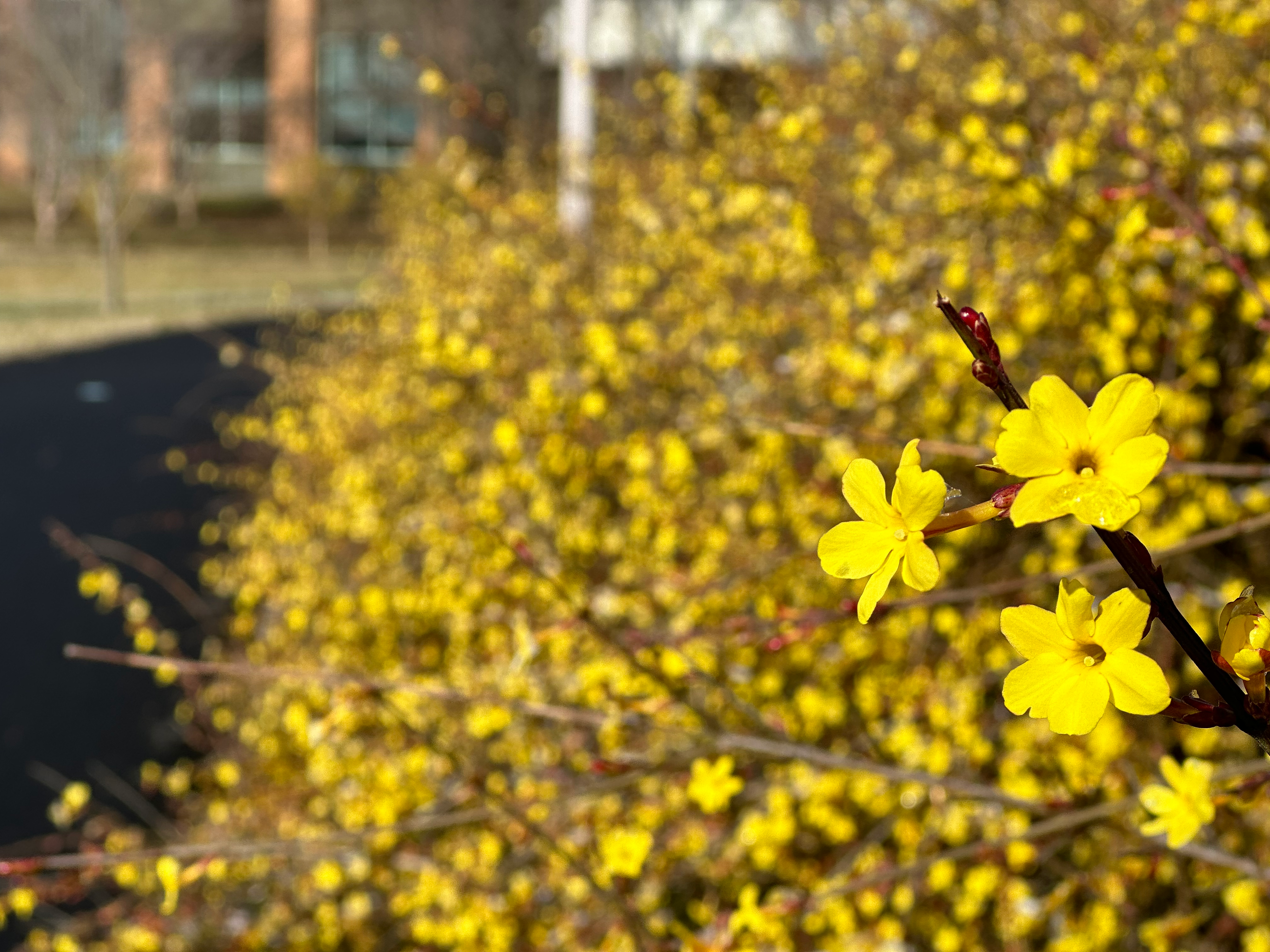
I focused it for a spring event, so it has a lot of yellow flowering early plants. I tattooed the whole northern slope with as many forsythia as I could manage to acquire, and I planted the grass with just thousands and thousands of narcissus.
Some of that was coming out of my, I mean, visitations to gardens like Dumbarton Oaks or some of the great estates of Europe, like Gravetye (opens in a new tab), where the bulbs are just sown directly in the grass, and you leave that grass to grow and then come, you know, towards the solstice, June 21, you cut it all back, return it to lawn.
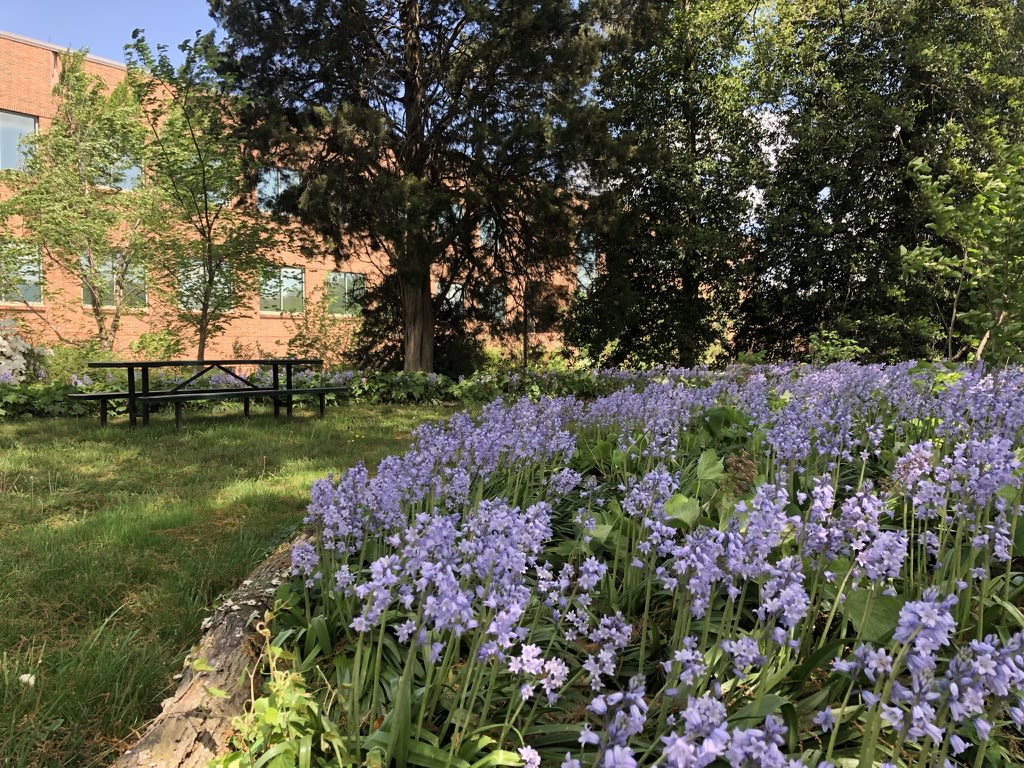
And I think for anyone coming to campus, it's a nice place to sit and take some shade, take a break, meet with friends. I think it was really a wise call to not just concentrate all of the retained space over in the historic district, but to keep this little island because it, in the end, it feels special.
Featured Plants

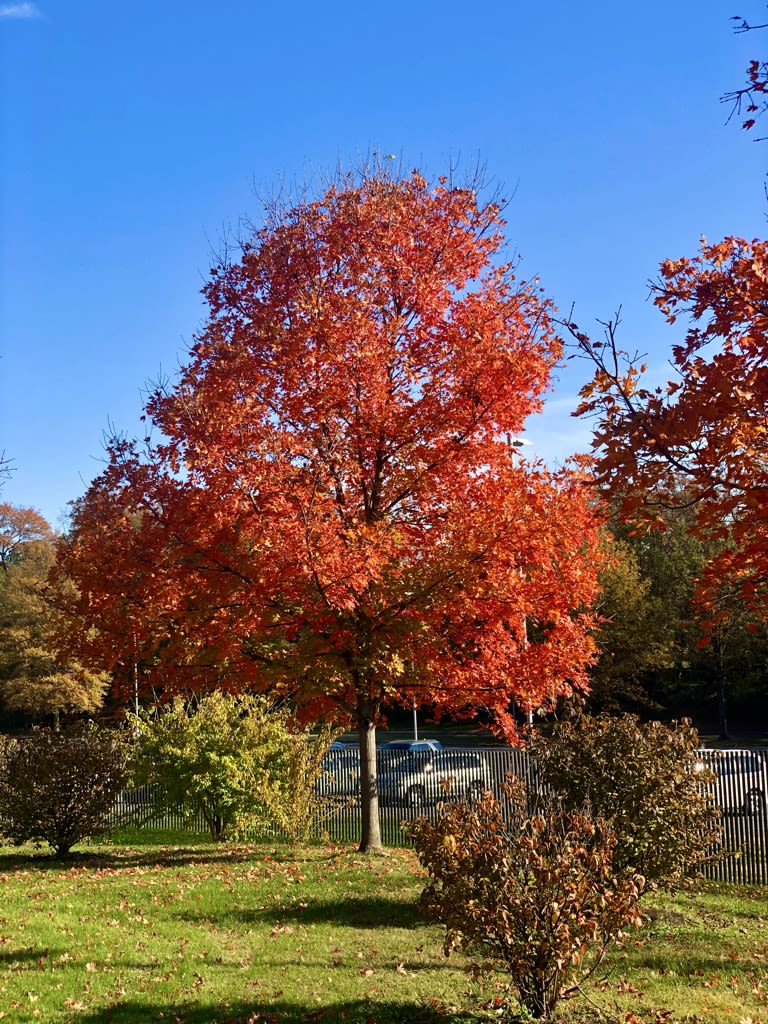
The brilliant fall color of a sugar maple
The brilliant fall color of a sugar maple

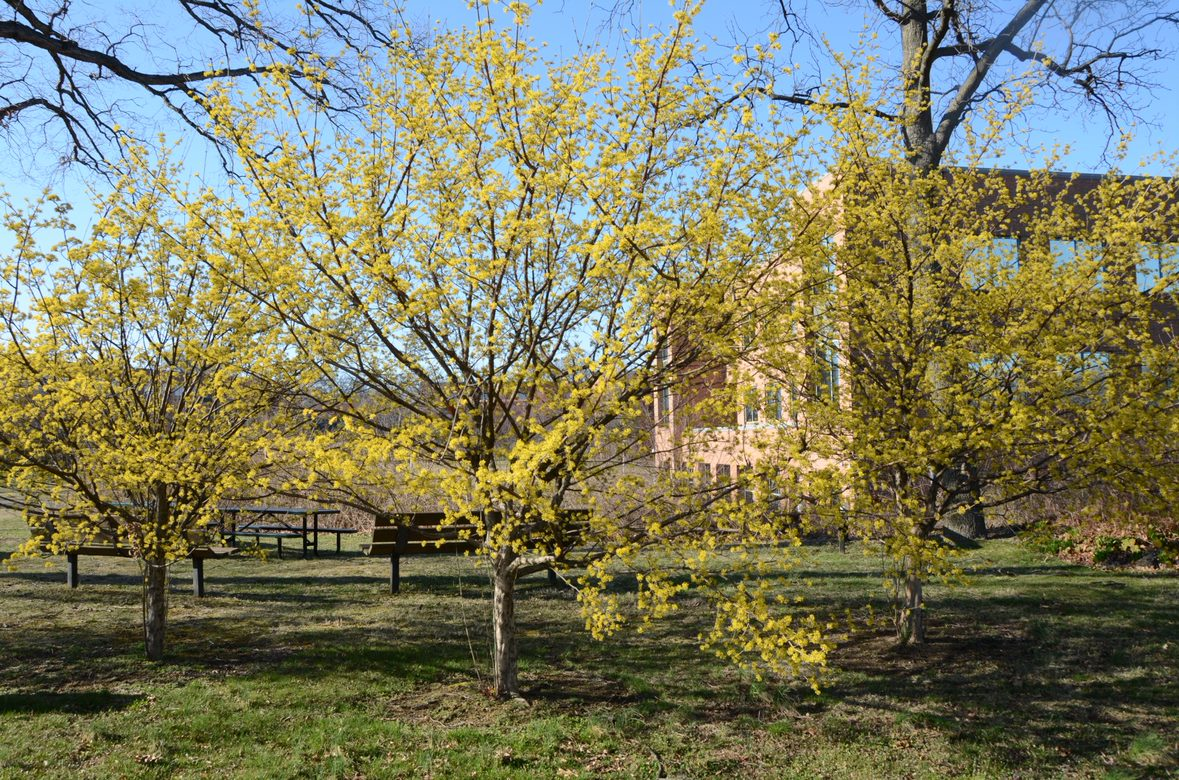
Asian Cornelian Cherry
Asian Cornelian Cherry

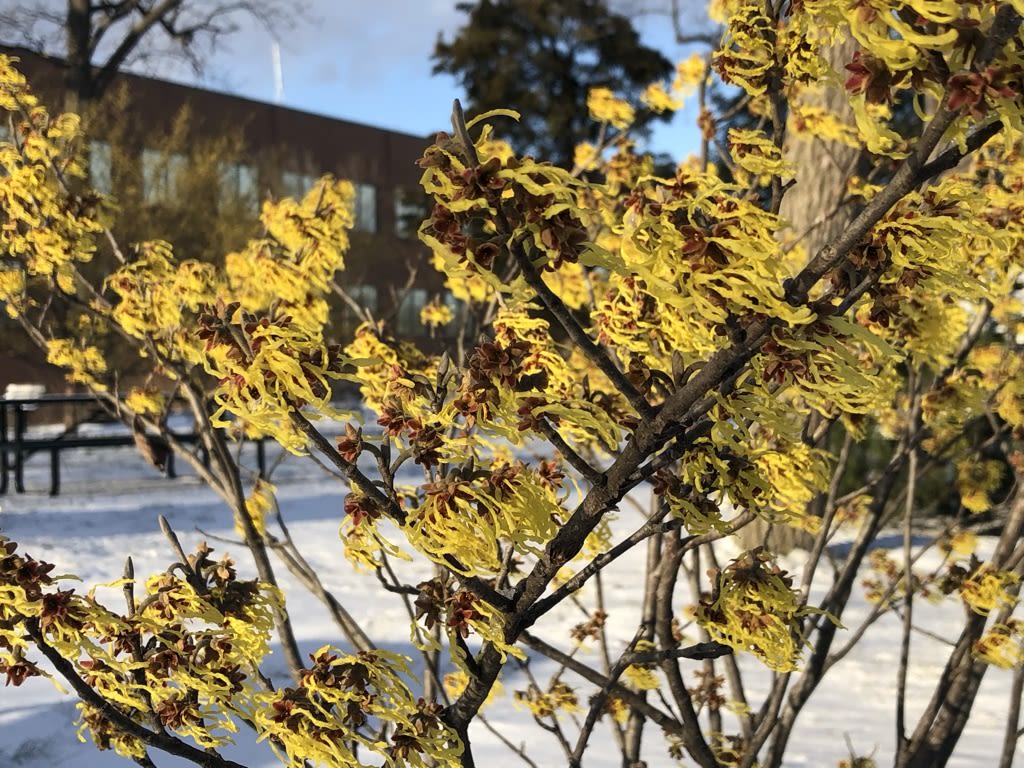
Witch hazel in winter
Witch hazel in winter

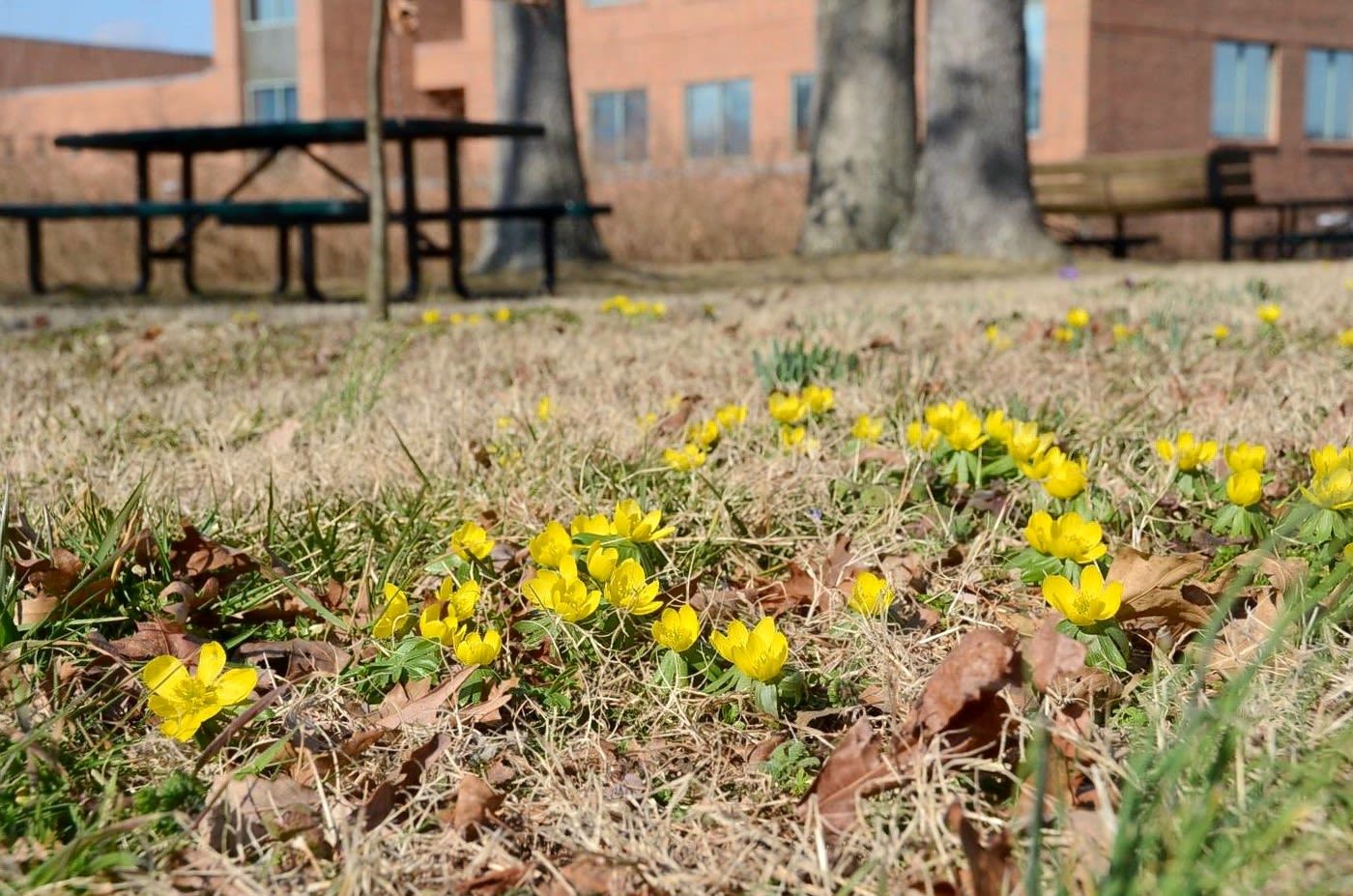
Winterling
Winterling
Sugar Maple
(Acer saccharum)
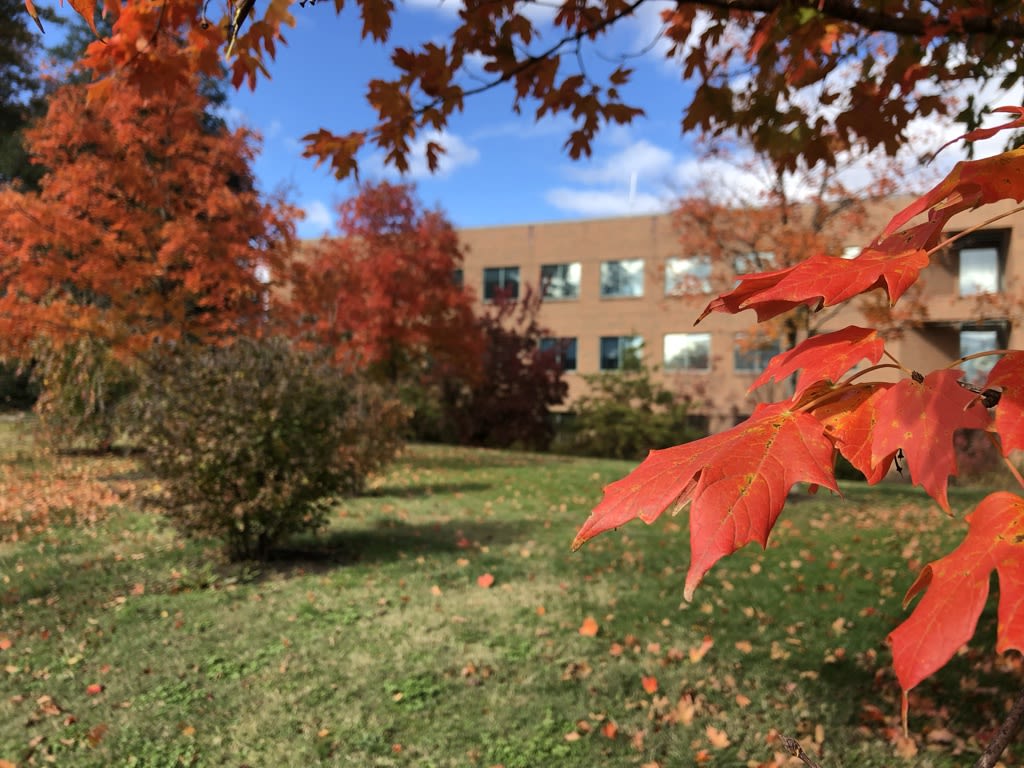
There is simply no better tree for fall color than a sugar maple. These large deciduous trees are native to the northeast of North America, where they are a significant component of forests.
Their unmistakable palmate leaves glow like embers in the fall in vibrant shades of orange and red. They are what make autumn in New England brilliant. Insignificant flowers burst before forming leaves in the early spring and yield seeds in pairs of samaras—seed pockets shaped like a biplane propeller—which begin to whirl down from its fine shade canopy in summer.
Tapping the trees was perfected by native people, who prized the sugary syrup that now underpins today’s lucrative maple syrup industry.
Instantly recognized by the world as the symbol of Canada, the sugar maple is a true species of distinction. The cultivars ‘Green Mountain’ and ‘Bonfire’ have been planted at NFATC since 2007.
Asian Cornelian Cherry
(Cornus officinalis ‘Morris Arboretum’)
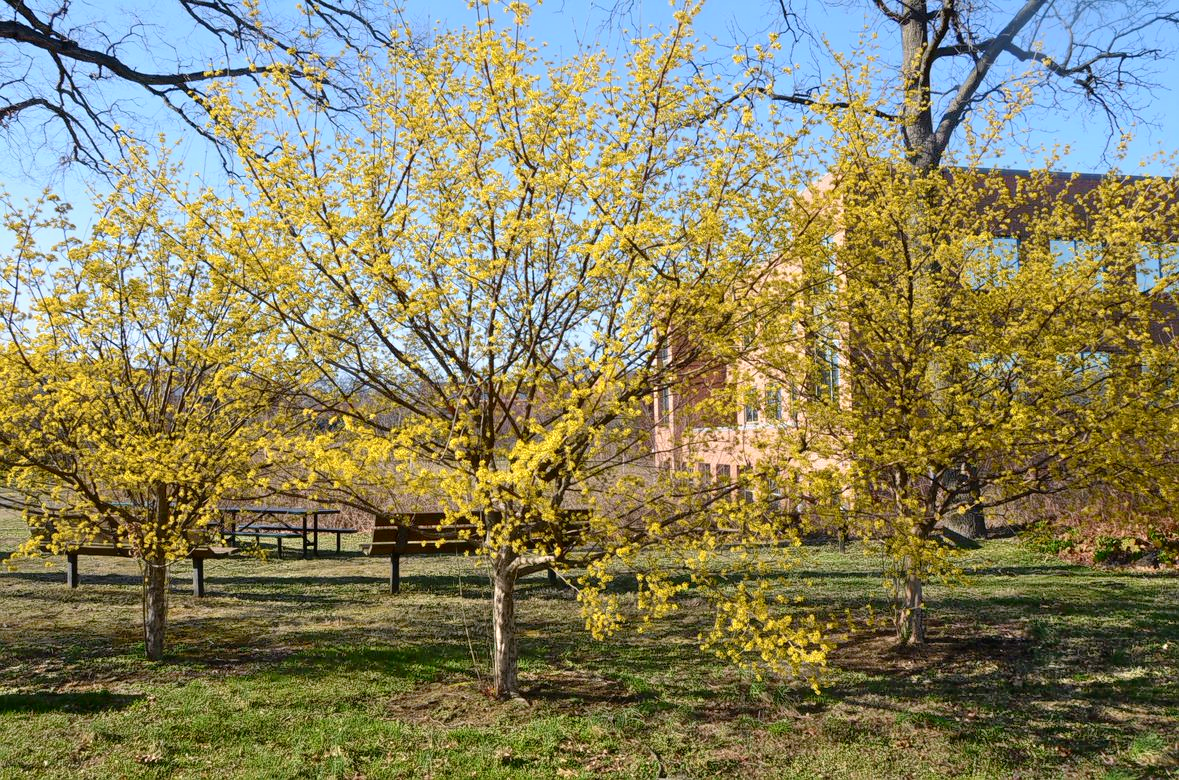
Asian Cornelian cherry is the earliest blooming member of the dogwood family and comes from China, Korea, and Japan. A small-stature tree with attractive exfoliating bark, it bursts into yellow blossom in early spring and holds its display without leaves for weeks.
This tree is not commonly found in the trade. The specimens at NFATC were obtained in 2008 from the breeding block of Princeton Nursery, New Jersey, just prior to its demise after over 100 years of operation.
The cultivar ‘Morris Arboretum’ is named after the University of Pennsylvania arboretum and was introduced by Rick Lewandowski of the Mt. Cuba Center.
Witch Hazel
(Hamamelis x intermedia, ‘Arnold Promise’)
‘Arnold Promise’ is a witch hazel of hybrid origin with yellow strap-like flowers that bloom in late winter and have a spicy fragrance. While they are the ultimate early bloomer, the plant also exhibits a rich red and orange fall color and vase shape habit that make it an asset year-round.
The cultivar ‘Arnold Promise’ was the result of inadvertent cross-pollination between Chinese and Japanese species collected at Harvard’s Arnold Arboretum in the 1920s. Subsequent selection of the progeny in the 1950s led to the most successful plant introduction from the storied institution.
Witch hazels are best planted where they can be enjoyed from an interior window as they portend spring and beckon us to come outside. The specimens on Russell’s Knoll were planted in 2018.
Winterling
(Eranthus cilicica)
Winterling is a very early blooming member of the buttercup family and native to forested mountain slopes in central Asia, especially Turkey. Its bright yellow flowers open with the late morning sunshine where they welcome the first bees of the season and close at dusk.
The plant forms tubers that spread over a period of years to form colonies when sited correctly, generally under the dry shade of mature trees. It packs a potent toxin, protoanemonin, which protects it from herbivory.
The winterlings on Russell’s Knoll were planted in 2015 and have been gaining ground since.
Through the Seasons
Select each of the images below to zoom in and learn more.
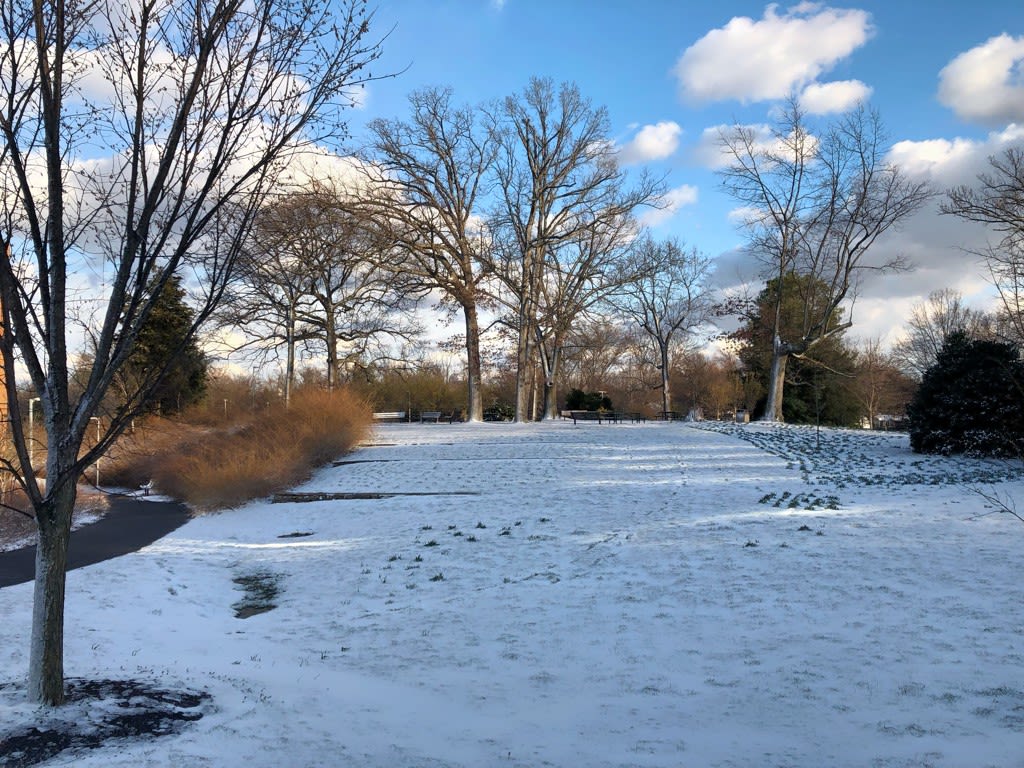
Russell's Knoll in winter
Russell's Knoll in winter
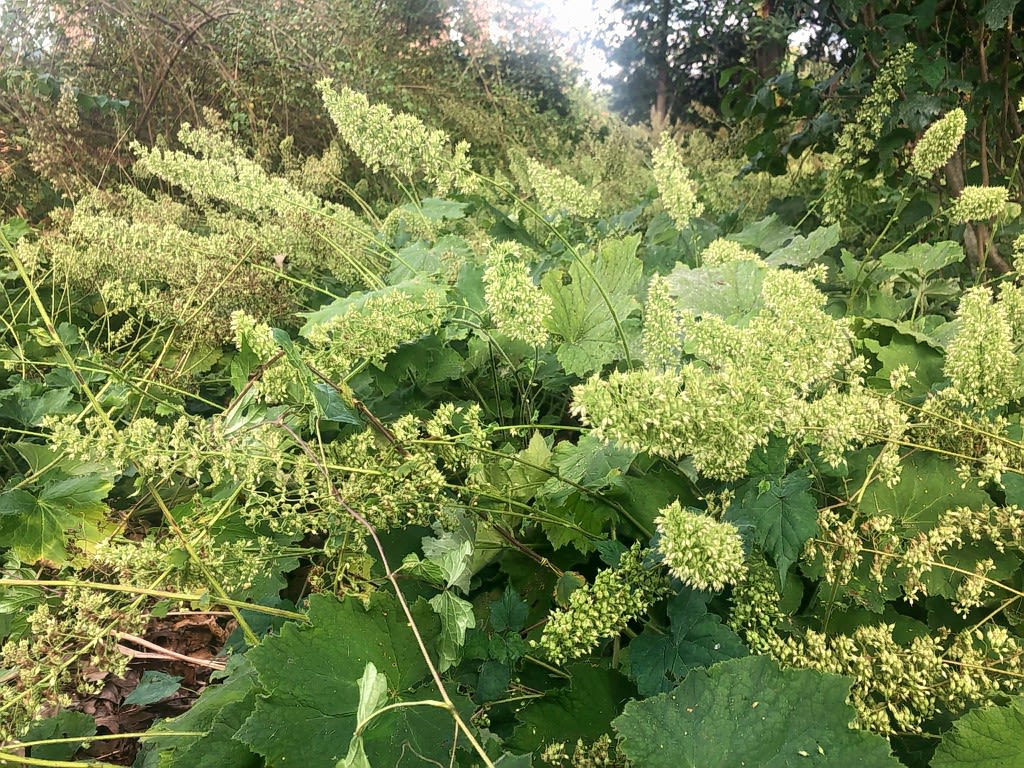
Coral bells (Heuchera villosa 'Autumn Bride')
Coral bells (Heuchera villosa 'Autumn Bride')
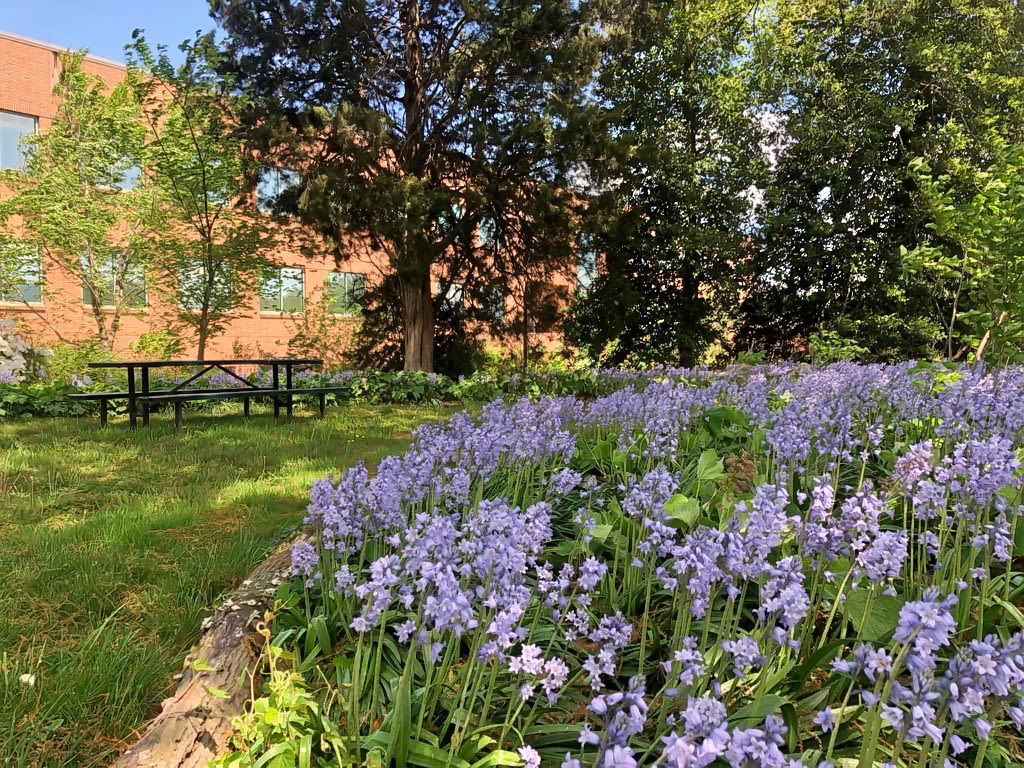
Spanish bluebells in bloom
Spanish bluebells in bloom
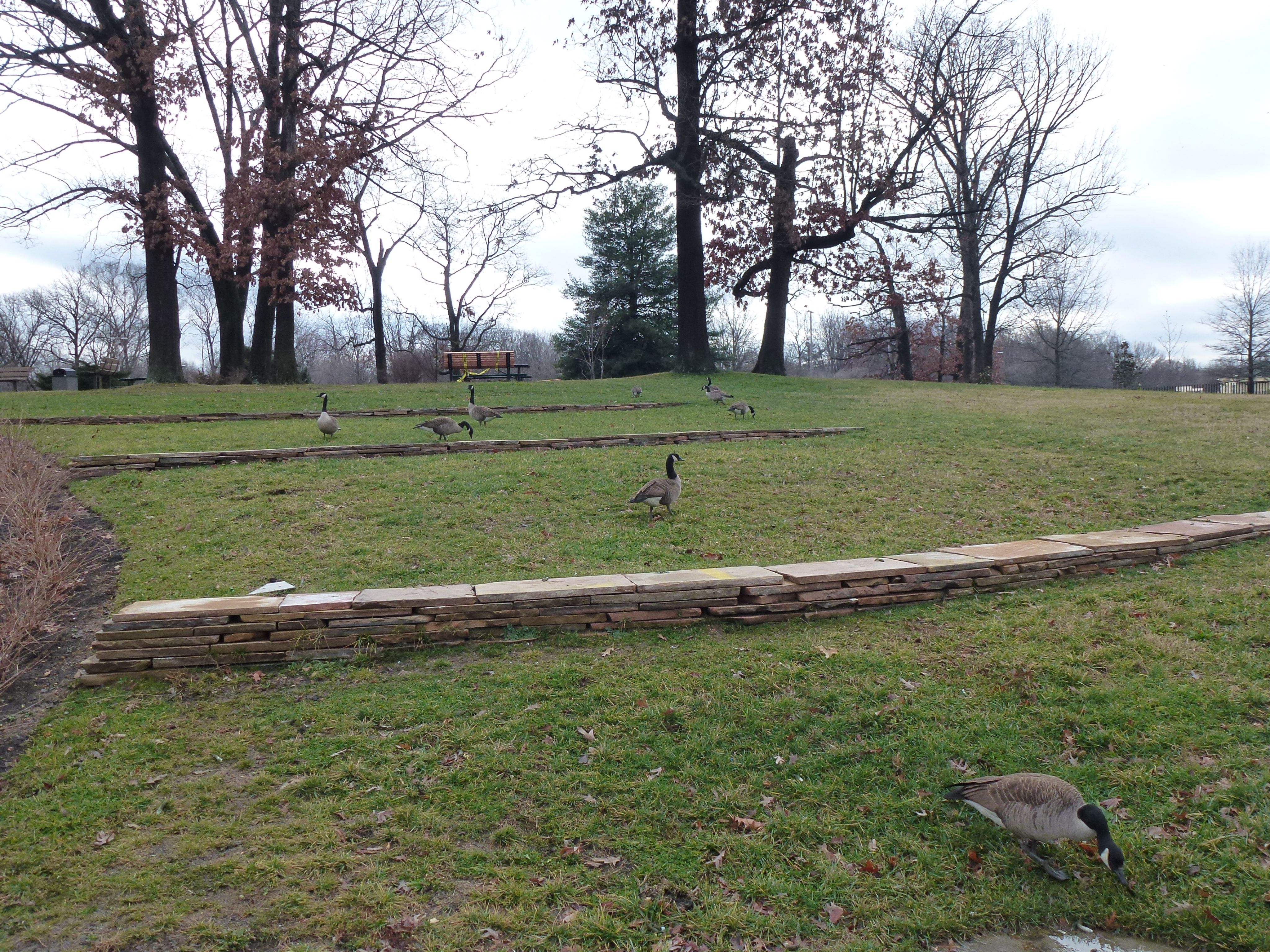
Reclaimed stones used for terraces
Reclaimed stones used for terraces

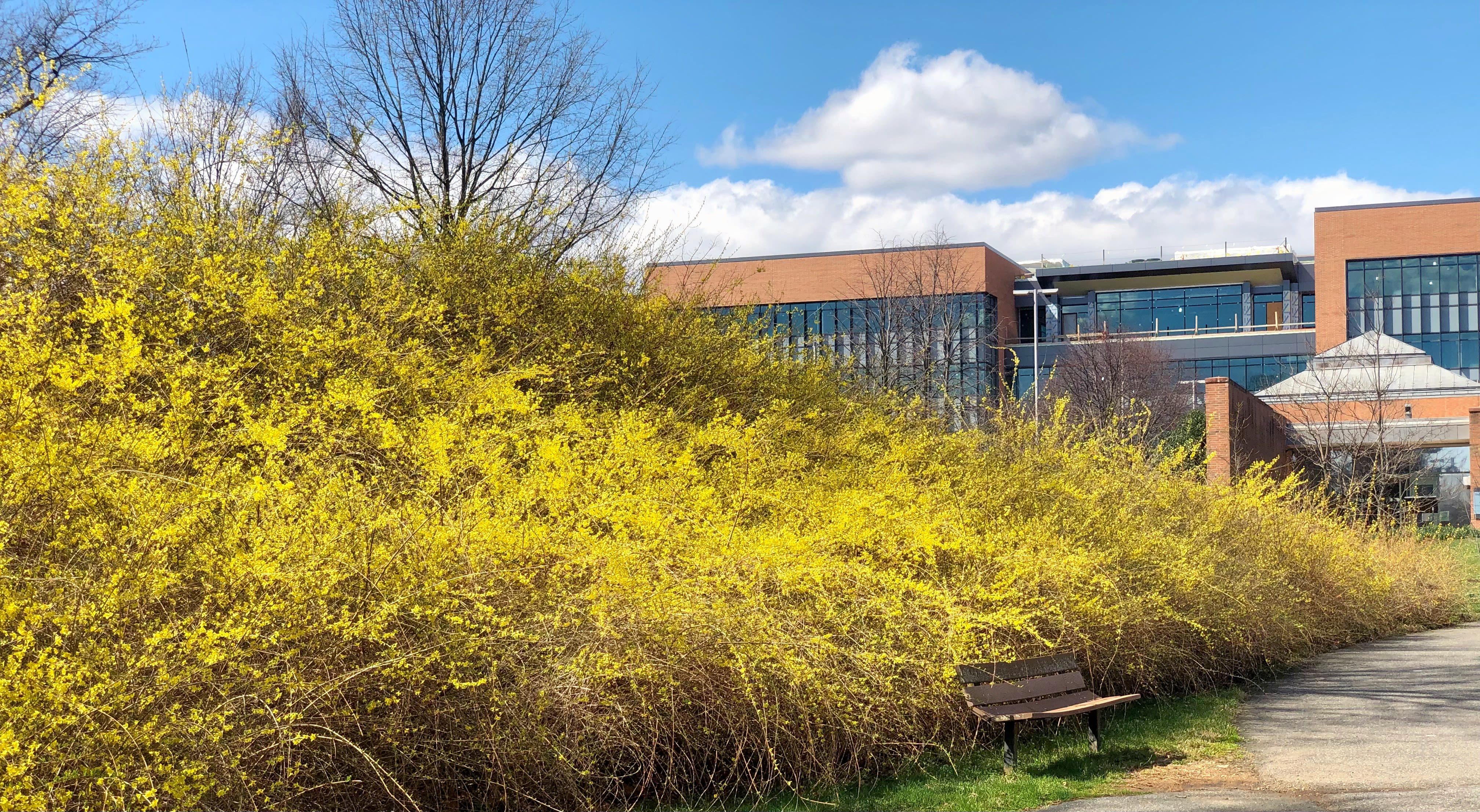
Forsythia blooming in early spring
Forsythia blooming in early spring

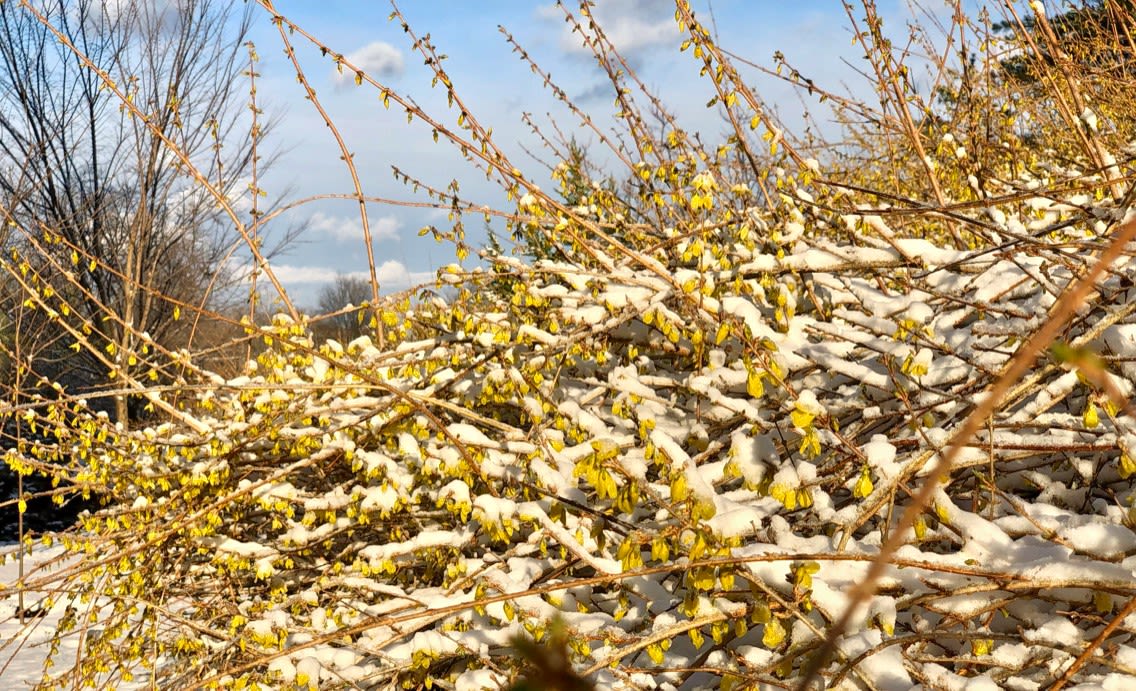
Forsythia in late winter
Forsythia in late winter
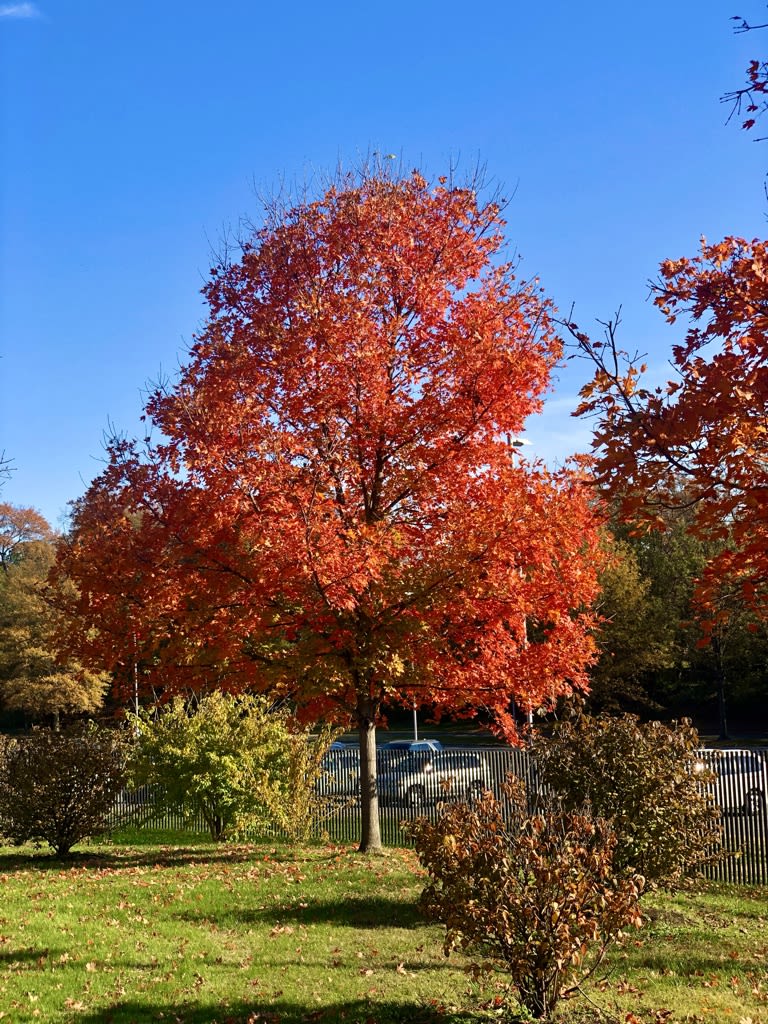
The brilliant fall color of a sugar maple
The brilliant fall color of a sugar maple
Through The Years
The entirety of Arlington County was included in land grants from the British Monarchy in the 17th century to Thomas, Sixth Lord Fairfax of Cameron, and Henry Bennet, Earl of Arlington. The Shultz Center sits close to where these two land grants met. George Washington surveyed the whole area in 1775 and, in 1791, encouraged its inclusion in an amendment to the Residence Act, making it part of the new capital city.
Through the end of the 19th century, the property was primarily rural farmland. As early as 1890, farms near the Shultz Center’s present-day 72 acres were being subdivided to build houses. The Shultz Center is based primarily on land from the Alcova Estate that became the modern-day Alcova Heights Community, with the West Parcel being in the Barcroft Community.