
The Paleogarden
The Grounds at NFATC
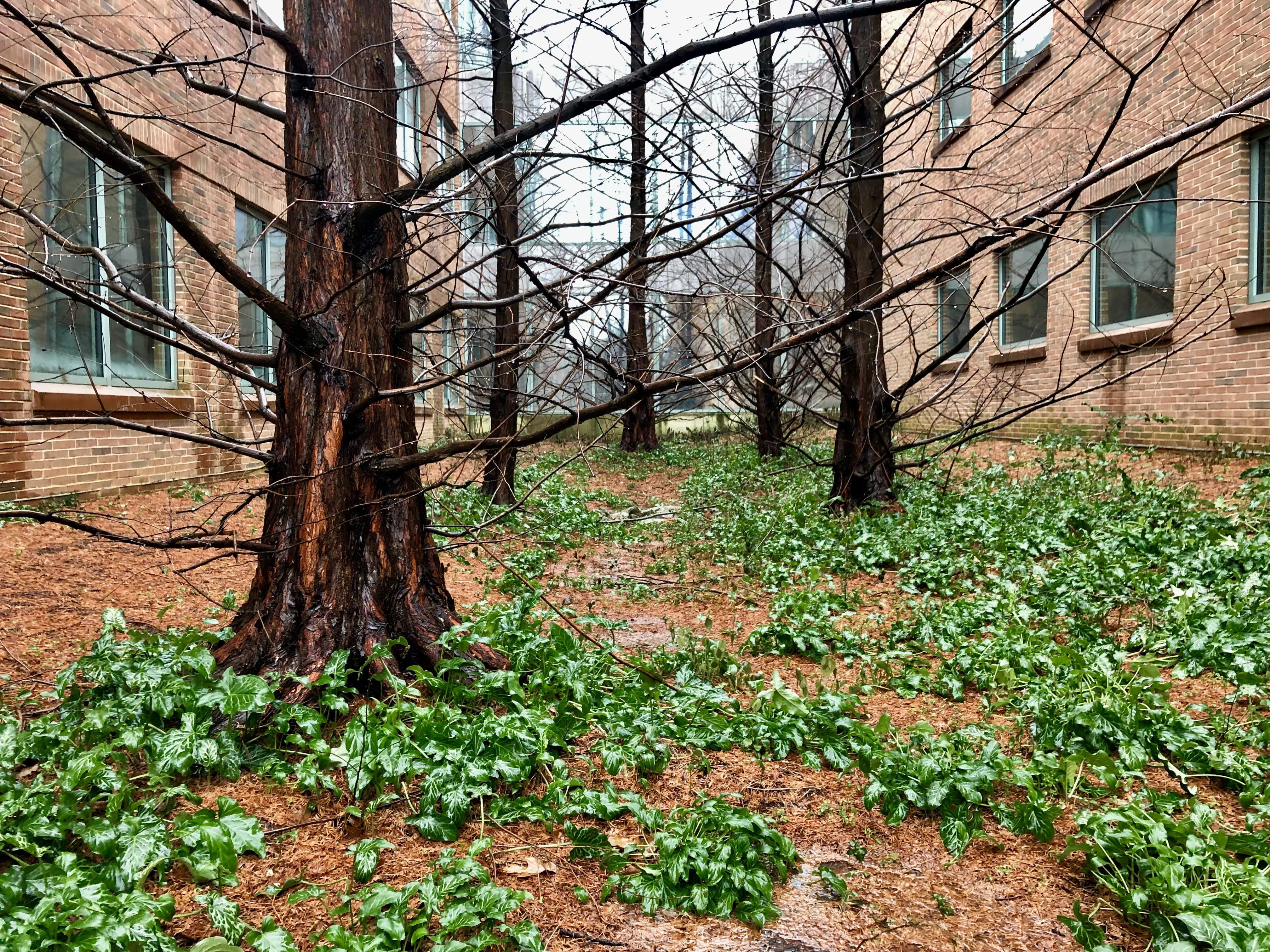

Step back in time as you look at several species of plants that date back to over 150 million years.
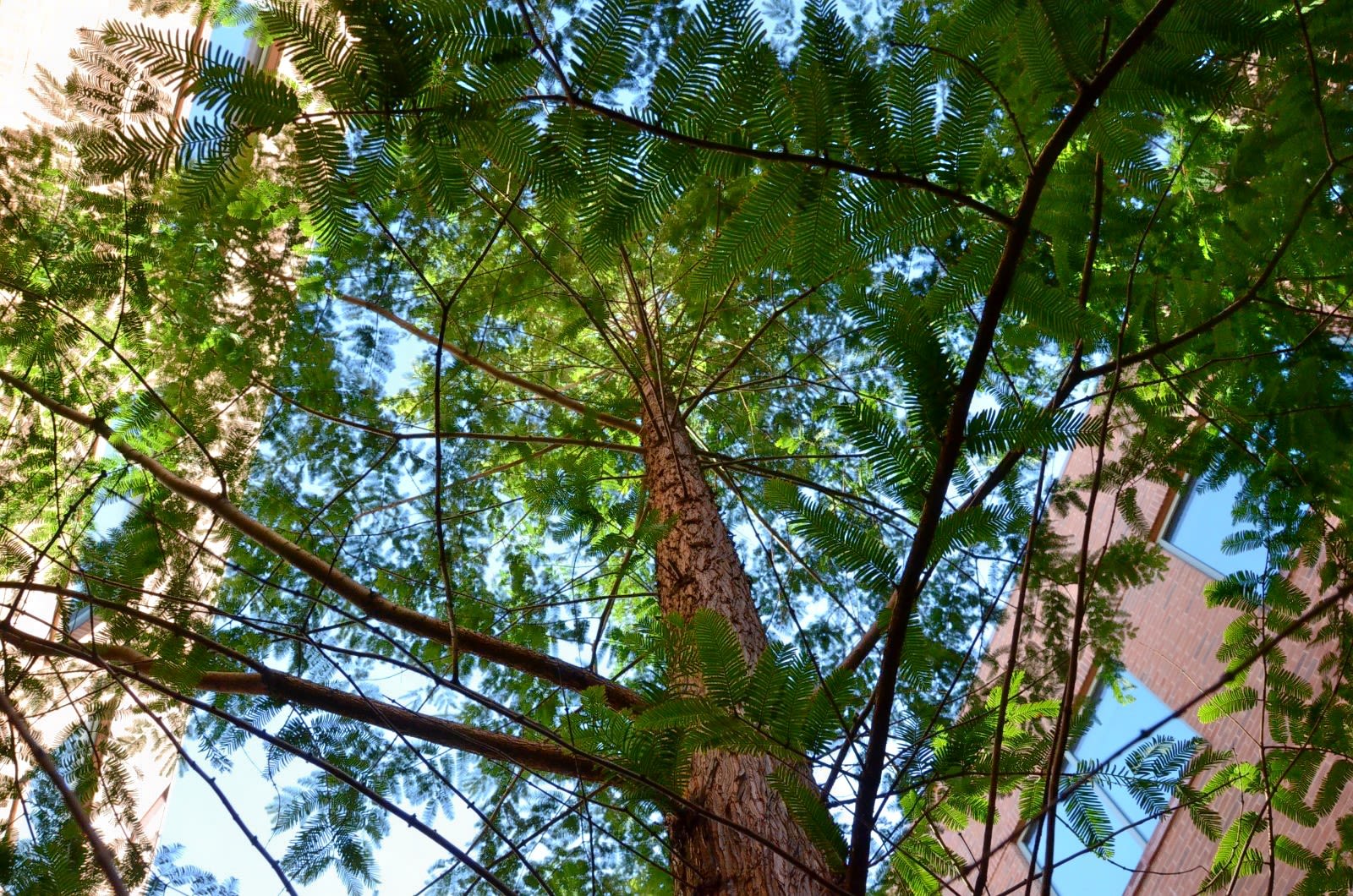
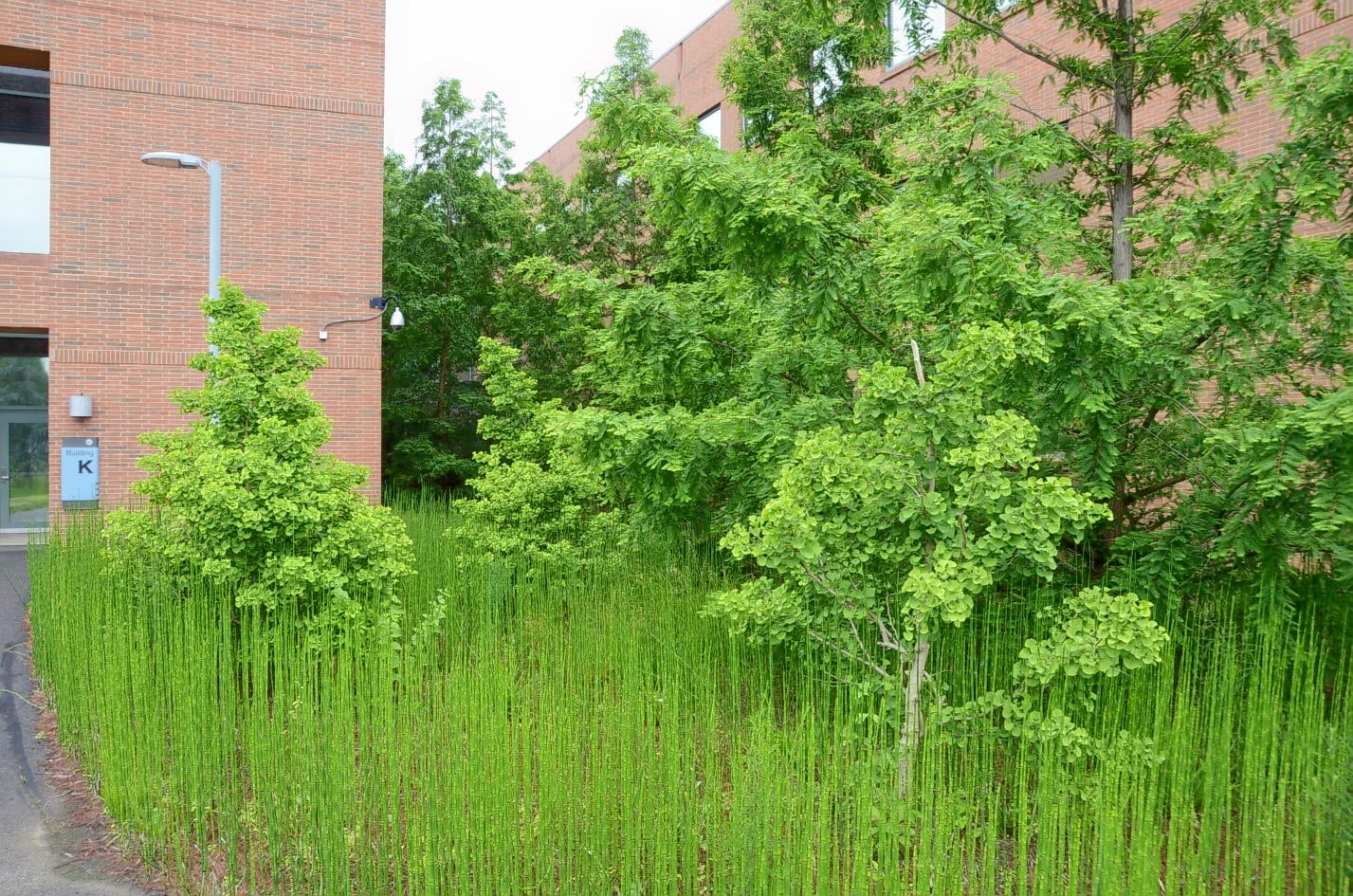
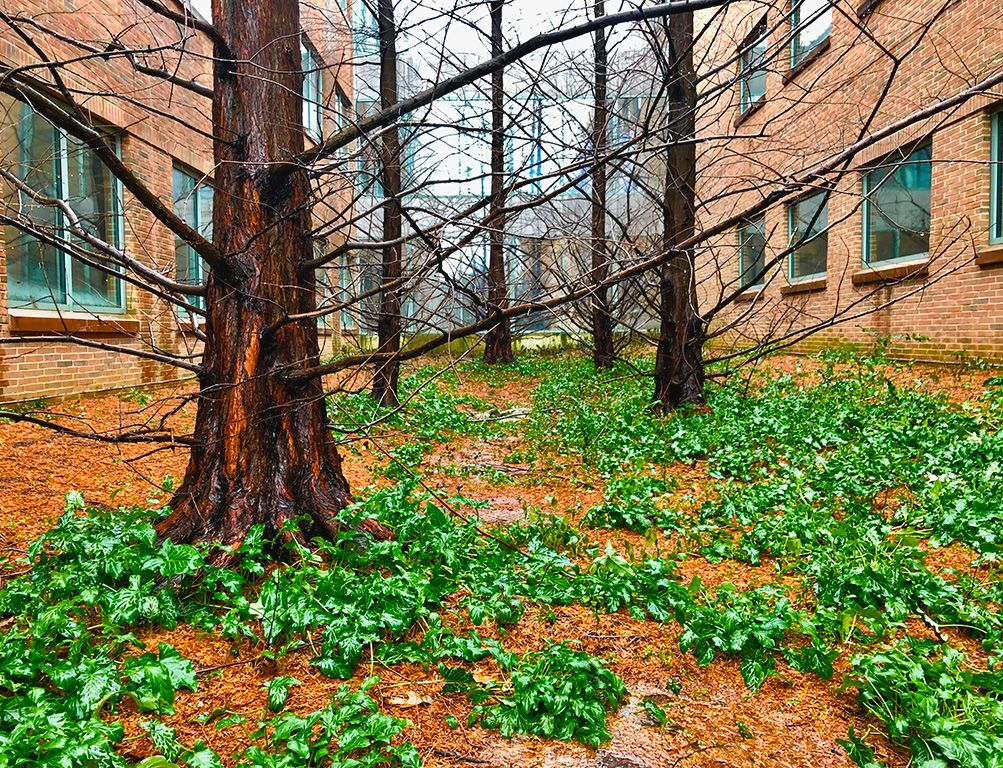
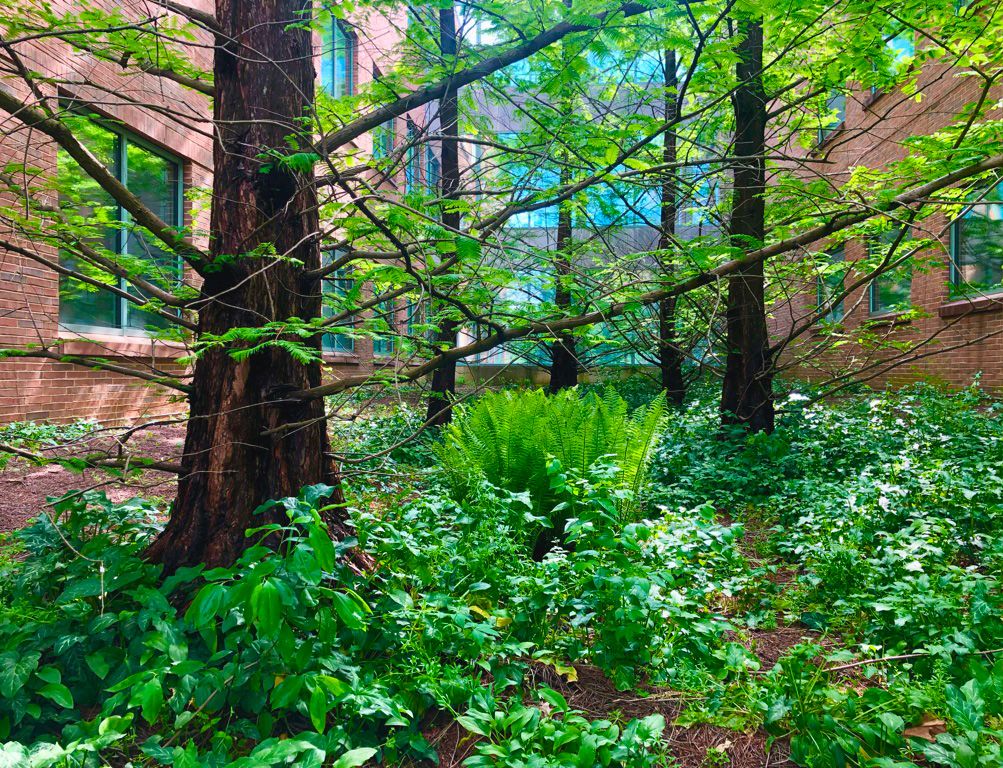
Between the F and K buildings is a stand of dawn redwood—Metasequoia glyptostroboides—a tree once thought to be only part of the fossil record. Italian arum, Chinese ground orchids, and horsetails complement the Paleolithic character of the Metasequoia.
In tandem, this garden embodies Earth before humankind, demonstrating the depths of time and the resilience of these species.







Horticulturist's Tour
Listen to NFATC Horticulturist Darren DeStefano discuss the history of dawn redwood and the design of the Paleogarden.
Select the play button to listen to the audio as you follow along with the transcript below.
So, this is the Paleogarden.
It’s this narrow cut between the buildings and was something that was left behind from the construction, was kind of a curious space, difficult to figure out what you could get to meaningfully grow there.
And it occurred to me at some point that this was a great location in order to exhibit this prehistoric species called Metasequoia glyptostroboides, which is a fascinating plant and a plant really to exhibit, to extract the character from and to really show off.
(Scroll to follow along with the audio.)
And I had seen the plant in a lot of different scenarios of cultivation. It’s often left in an open lawn. It's a huge thing. Right. It’s a relative of a redwood. And they can grow incredibly large. It’s a fossil species. So it was thought to be extinct until rediscovered in China in the 1940s. And the plants that were found were only a handful.
After its rediscovery, after World War II, it was, you know, it enjoyed this renaissance. It was a curiosity. And so, it was planted in arboreta and botanic gardens around the world. And oftentimes it was laid out with a lot of room.
So, when I saw this cut between the buildings, I thought, 'Oh, well that's a great place to put Metasequoia,' and to allow it to just erupt, shoot right up through those buildings. I knew it would do nothing but chase light.
And then you’d be able to see it from across campus. And it would look interesting to have, you know, this green plume in the middle of this sea of brick buildings. And I knew it would provide a level of dappled shade to the windows that are below it, rather than completely canopy over the space. I also knew that it wouldn't just keep producing branches, just pushing into the sides of the building and require constant pruning.
When I planted it in 2011, I had high hopes, and it really worked out. I mean, the trees took right away, and they've put on 10-plus feet a year ...
... and they really are exhibiting now this fluted trunk, this base that they create. You can admire that and just go back in time.
Featured Plants

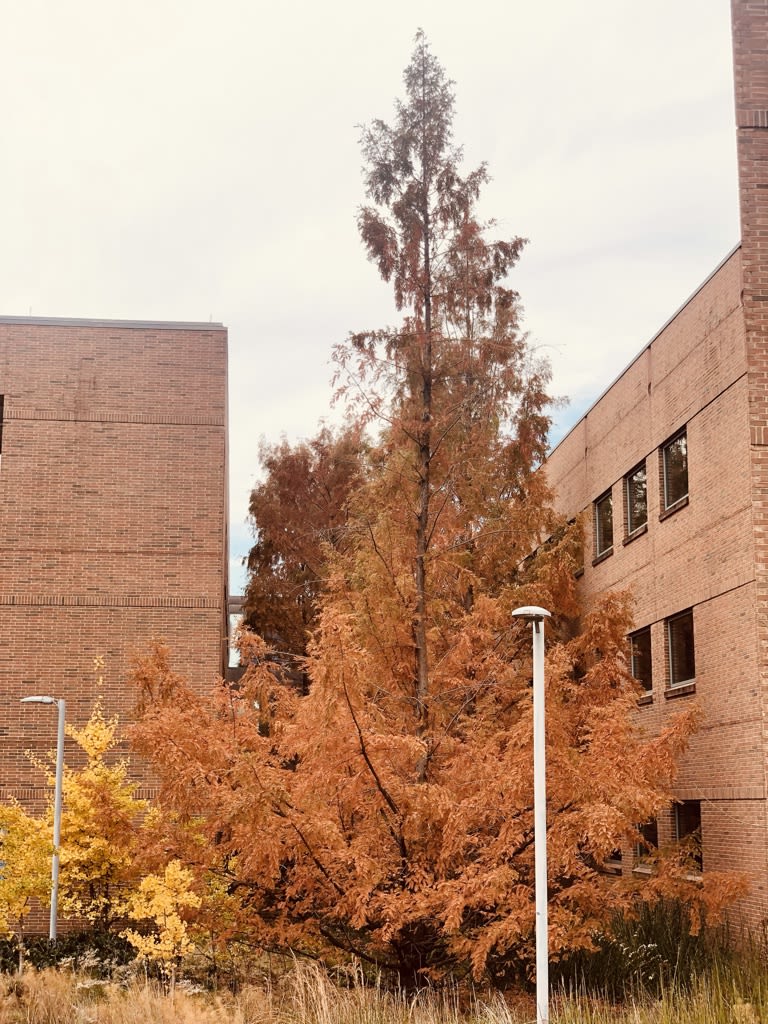
Dawn redwood
Dawn redwood

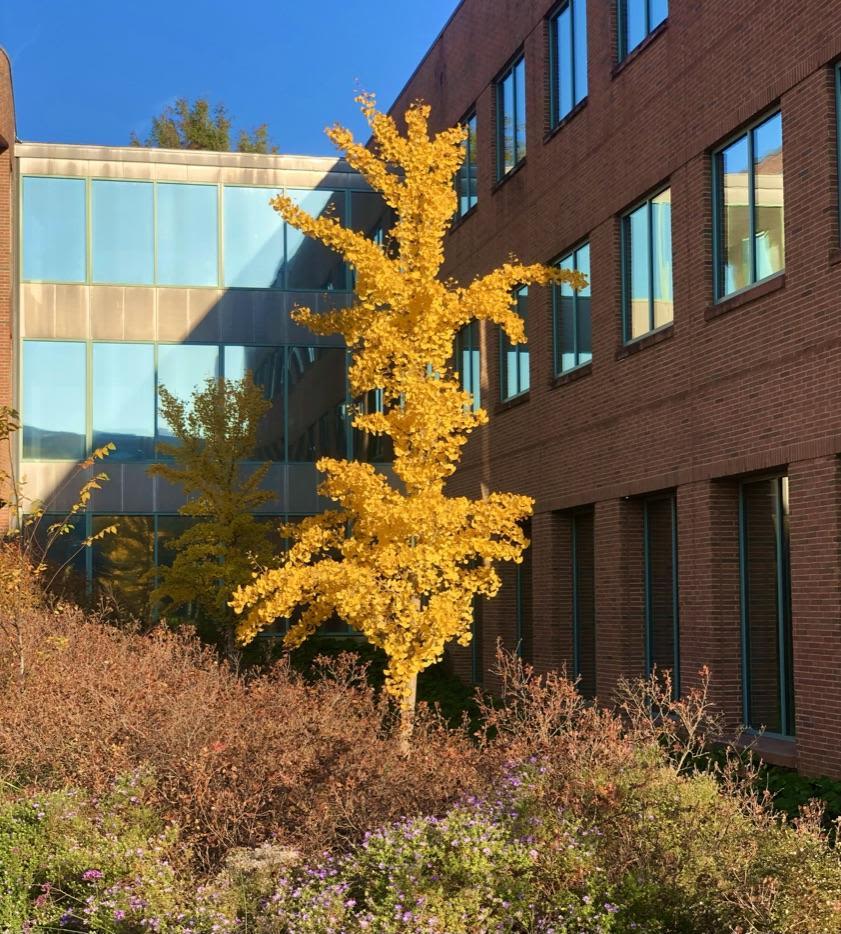
Ginkgo
Ginkgo
Dawn Redwood
(Metasequoia glyptostroboides)
Dawn redwood is a deciduous conifer in the cypress (Cupressaceae) family. Long thought to be extinct, the plant was discovered in Hubei Province, China, in the 1940s. It is now one of the most ubiquitous trees in landscaping across the Northern Hemisphere.
Dawn redwood grows with strong, apical dominance and forms a distinct conic architecture in youth. The trees produce a heavily buttressed trunk of fluted, red-tinged wood that gives it a primordial bearing, especially when wet. Although an urban giant, they are a fraction of the size of their true sequoia brethren.
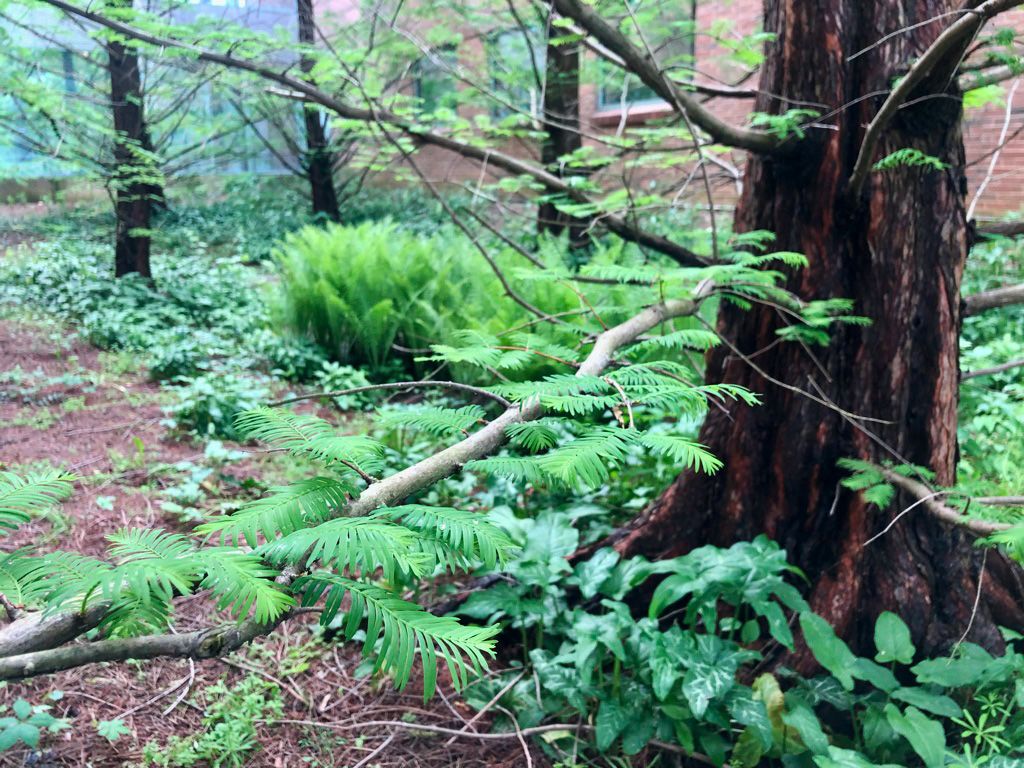
The soft, ferny foliage matures from yellow-green in the spring to deep green in summer, and bronzes to rust in the fall prior to dropping in winter.
Ginkgo
(Ginkgo biloba)
Ginkgo is a prehistoric deciduous tree species and only extant member of the family Ginkgoaceae, which was dominant during the Jurassic epoch but now survives primarily through cultivation.
Its foliage is distinctly fan-shaped with parallel venation that emerges yellow-green, settles to a rich green, and converts to a vibrant yellow before falling off in relative synchrony in mid-autumn.
Ginkgoes are dioecious and females do not flower but produce ovules that form berrylike fruit and produce butyric acid, which smells like vomit, an unforgettable aroma for all who tread on ripe fruit.
Lore surrounds the ginkgo. It was the closest complex organism to survive the atomic blast at Hiroshima. It was planted in the garden of Goethe, who composed a poem in its honor. It provides an extract that is among the world’s most consumed herbal supplements for its benefits in mental acuity. With help from Benjamin Franklin, John Bartram, the first American botanist, procured the first ginkgo to be planted in North America in 1785, a tree which still stands in his Philadelphia garden.
Ginkgoes planted in 2011 can be found in the Paleogarden on the east side of the K Building.
Through the Seasons
Select each of the images below to zoom in and learn more.

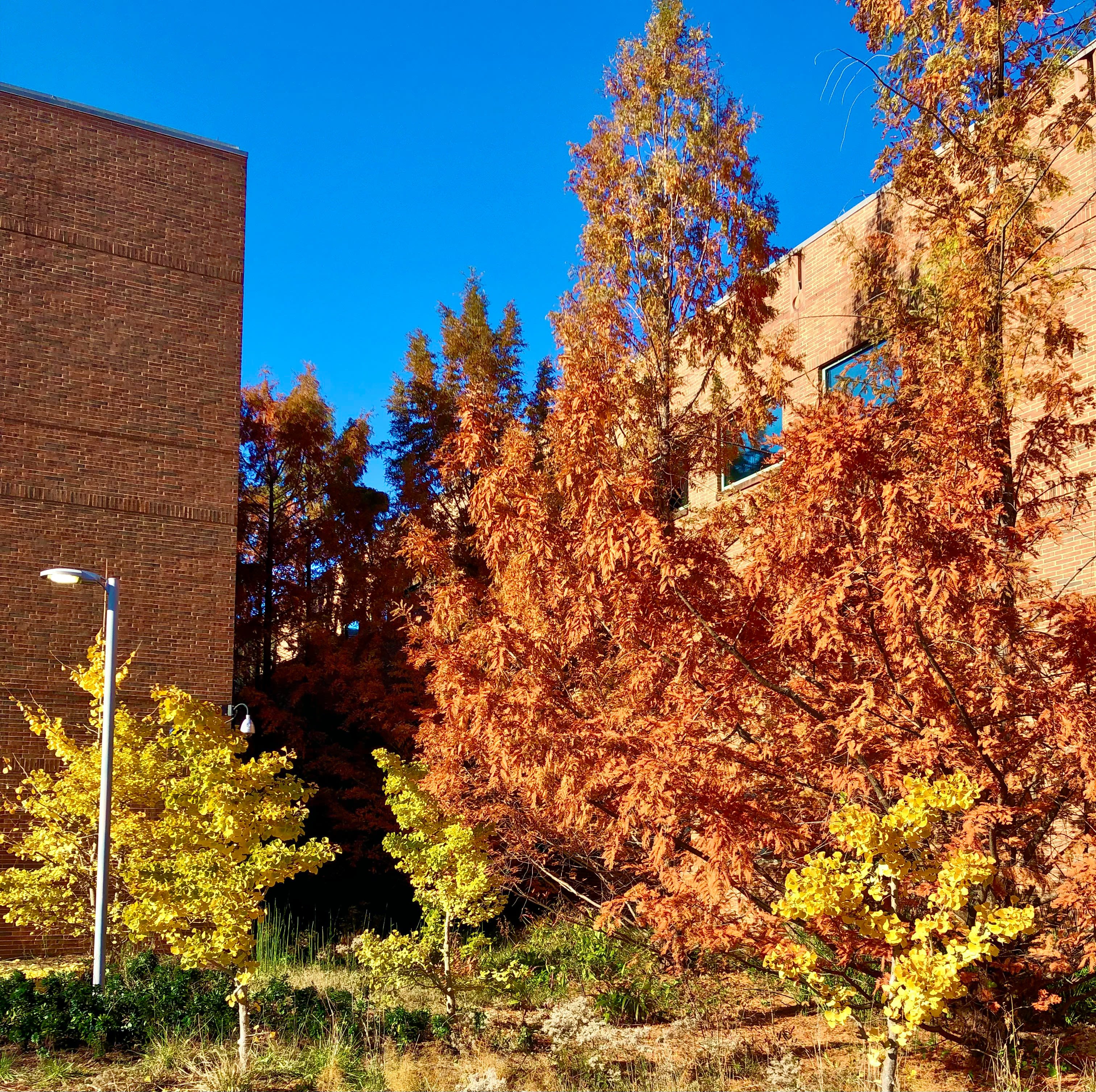
Dawn redwoods and ginkgoes working in tandem for a beautiful fall display
Dawn redwoods and ginkgoes working in tandem for a beautiful fall display
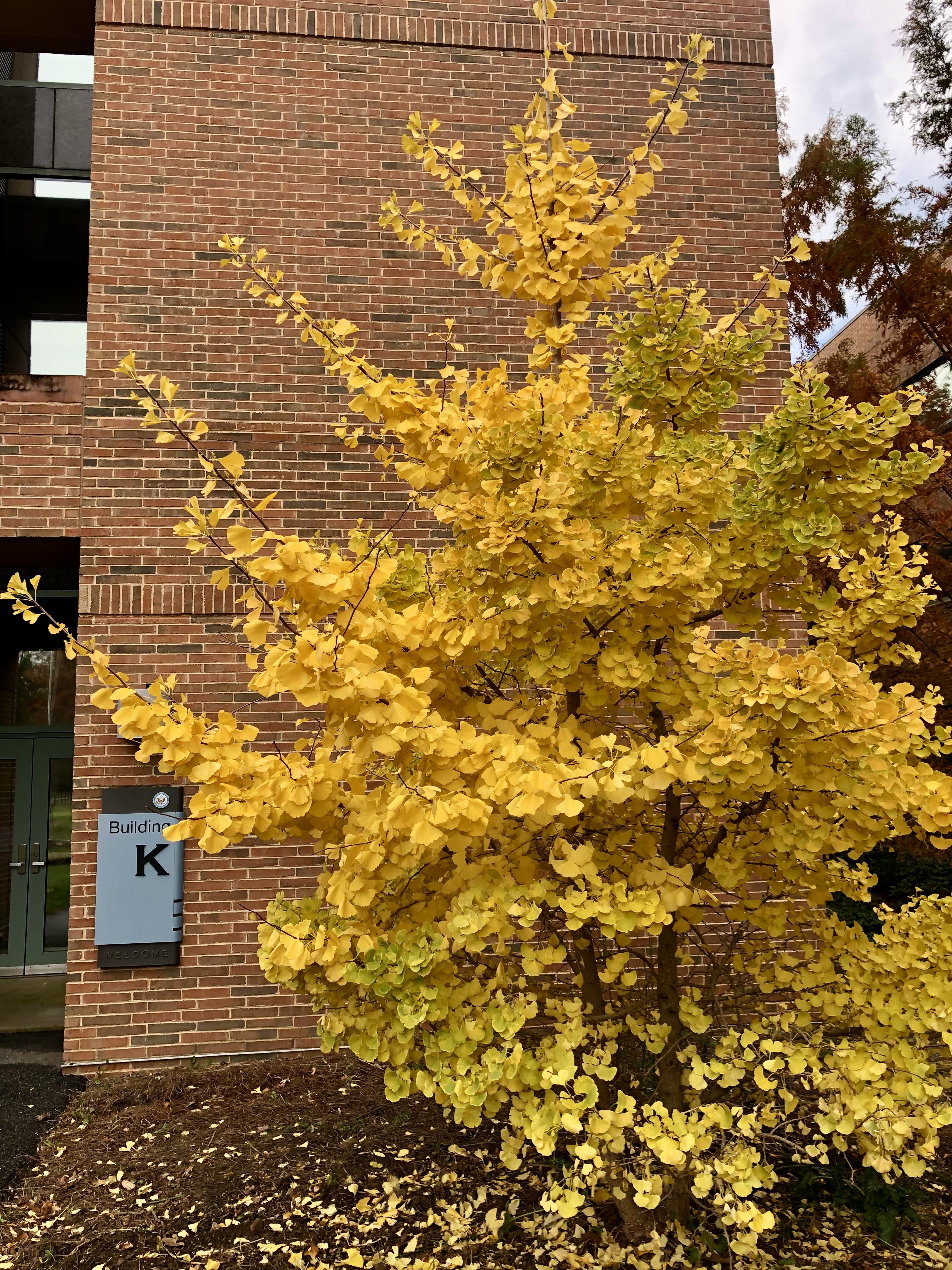
The distinctively vibrant yellow fall color of a ginkgo tree
The distinctively vibrant yellow fall color of a ginkgo tree

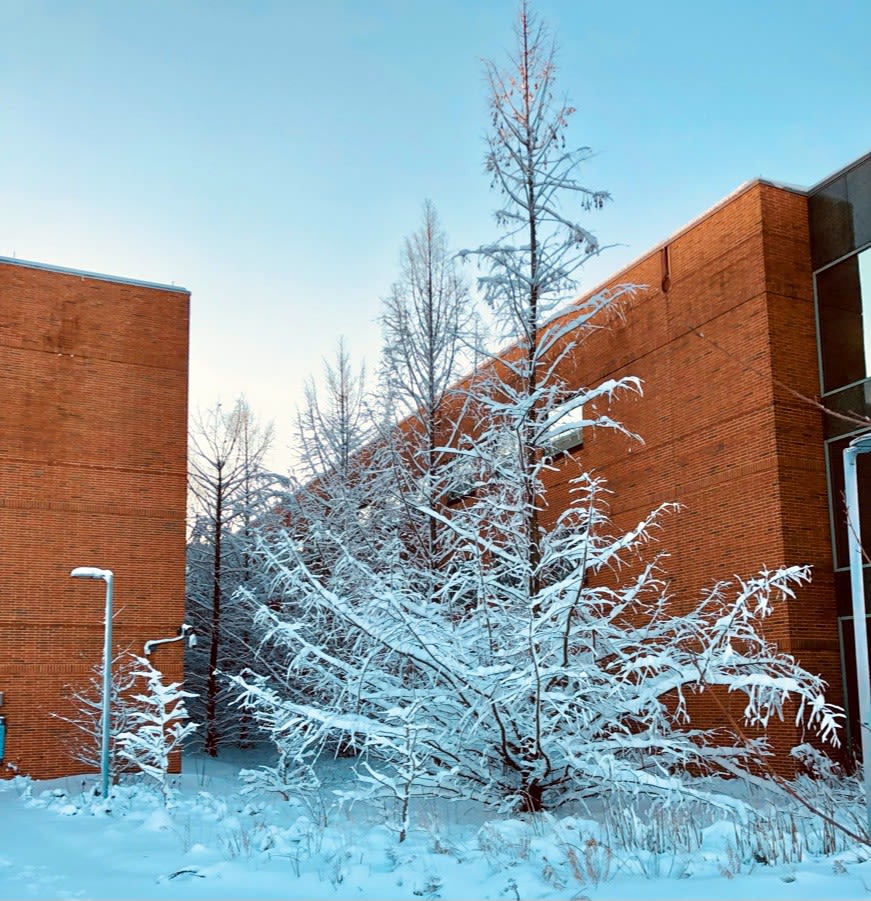
Dawn redwood in winter
Dawn redwood in winter

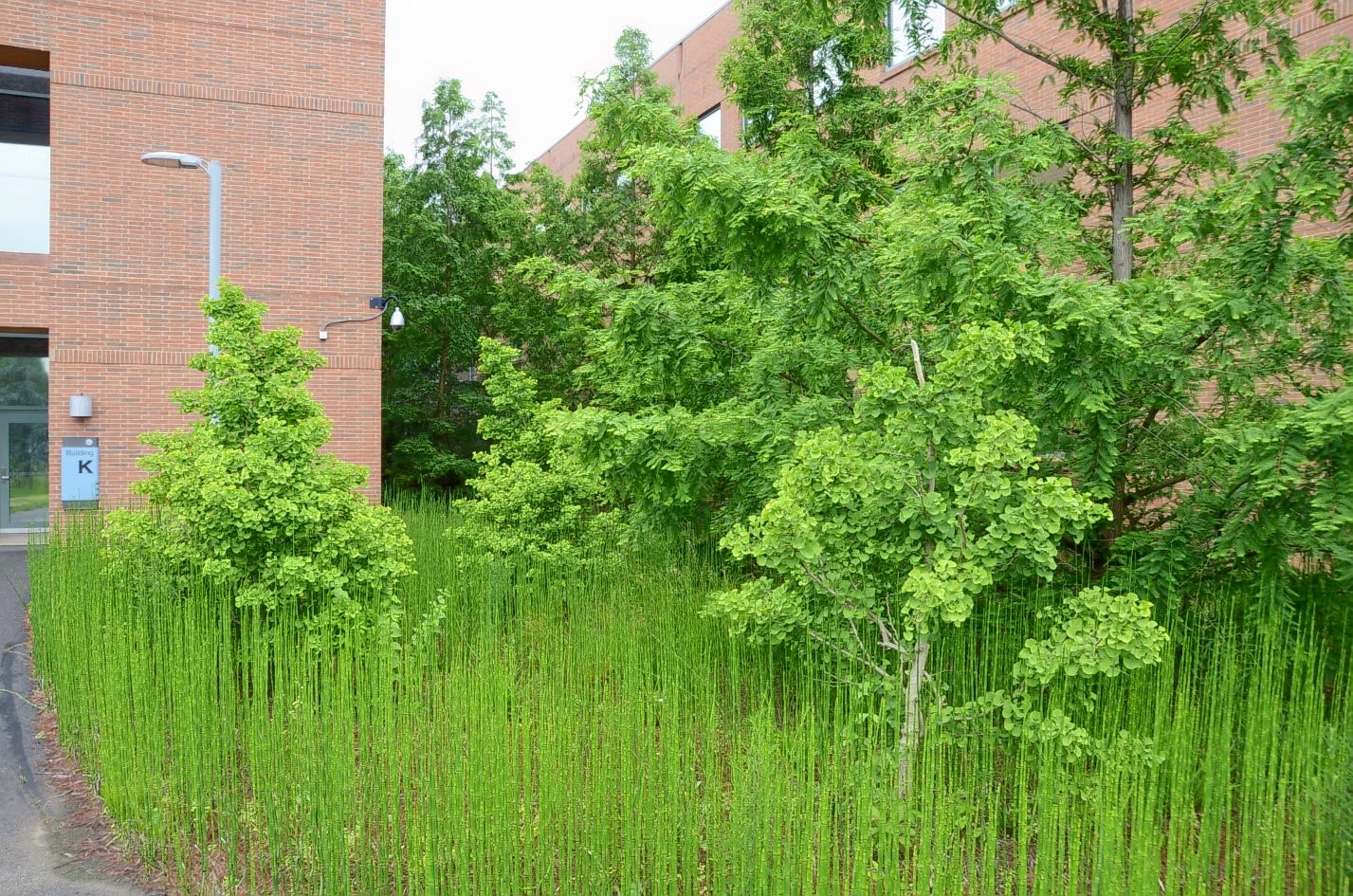
Horsetails rising from the ground, with dawn redwoods and ginkgoes displaying their summer green
Horsetails rising from the ground, with dawn redwoods and ginkgoes displaying their summer green

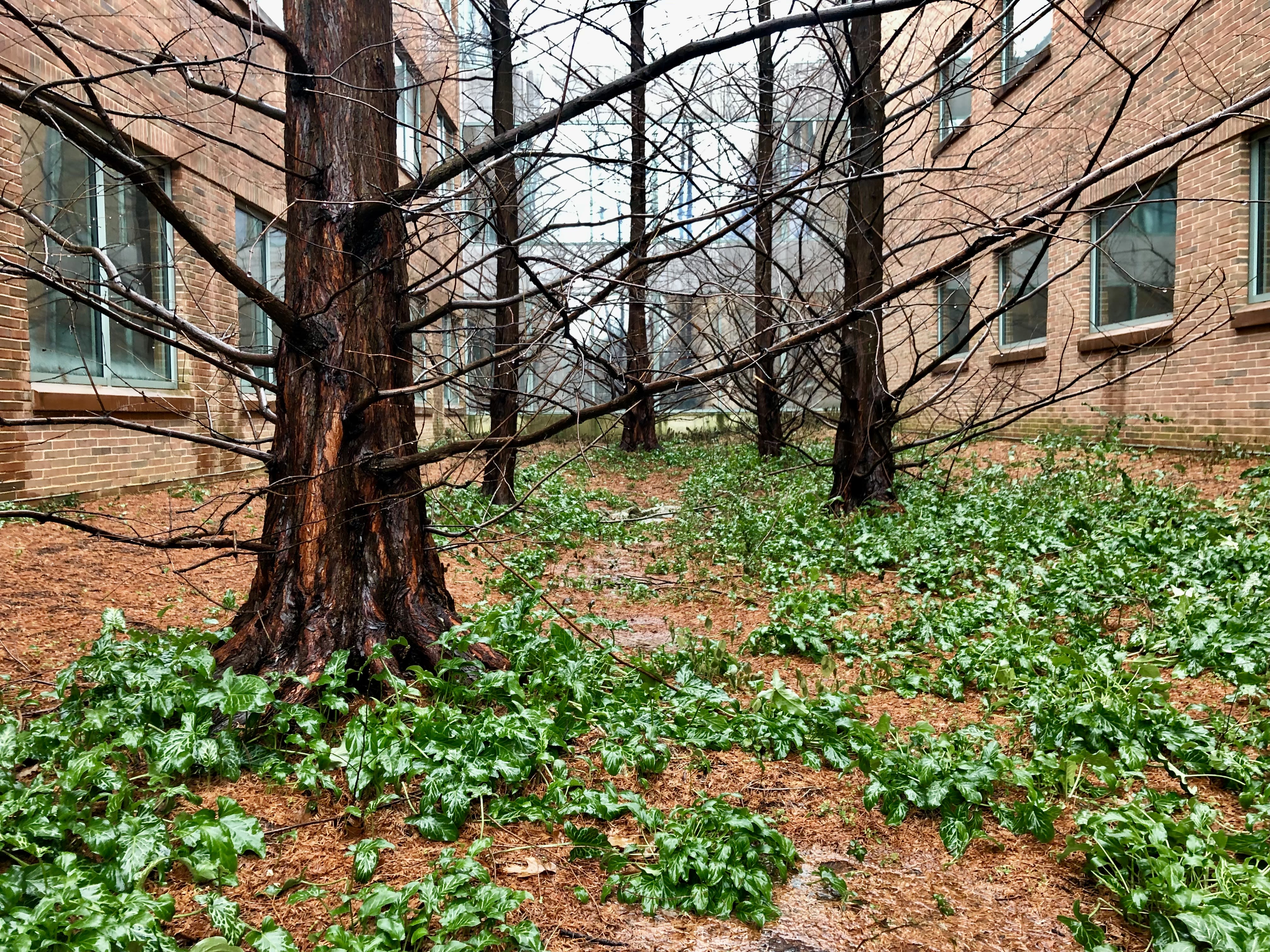
Italian arum at the base of dawn redwood
Italian arum at the base of dawn redwood
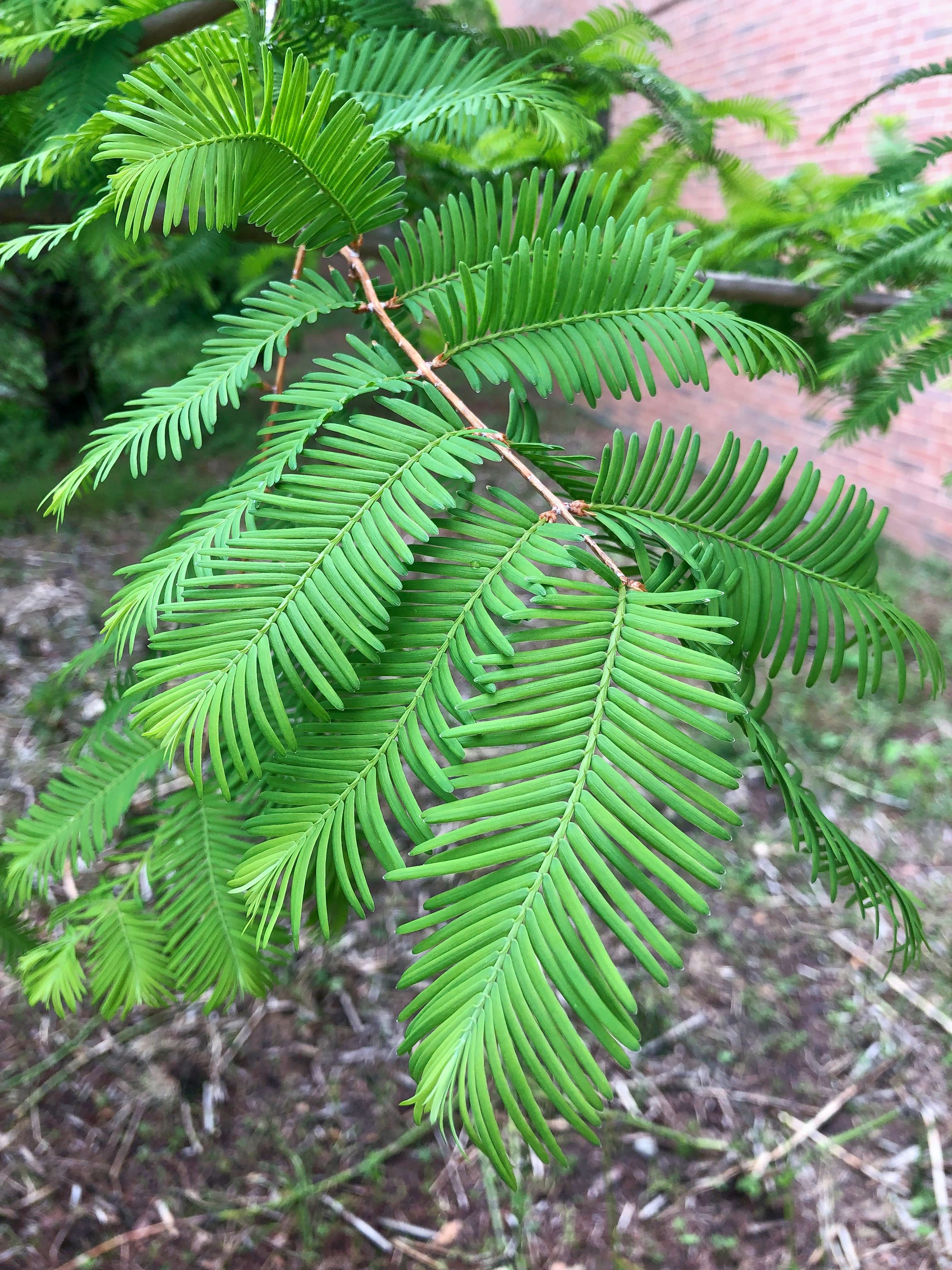
The foliage of dawn redwood
The foliage of dawn redwood
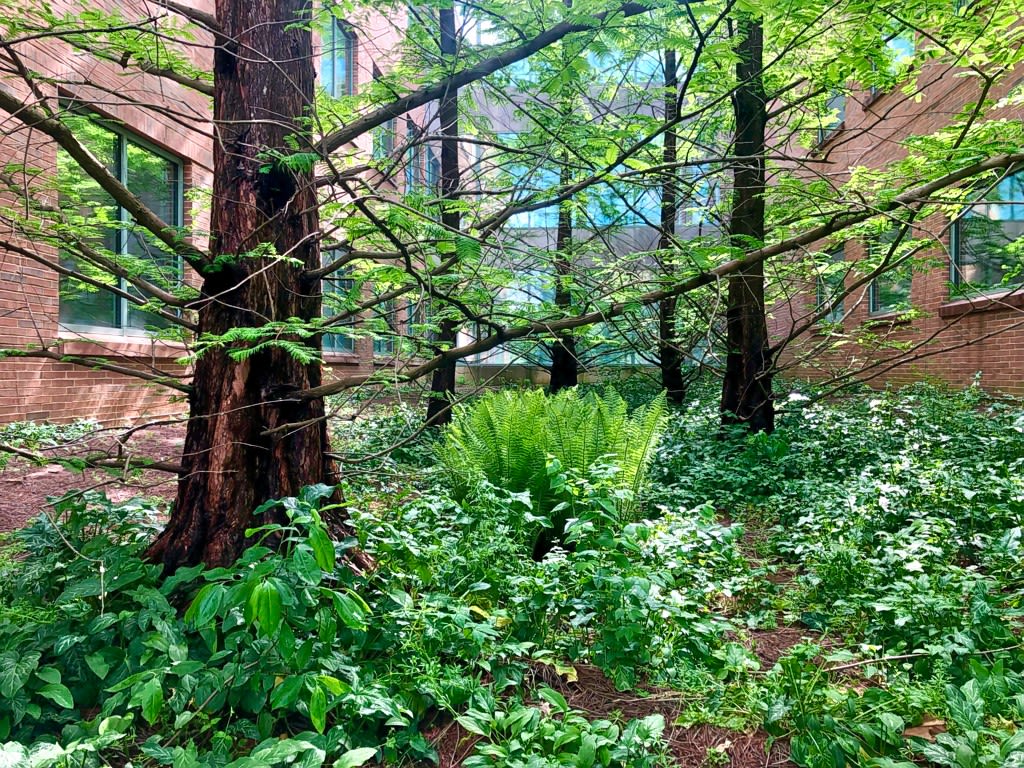
The trunks of dawn redwood
The trunks of dawn redwood
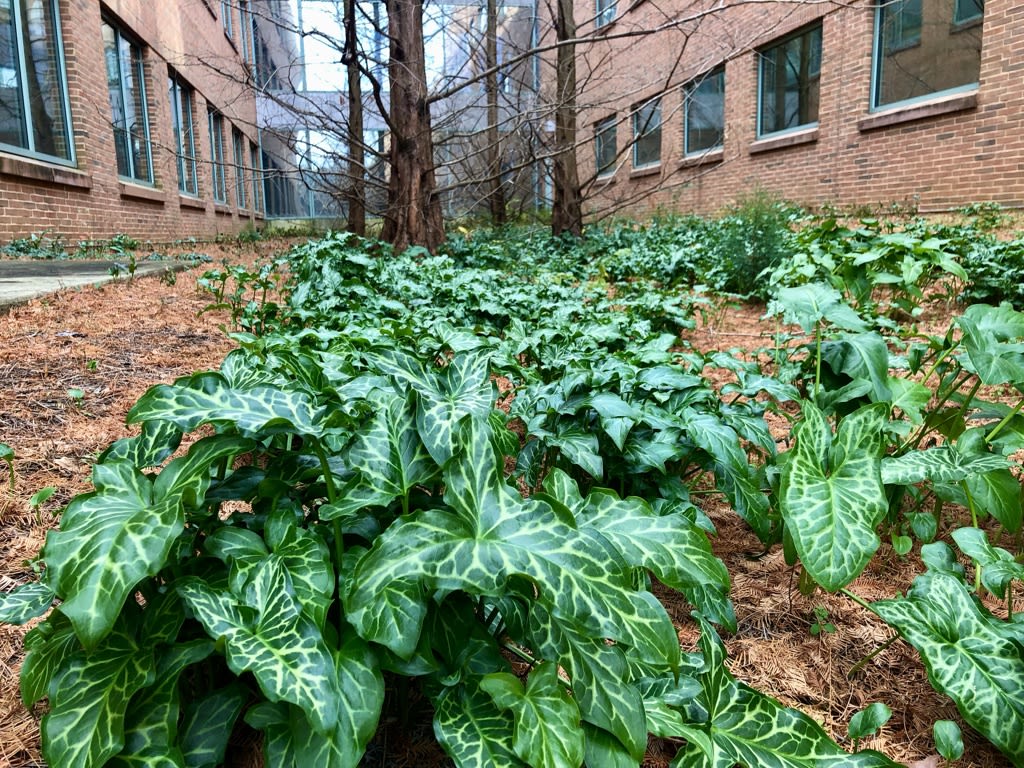
The dark green, arrowhead-shaped leaves of Italian arum
The dark green, arrowhead-shaped leaves of Italian arum