
The Promenade
The Grounds at NFATC
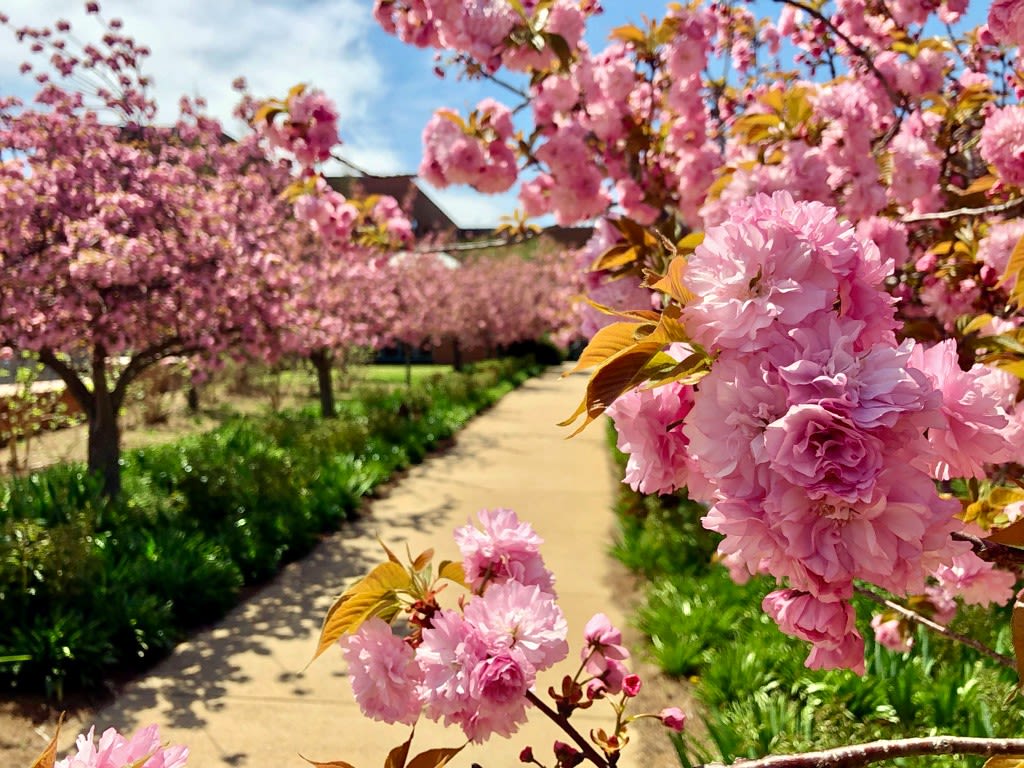

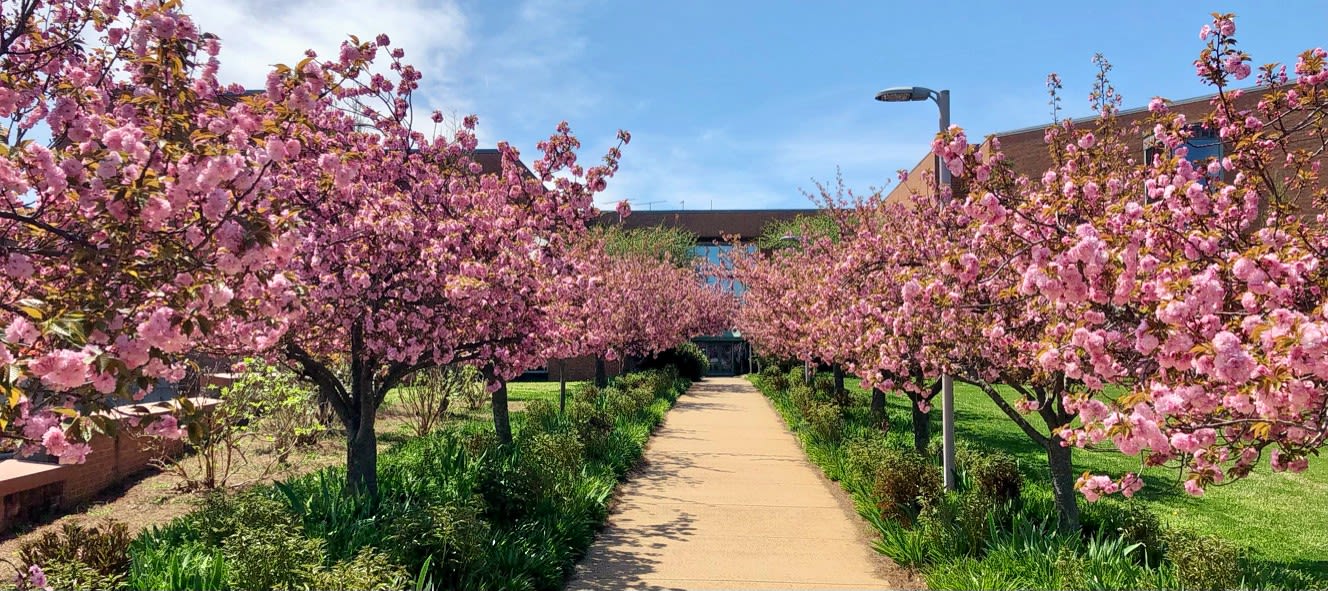
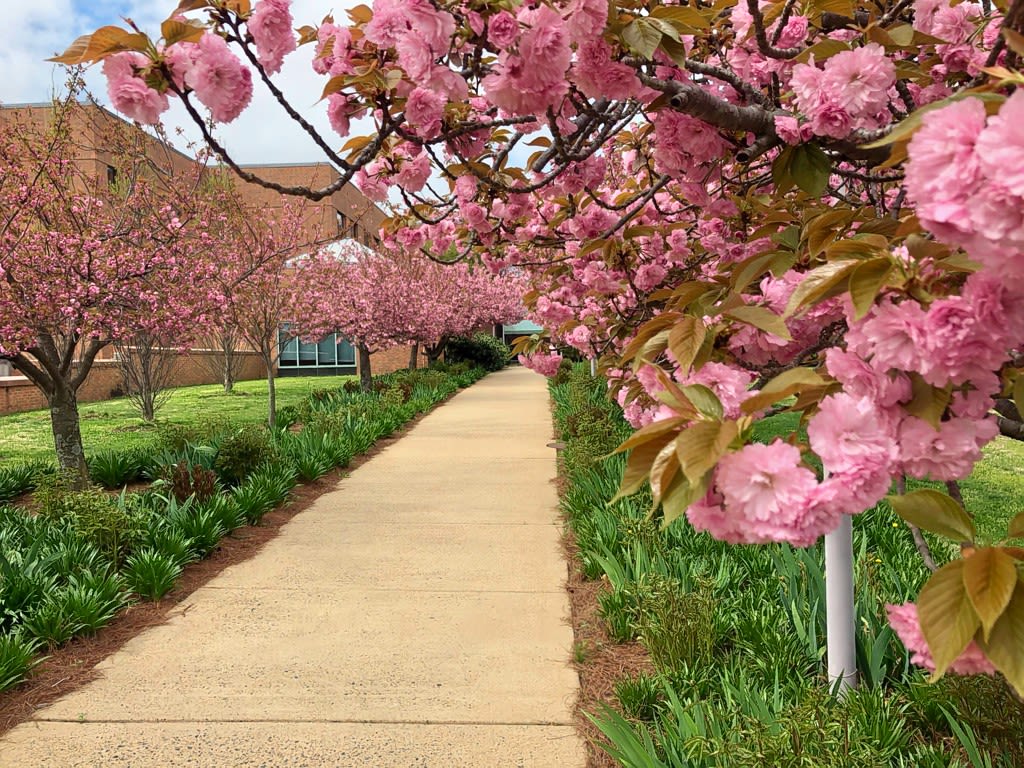
The foundation of this garden is the result of a significant restoration effort. The Kwanzan cherries that structure the Promenade were the last of a series of allées, originally designed to be a primary landscape feature at NFATC when the State Department took over the property and was expanding the campus. Unfortunately, these trees were planted too deeply, stunting their growth and leading to decline. Through an intervention in 2007, the cherries before you became the only allée to survive.
The design of the Promenade has incorporated many classical garden elements, resulting in an assembly that provides a long, powerful spring show, with one or more plants always blooming throughout the season. Be sure to take a stroll along NFATC’s most classical garden during this time!











Horticulturist's Tour
Listen to NFATC Horticulturist Darren DeStefano discuss how he and his team resurrected the Kwanzan cherries, the plantings that make up the Promenade, and how the bald cypress to the right of the Promenade help manage stormwater.
Select the play button to listen to the audio as you follow along with the transcript below.
So this is the most formal garden on campus.
And it really began with the planting of the Kwanzan cherries that predates my presence on campus. They were planted with the original garden design back in 1991, but they were planted far too deep, and they were really suffering from a condition that's called girdling roots, when roots encircle the trunk of the tree and strangle it.
(Scroll to follow along with the audio.)
What I really thought was perhaps I ought to just get rid of them. But I also was familiar with air spading—a technique where you use compressed air with an air gun in order to blast away soil that gathers around the root flare of the tree. And it revealed this, like, rat’s nest of roots that were all constricting around the trunk.
And so, we sawed off all the constricting roots, and the trees responded incredibly. They really flourished and pushed out new growth that spring that was incredible. And after that experience, I decided that it was really time to double down and to create this formal planting.
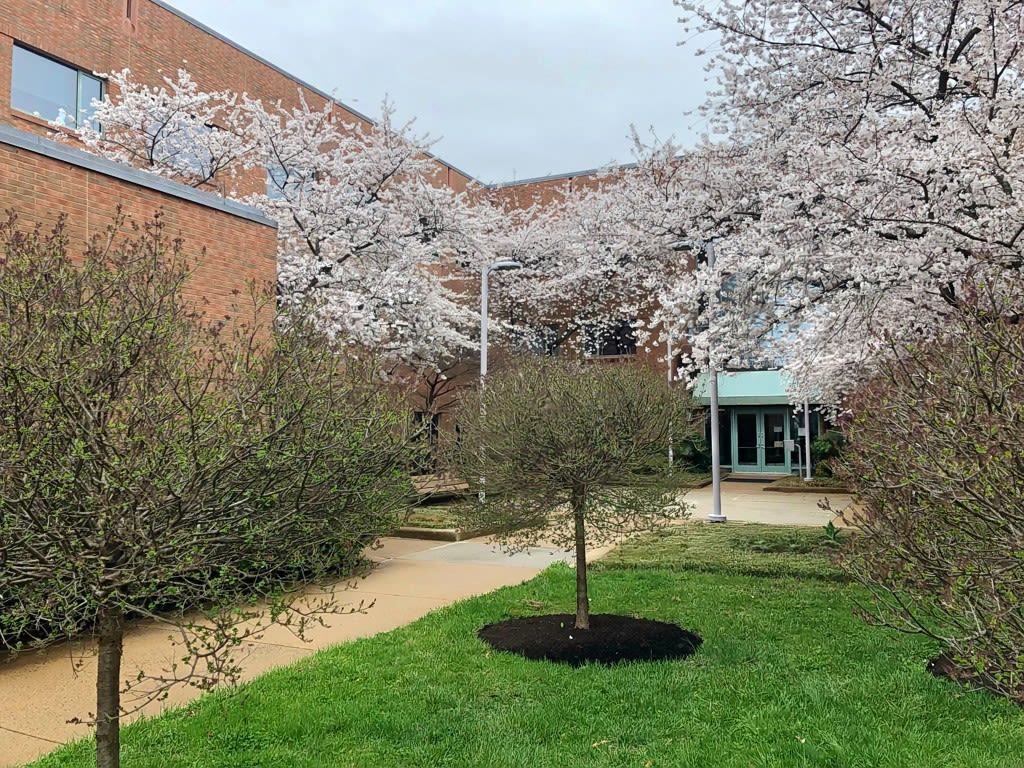
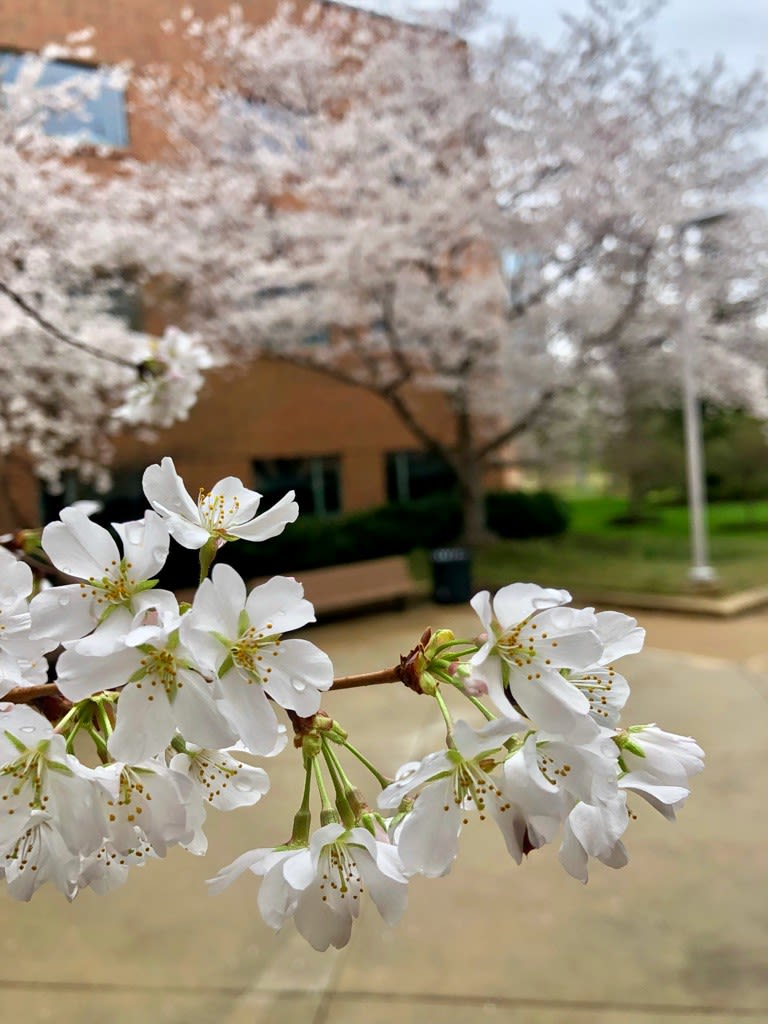
It's a spring tour de force, and it begins with Yoshino cherries that are actually planted in the courtyard right prior to the entrance. They flower white, early spring, generally in March, April.
And then the Kwanzans overhead, they flower pink doubled rose-like blossoms.
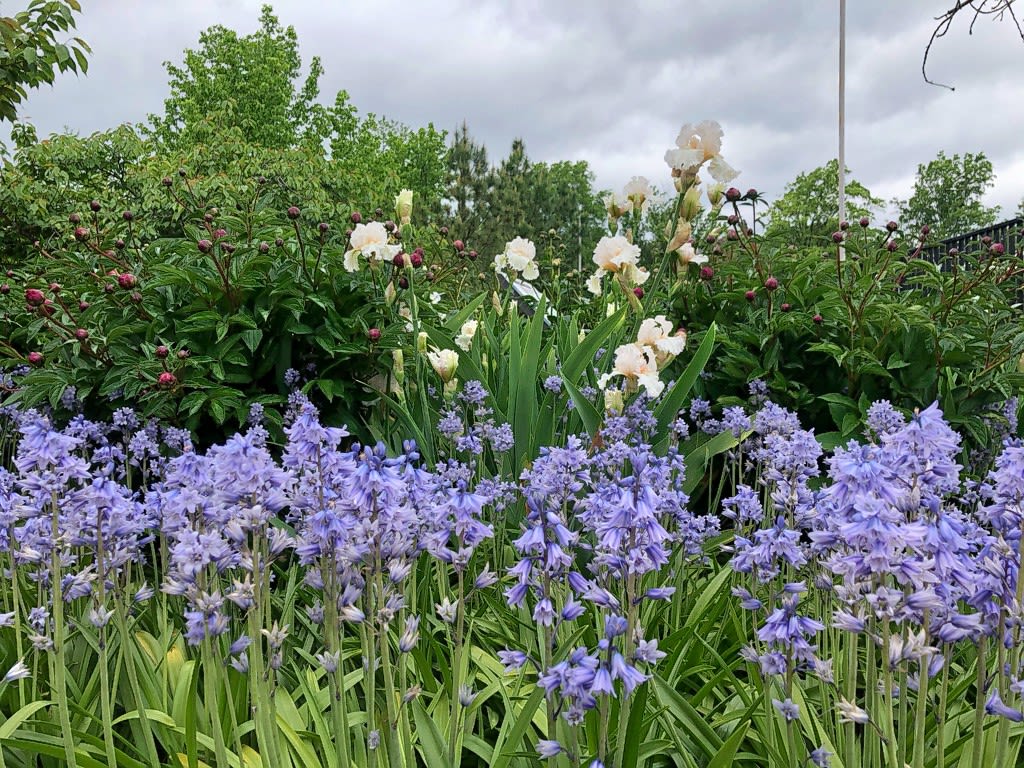
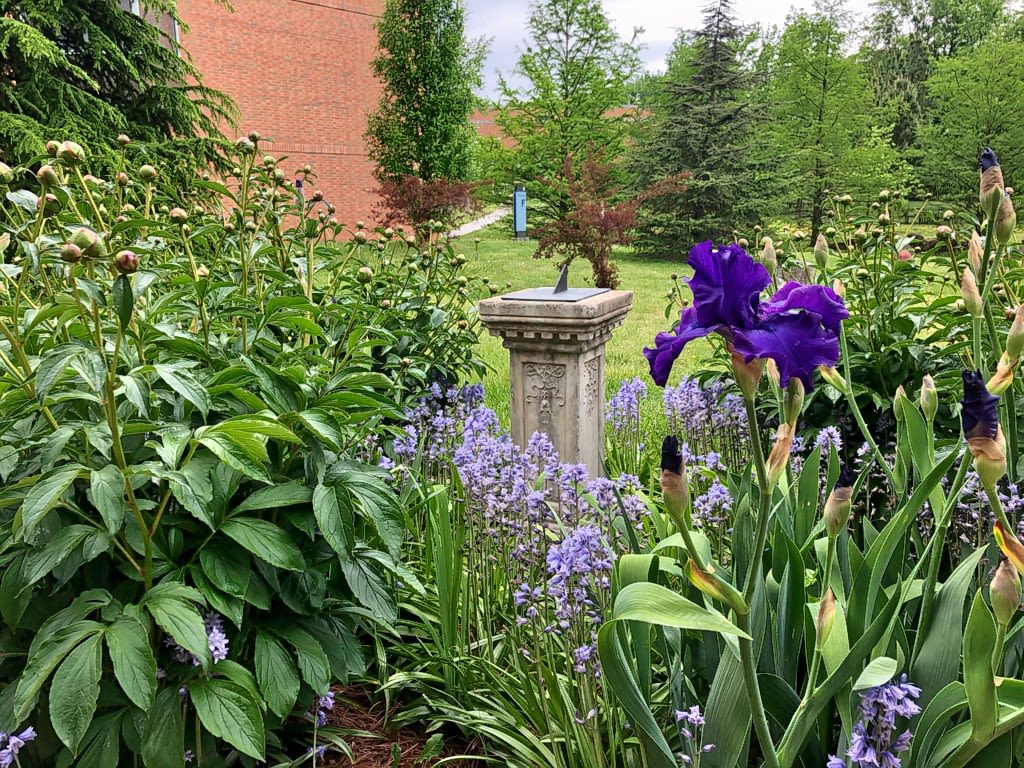
That's followed by Spanish bluebells, these bulbs that are planted underneath the Kwanzan allée. They come up and flower blue.
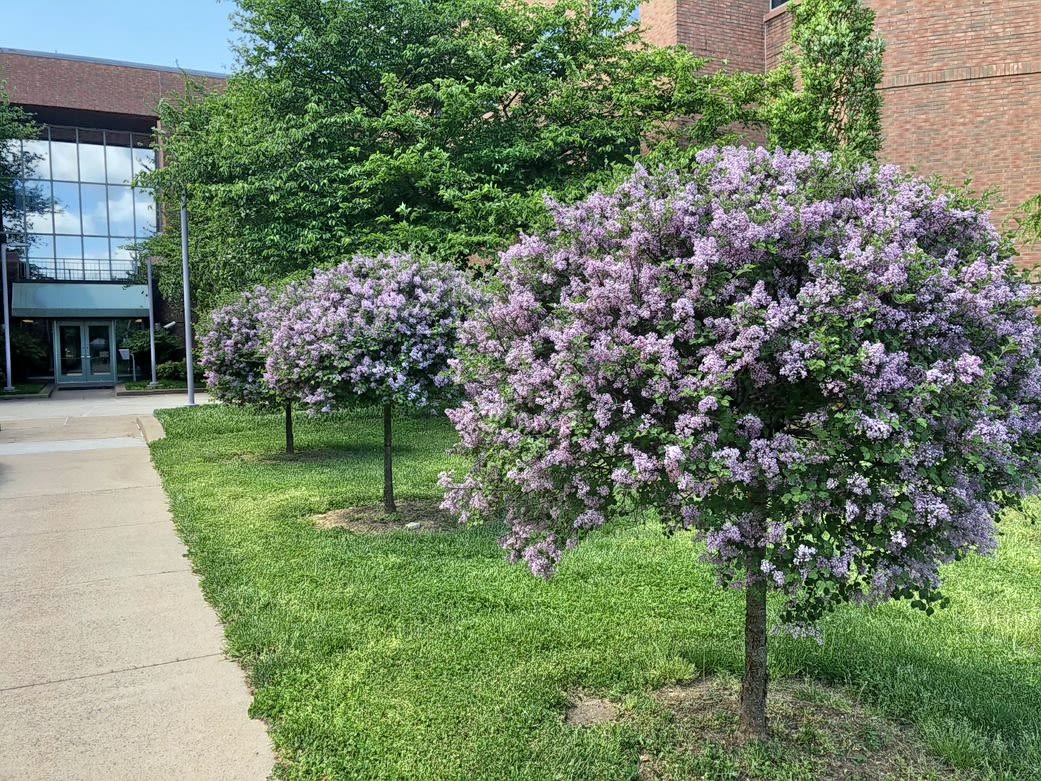
Then you get lilac, Meyer’s lilac, that are grown on standards more towards the entrance, which perfumes the air.
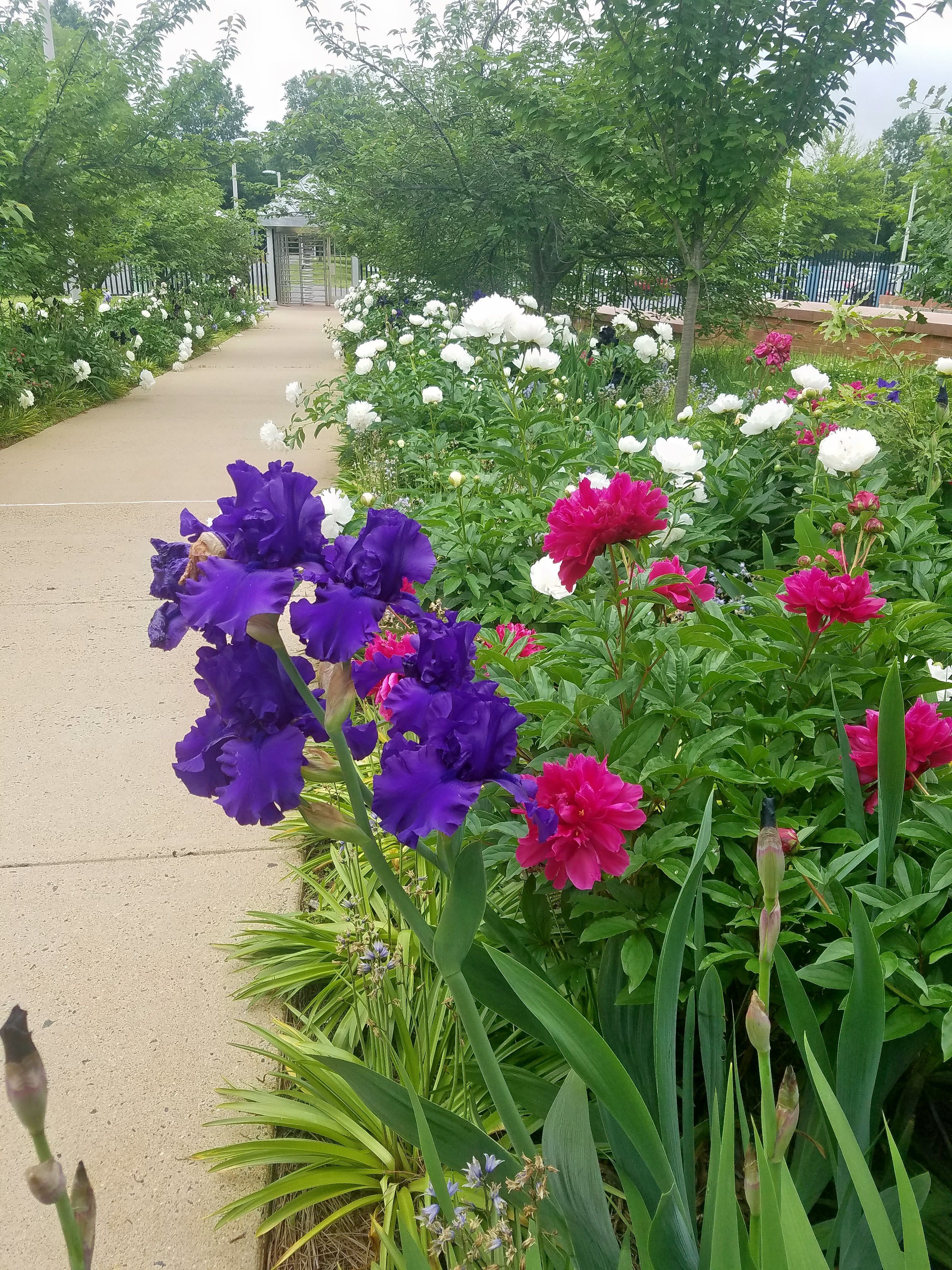
And then you get a combination of peony and iris—two kinds of peony, one that is white with a little magenta and another that is more maroon. And the iris are almost all either white or black or royal blue. The flowering really finishes off with oak leaf hydrangeas that are over towards one side of the allée.
And when you're looking at the Promenade, I mean, it’s underpinned by these Lebanese cedars that are off to the side of the building. And these are some of the most stately trees that can be planted, and really add an air of gravitas to the entrance.
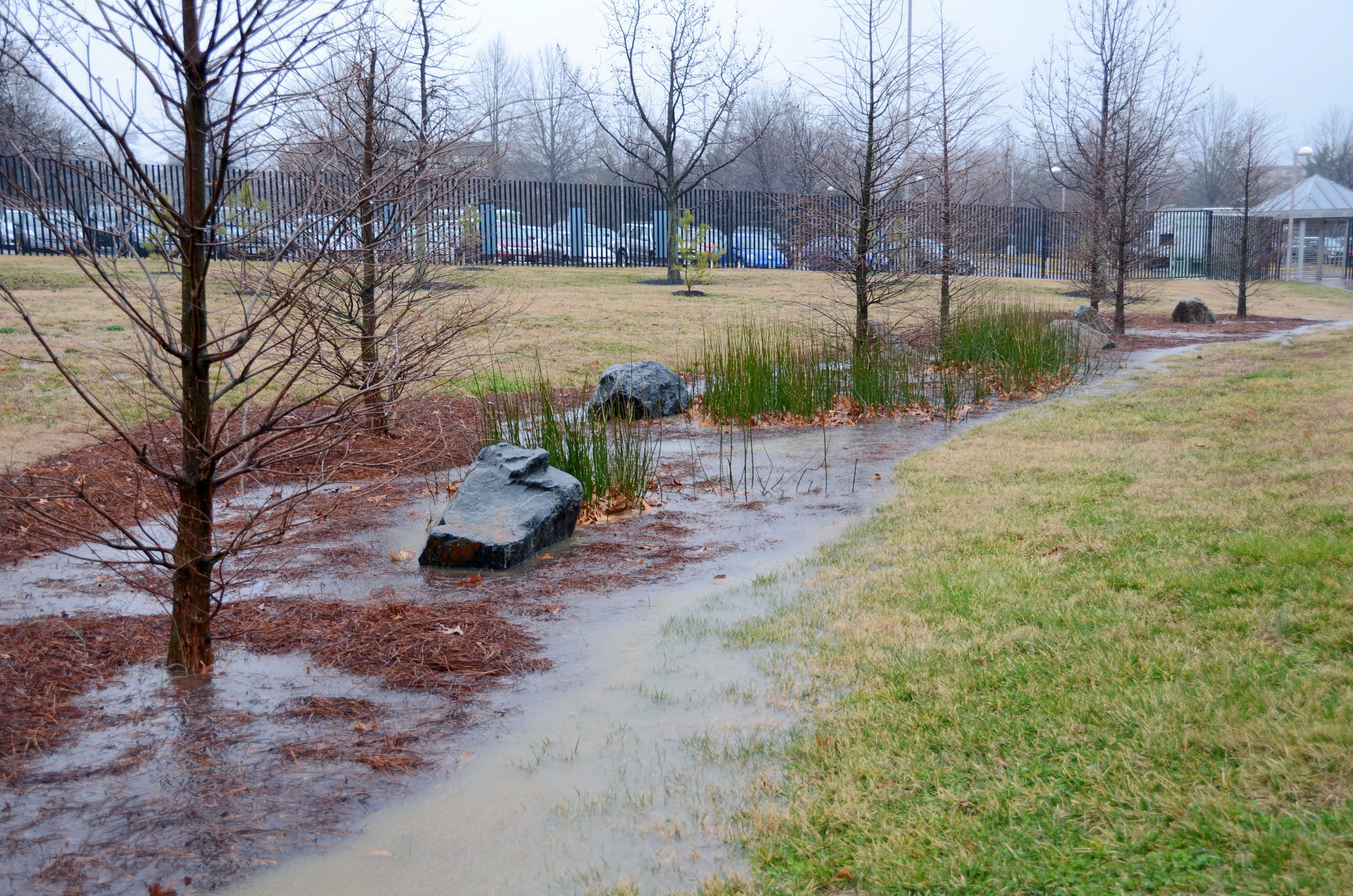
To the extreme right, to the extreme north of the planting, is a run of Taxodium, of bald cypress that are at the tail of this drainage that really handles a lot of the stormwater from the back of campus. And those were actually the first plantings to go in here. They've been in for over a decade and have reached a nice size. They're starting to produce the cypress knees, and they really helped control the stormwater that used to flood the pathway here.
The trees are planted in a zigzag pattern, and the water is compelled to move in and out and around them. Really a great example of a regenerative conveyance. So, where water is moving through landscape being harvested to fuel growth, rather than just being deposited into a pipe and taken to a treatment plant.
Featured Plants

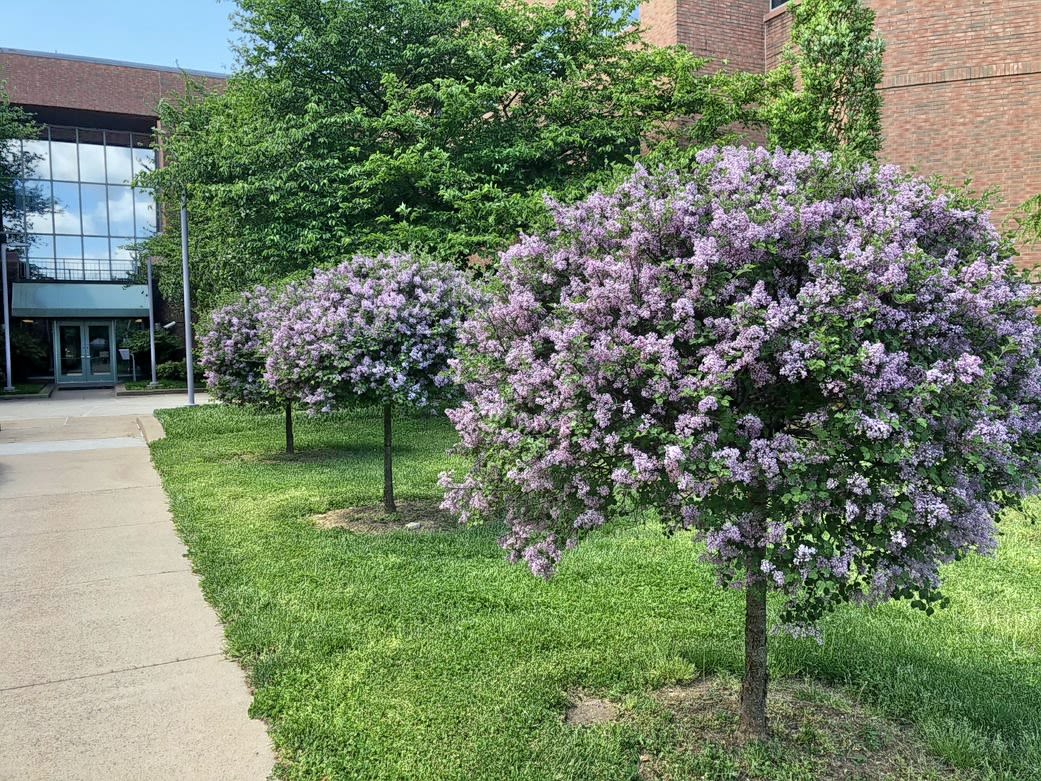
Meyer's lilac
Meyer's lilac

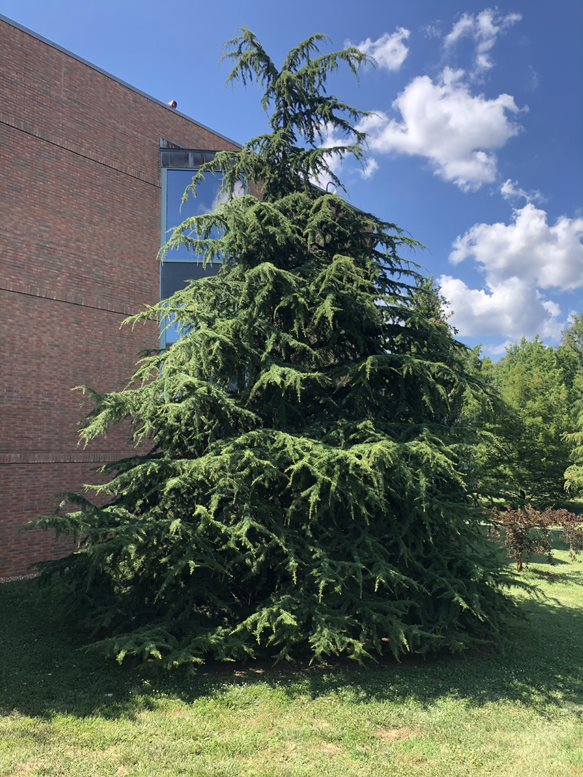
Himalayan cedar
Himalayan cedar
'Paladin' Meyer's Lilac
(Syringa meyeri ‘Paladin’)
Meyer’s lilac is a member of the olive (Oleaceae) family. It came to the western world after Frank Meyer, the Dutch émigré turned U.S. Department of Agriculture plant explorer, found the only known source of the plant in 1909, in a garden north of Beijing.
Lilacs are fundamental to garden culture and lend an air of refinement. Imported into North America as early as 1750, both Thomas Jefferson and George Washington took pride in cultivating them as they defined a level of civility in the nascent nation.
With around 20 species, lilacs are primarily native to Asia, with a couple in Europe. They prefer northern climates with long winters and cloudy skies, but Meyer’s lilac is an exception to the rule, as it tolerates humidity, sun, and heavy soils. Meyer’s lilac blooms in late April after its European brethren with a profusion of iconic lilac perfume and floral hue before settling into a deep green carefree shrub.
The specimens at the end of the Promenade are ‘Paladin’—a dwarf globose selection of the species that are grafted onto a standard of Japanese tree lilac (Syringa reticulata), elevating the flowers and scent to eye level, creating a topiary effect, and enhancing enjoyment. These were crafted by Foxborough Nursery and planted in 2016.
Lebanese Cedar
(Cedrus libani)
Cedrus libani is an evergreen conifer in the pine (Pinaceae) family. The most celebrated tree of antiquity, the Lebanese cedar was the timber of the Phoenicians, used to build everything from their mercantile navy to Solomon's temple. They stood sentinel over the birth of religions and are liberally cited in ancient Judaic, Christian, and Islamic works. It’s one of the trees emblazoned on a national flag and is the symbol of the Lebanese people.
Cedars are tolerant and enjoy a huge range from Delhi to London and Beirut to Miami. They are often grown around classical monuments and stately homes. Planted for ornamental purposes since Roman times, cedars made their way to England in 1638 and, a century later, found their way into the garden estates of America’s founding fathers, including Mount Vernon, Monticello, and Montpelier.
The Lebanese cedar is the tree primeval. Living for thousands of years, it develops a terraced silhouette with age giving it a stately bearing and leading to its widespread planting around the world. In the wild, they once coated the mountains of the Mediterranean but are now reduced to a single old growth stand toward the peak of Mount Lebanon and an encouraging amount of regrowth throughout the Chouf Mountains of Lebanon and Taurus Mountains of Turkey.
The Lebanese cedars can be found at the corner of the F Building at the end of the Promenade.

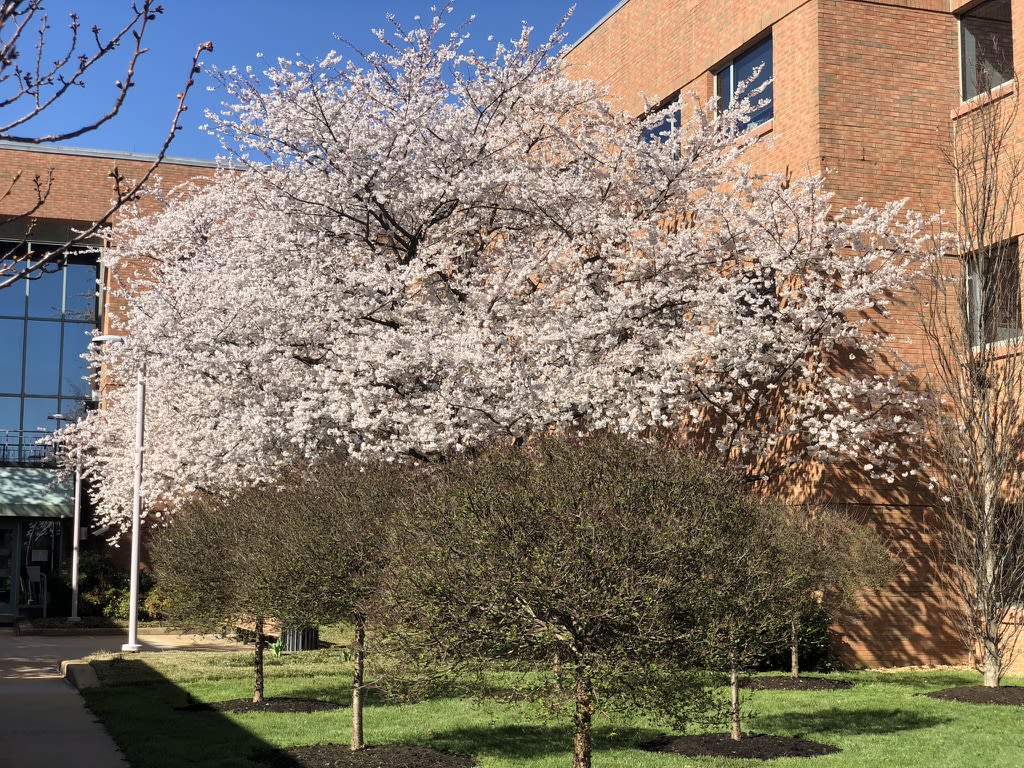
Yoshino's cherries blooming before Meyer's lilac
Yoshino's cherries blooming before Meyer's lilac

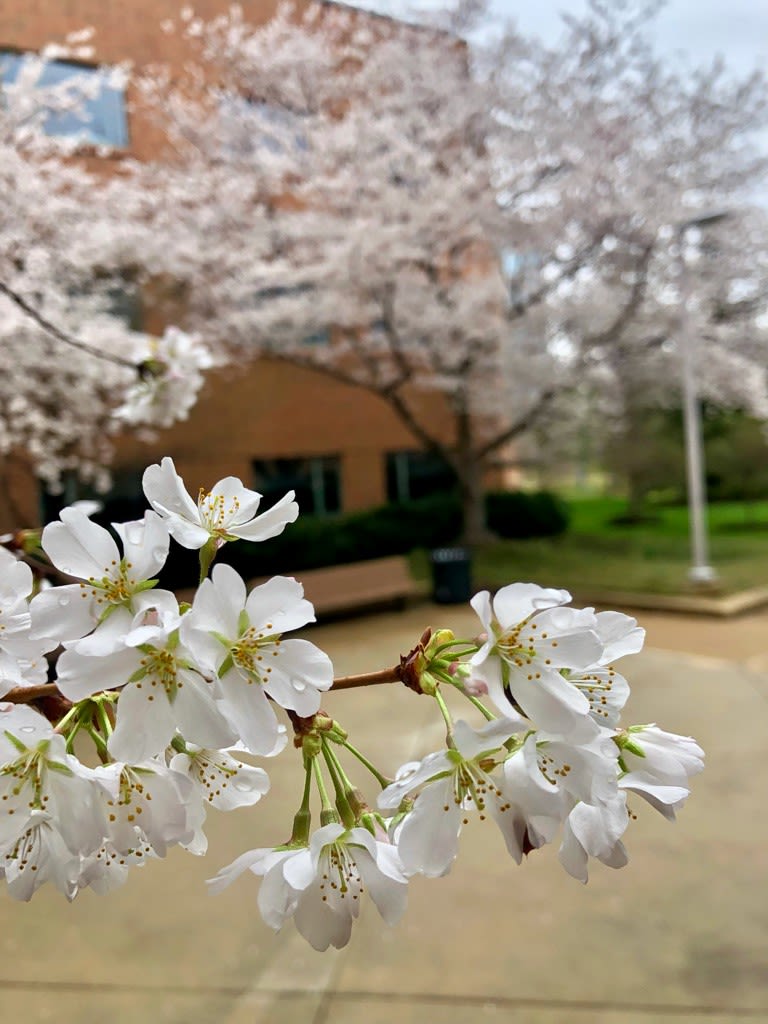
The flowers of a Yoshino cherry
The flowers of a Yoshino cherry
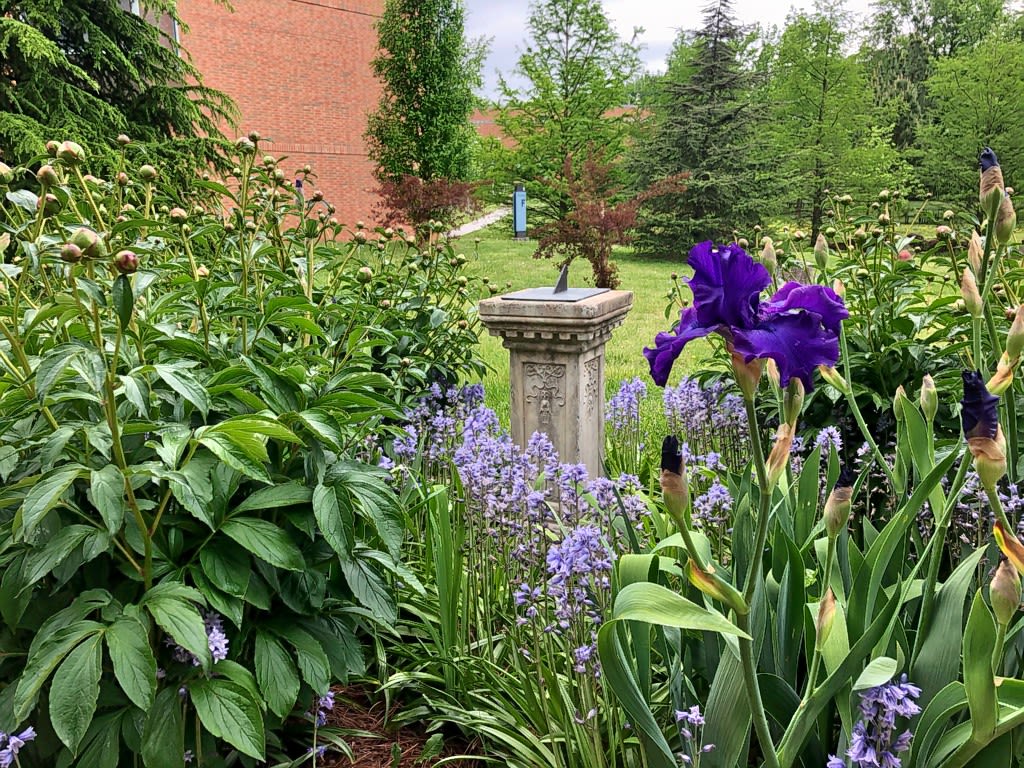
Spanish bluebells and purple iris in bloom, with peonies budding
Spanish bluebells and purple iris in bloom, with peonies budding
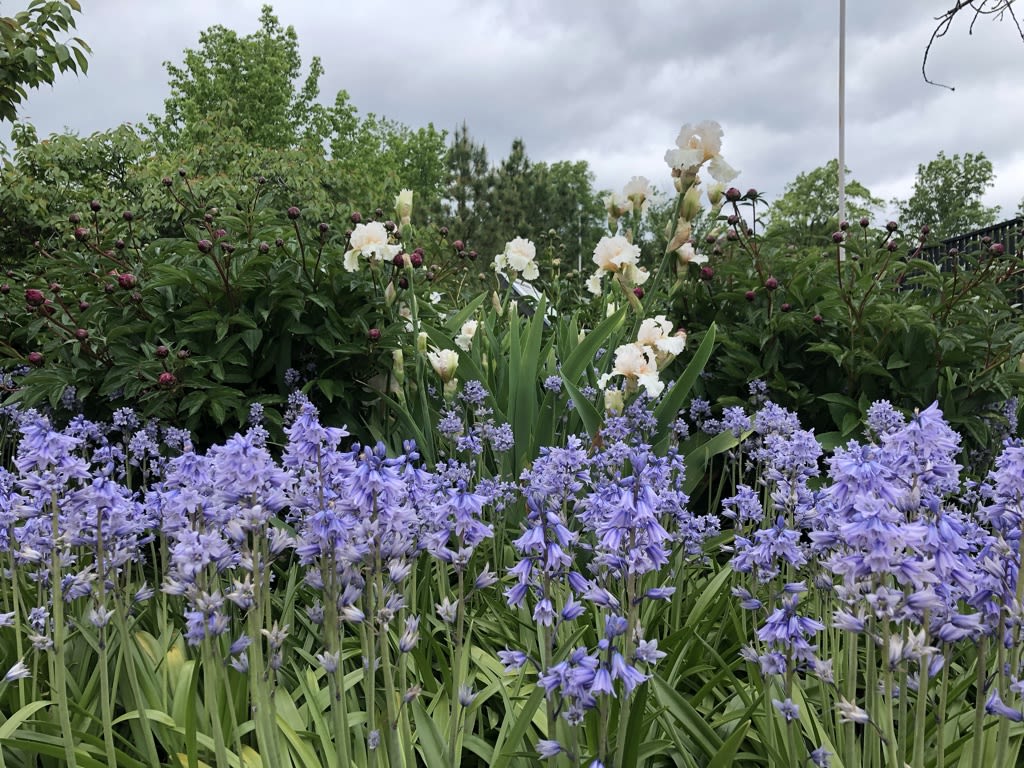
Spanish bluebells and white iris in bloom, with peonies budding
Spanish bluebells and white iris in bloom, with peonies budding

The feathery branches of Lebanese cedar drooping under the weight of snow in winter
The feathery branches of Lebanese cedar drooping under the weight of snow in winter
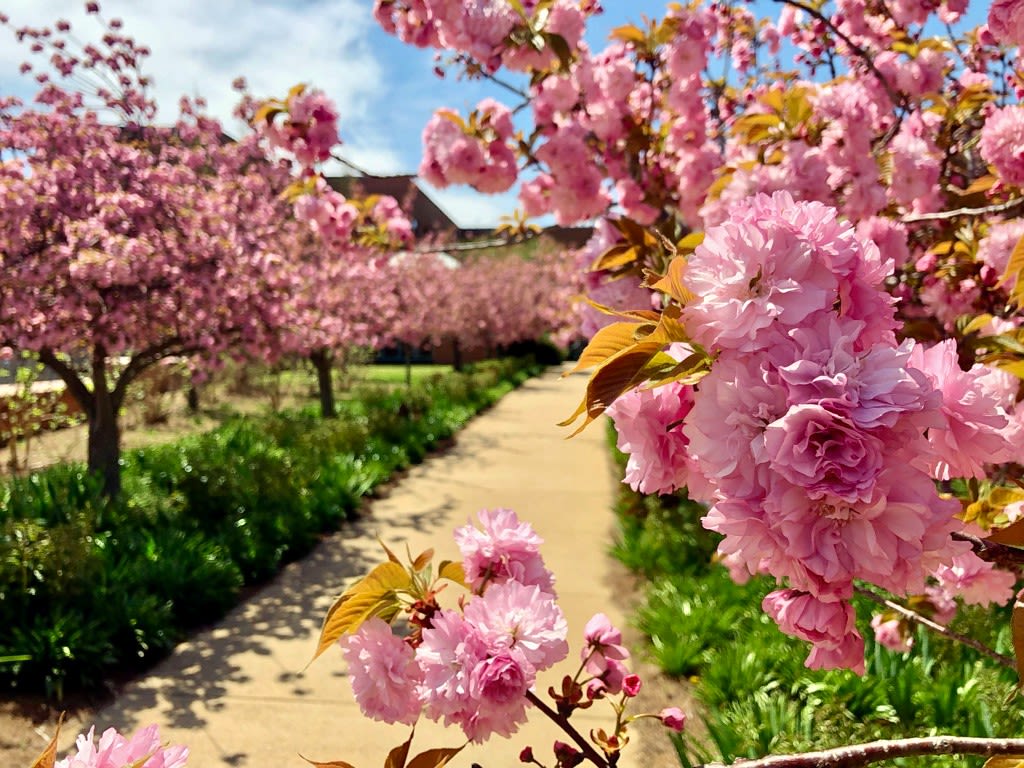
The flowers of a Kwanzan cherry
The flowers of a Kwanzan cherry
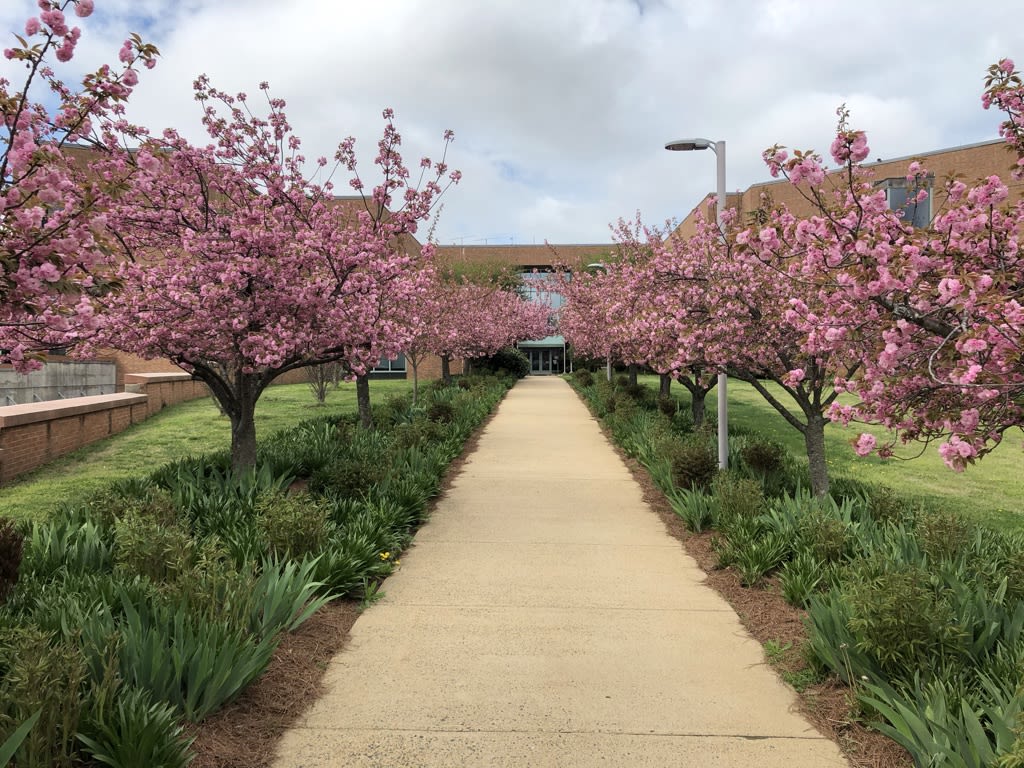
The Kwanzan cherries that define the Promenade, in bloom
The Kwanzan cherries that define the Promenade, in bloom
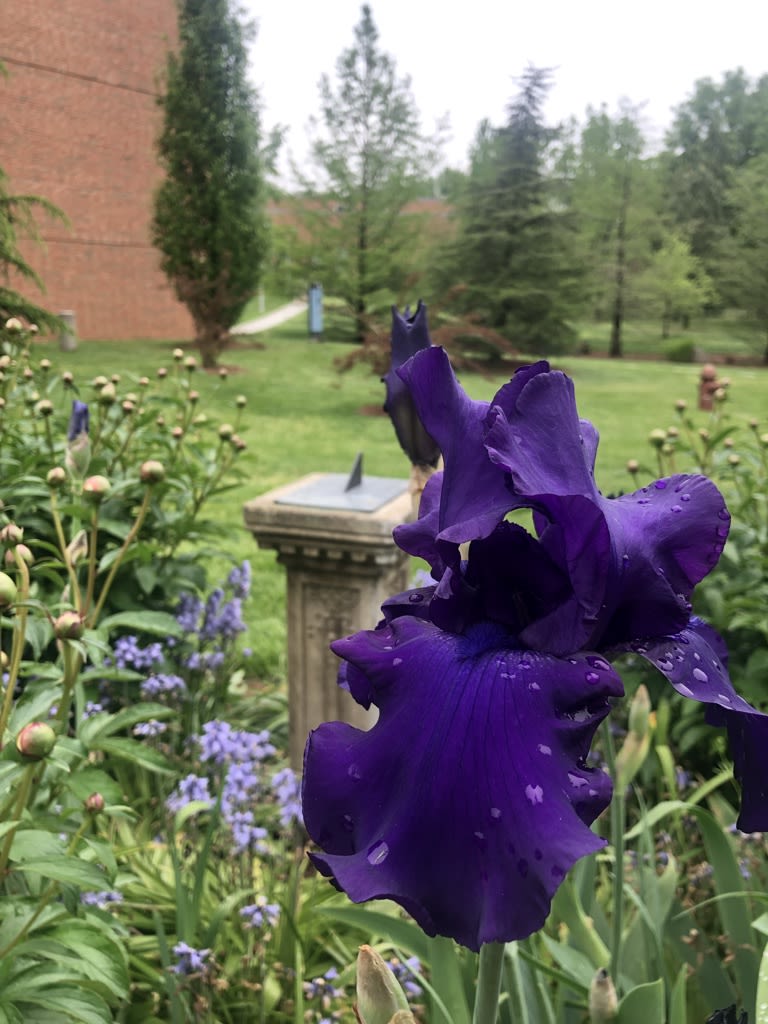
Purplse iris in bloom, next to peonies
Purplse iris in bloom, next to peonies
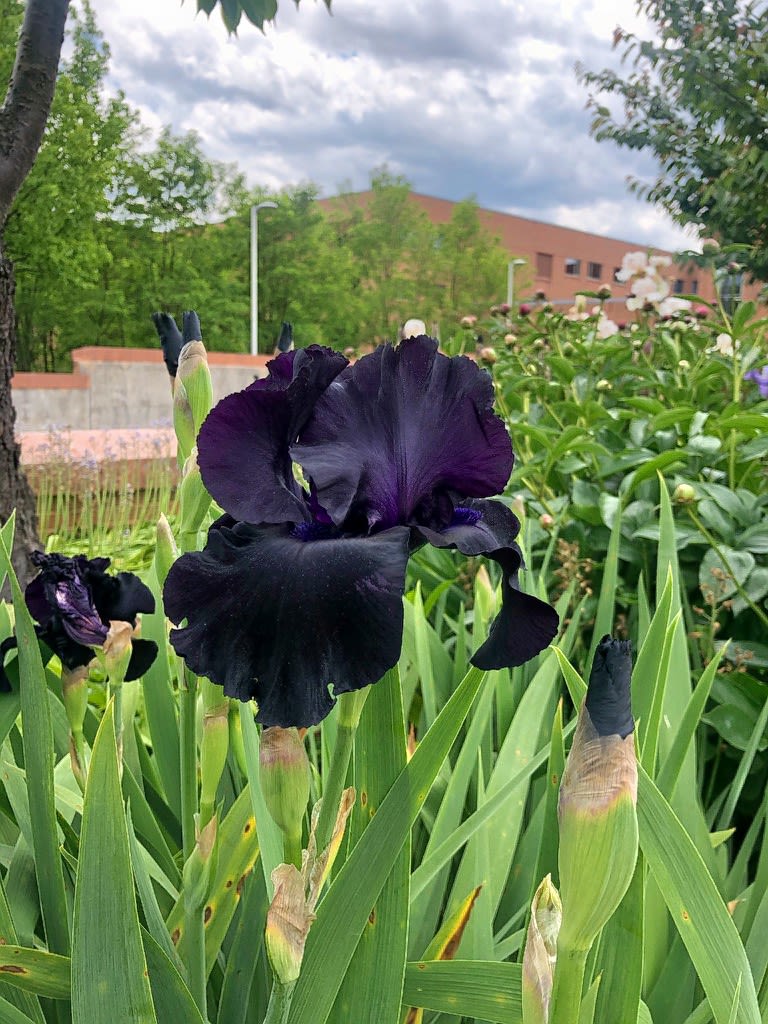
A uniquely dark iris in bloom
A uniquely dark iris in bloom
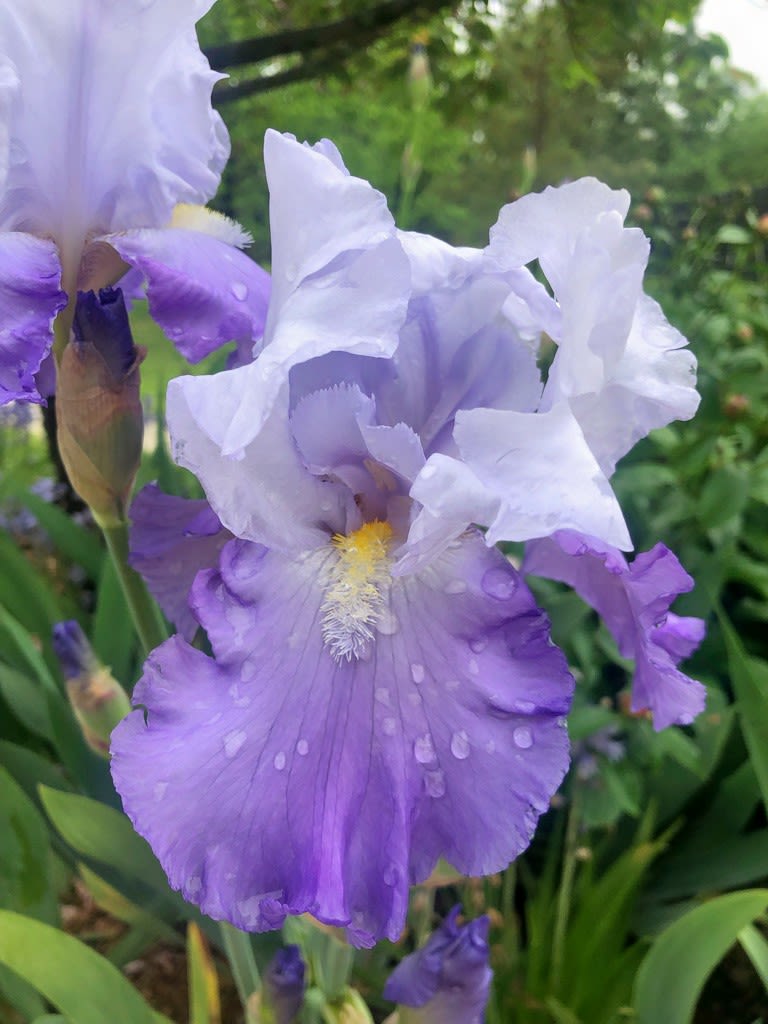
A two-toned iris with a yellow beard
A two-toned iris with a yellow beard
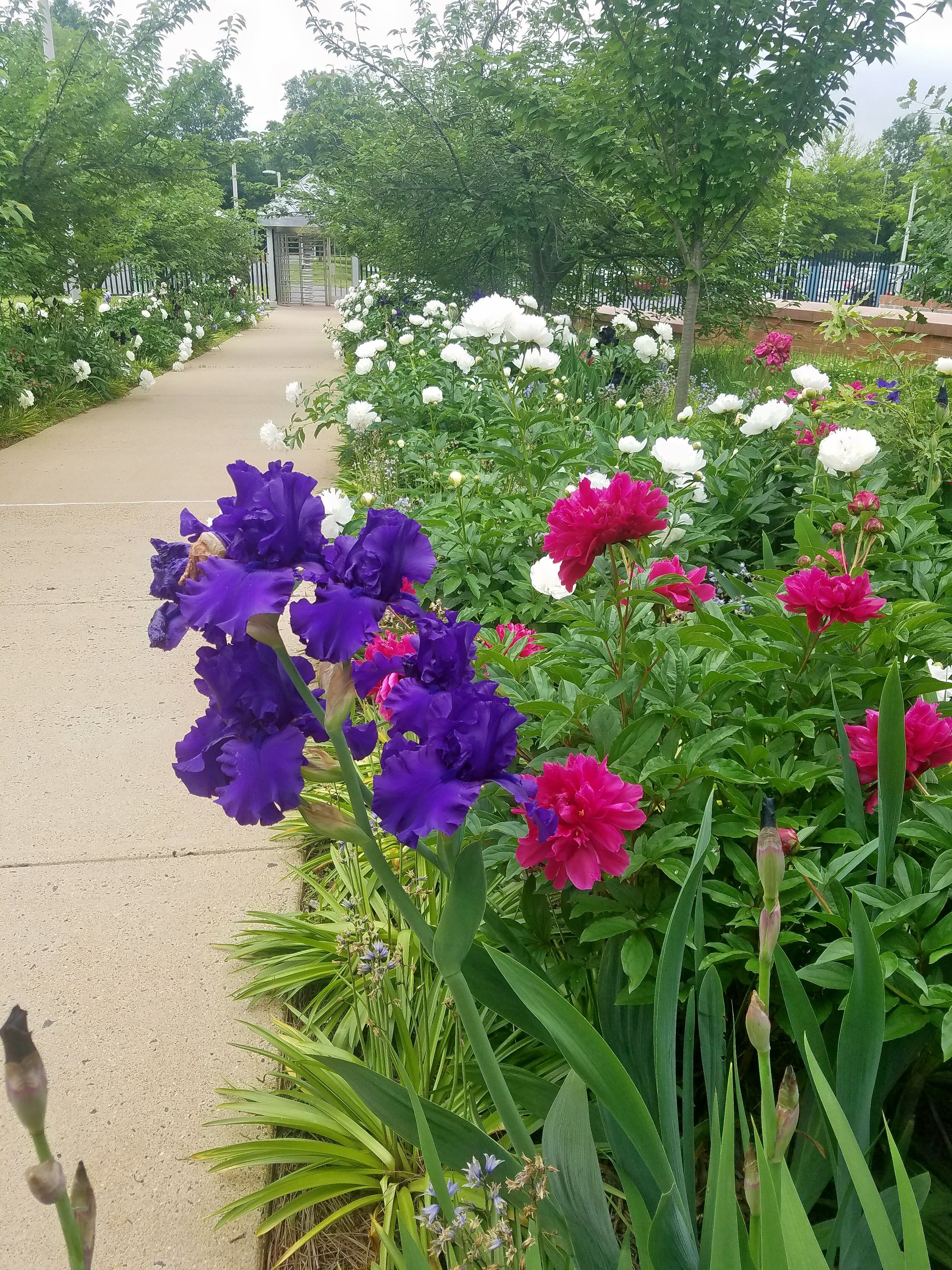
Purple iris and red and white peonies in bloom
Purple iris and red and white peonies in bloom
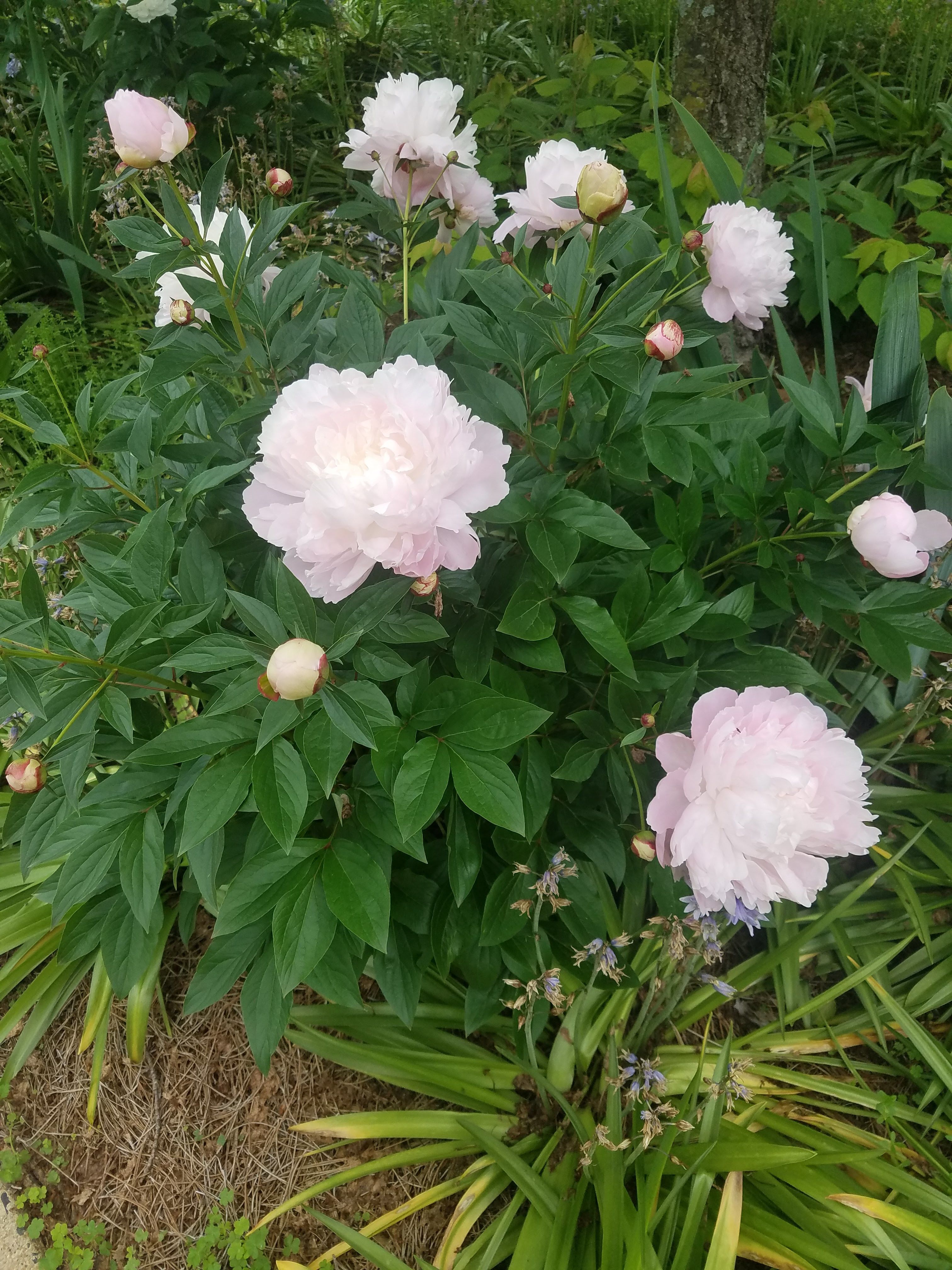
White peony in bloom
White peony in bloom