
The Stumpery
The Grounds at NFATC


Stumped? You’ve likely found yourself at the Stumpery if you’re asking yourself the question, What is this?
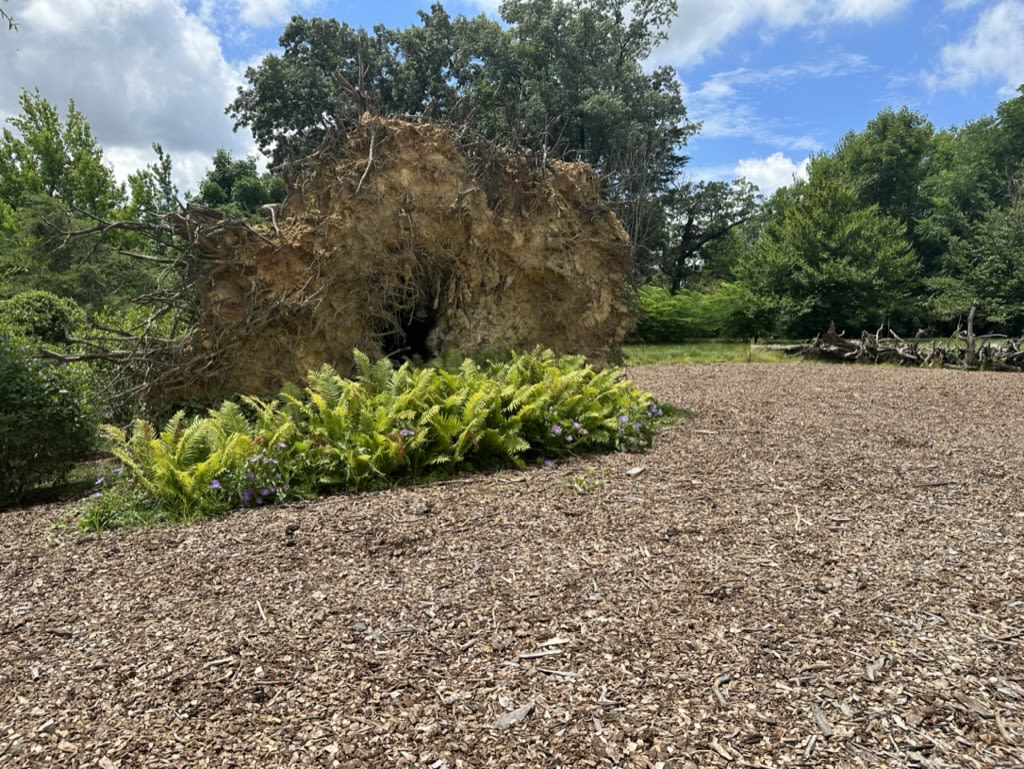
The Stumpery is a place of homage and meditation, adorned with ferns, with fallen trees transformed to sculpture instead of being taken away and disposed of. All at once, each fallen tree bears a past life, decay, and, as it decomposes, rebirth.
The Stumpery is for your visitation and contemplation. Sit, breathe, wander, get up close, and ask questions such as, What is this?










Horticulturist's Tour
Listen to NFATC Horticulturist Darren DeStefano talk about the conception of the Stumpery and the meaning gardeners and viewers alike can find in a stumpery.
Select the play button to listen to the audio as you follow along with the transcript below.
Welcome to the Stumpery, perhaps the most unusual garden on campus.
Not sure how many people would be familiar with the Stumpery. You've walked all the way back here, so you must have been looking for something. And indeed, you found it.
(Scroll to follow along with the audio.)
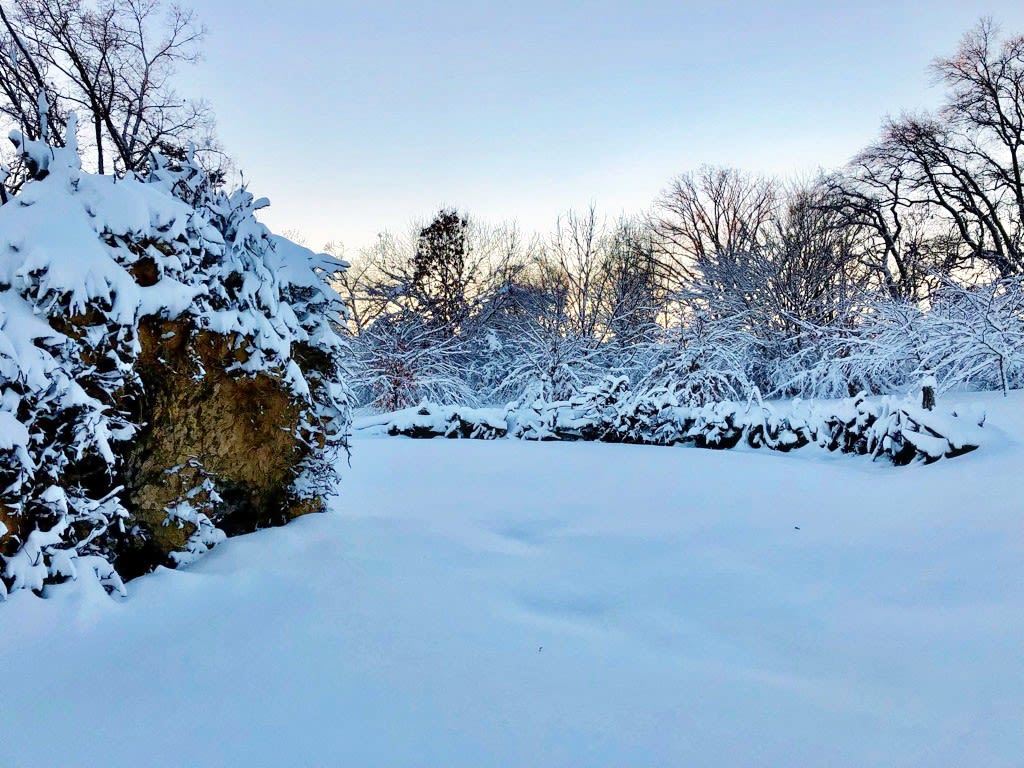
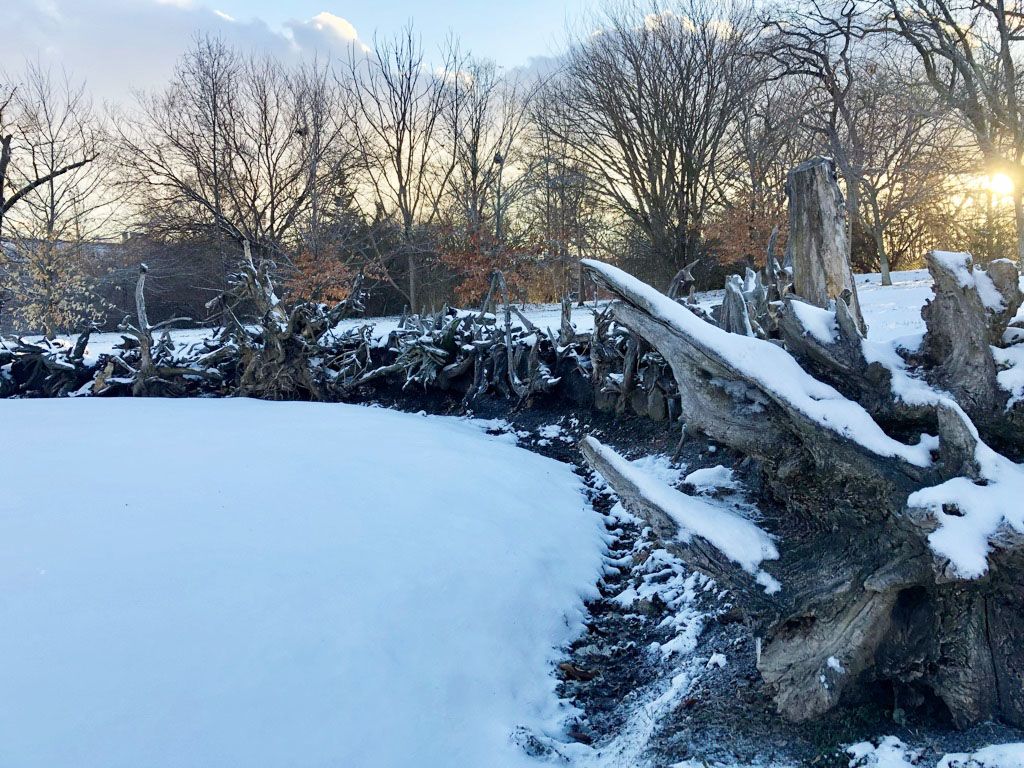
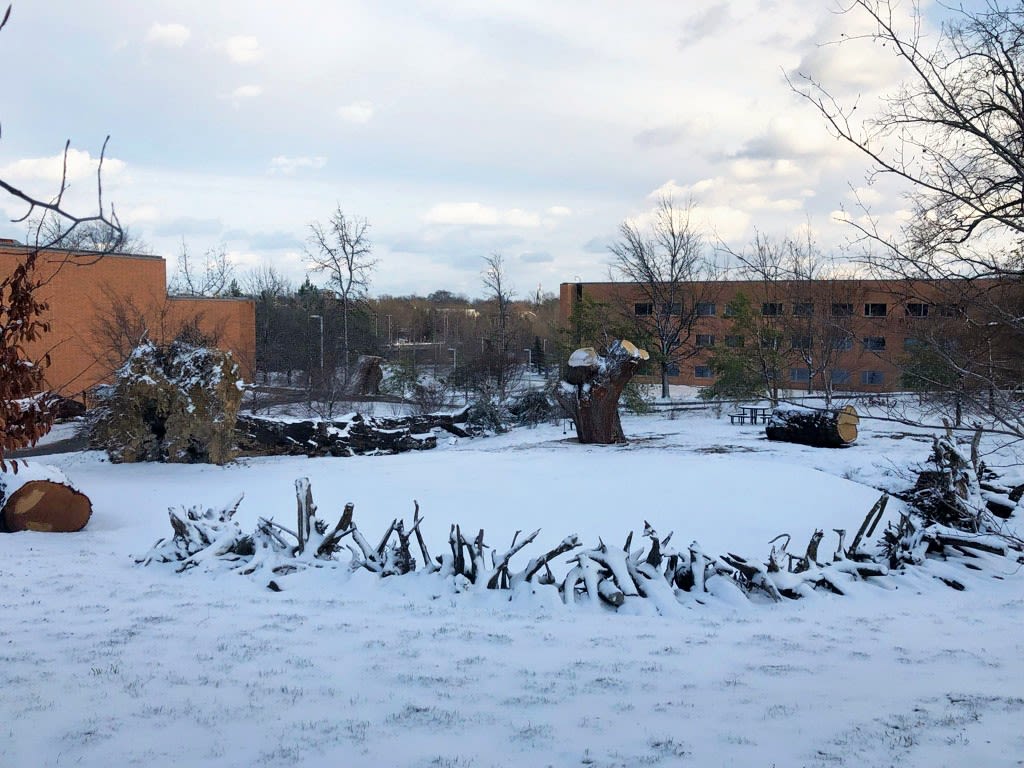
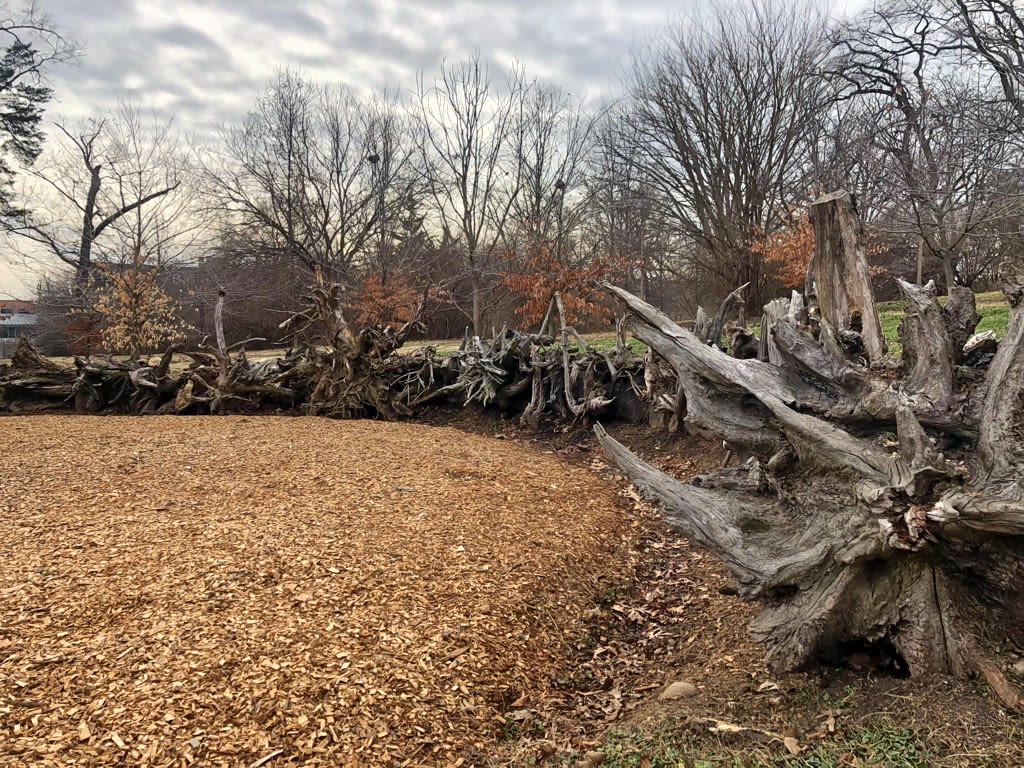
So, the Stumpery was created in response to the loss of one of the largest willow oaks on campus during a winter gale in 2018. For me, it was a tough moment, and I needed to make lemonade. I did what gardeners did centuries before when they lost a noble old tree on the property. I honored it, and I did it with materials that I had at hand. The original idea was to create a henge, an arc, and to focus that arc on the roots of the fallen tree.
The willow oak, it didn't just fall, it was thrown. So, the root plate just popped right out of the ground, and that's an unusual circumstance to have in a landscape. And so, I focused that arc right on that root plate.
Then I decided to exhibit my stump collection. Right? All of these root pieces that I had been gathering for the past 10 years. I mean, every time some interesting, smaller tree had thrown or was able to be pulled out, I kept it.
If you actually go back to really old European gardens, the Stumpery is almost always something that's been left in the back 40. They've disappeared from a lot of gardens, but they have remained in a good number. They're these private places or quiet spaces in the garden, and they're places of reflection and memory, especially if they're holding, like I said, some of the noble trees of the property. And in this time before mechanized equipment, it evolved from being a space of waste into a space of celebration of decay, recognizing the cycle of life.
And I created the Stumpery in really the last moments of my service before departure. And I put a lot into it. I really sought to use all of this material that I'd been storing and to create this space. And then I departed and was gone for a couple of years.
And upon return, the Stumpery had kind of grown over a bit, and it was the hardest space for me to return to. I kept walking by it and being like, 'Ugh. I really need to do something with that. It never got to where I wanted it to be.'
And then in January of 2022, after a long battle to try to retain the largest tree in Washington, when it became clear that I could not preserve it, I immediately shifted gears and said, 'Just give me the wood.' That was a difficult task. And, you know, with any loss, it inspires a lot of action.
There's a lot of decisions that have to be made rapidly. You have to decide what you're going to do and how you're going to resolve the situation. What is done for that thing, what is the process? That was when I decided, 'Oh, we're going to honor this piece here.' And when I lost this tree, I had to make snap decisions, and it was a resource that took over a hundred years to create—I didn't want to see it just discarded.
So, when the tree was being cut, I offered that the pieces could be deposited over at the NFATC. And so, we received these chunks of wood, and then I immediately had to decide how to display and exhibit them.
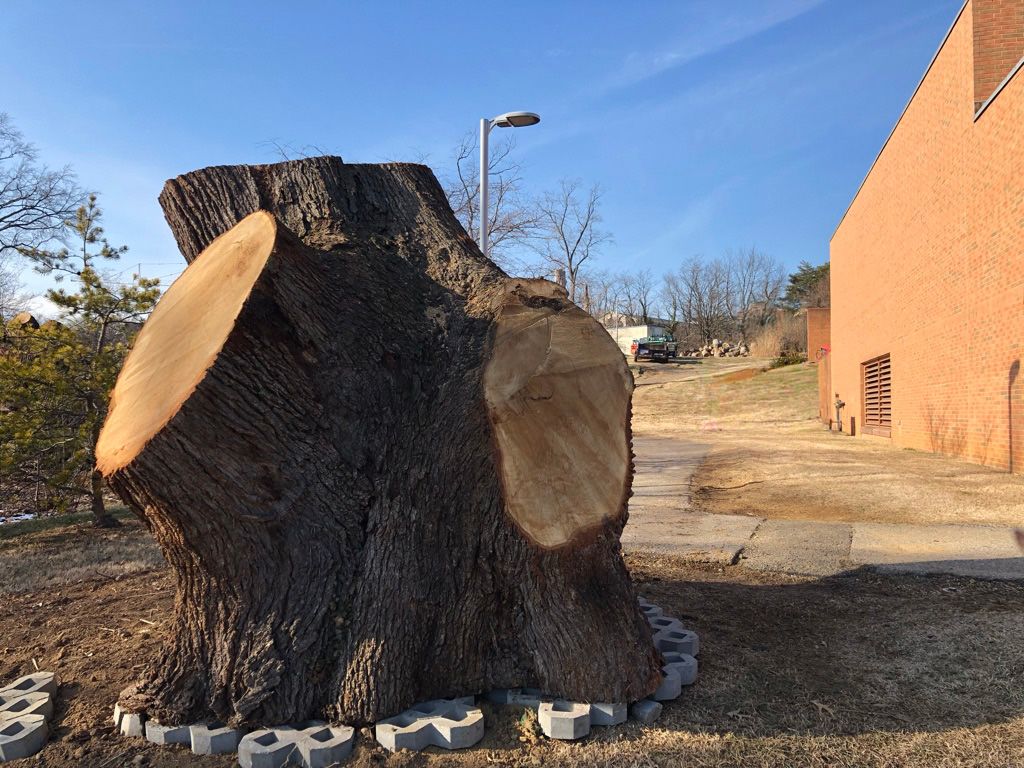
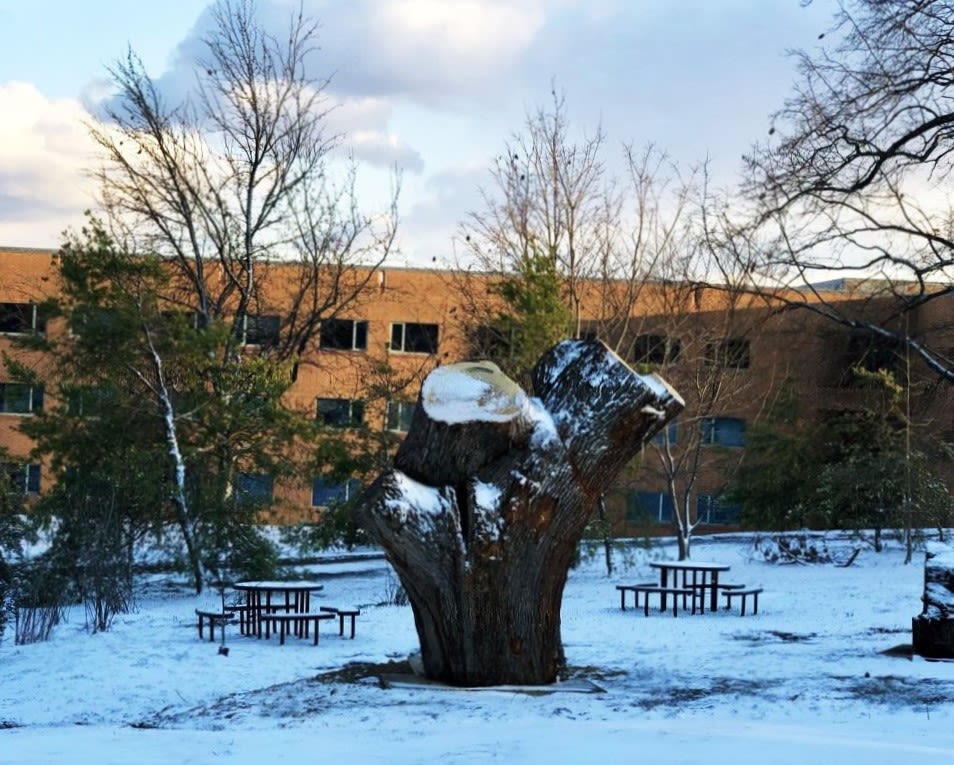
And so now when you enter this Stumpery from the south, you go by the base of this tree, this massive eight-foot diameter trunk anomaly in architecture where it had, really it was multi-stemmed rather than being a single trunk, which was the more common way that a burr oak like this would grow.
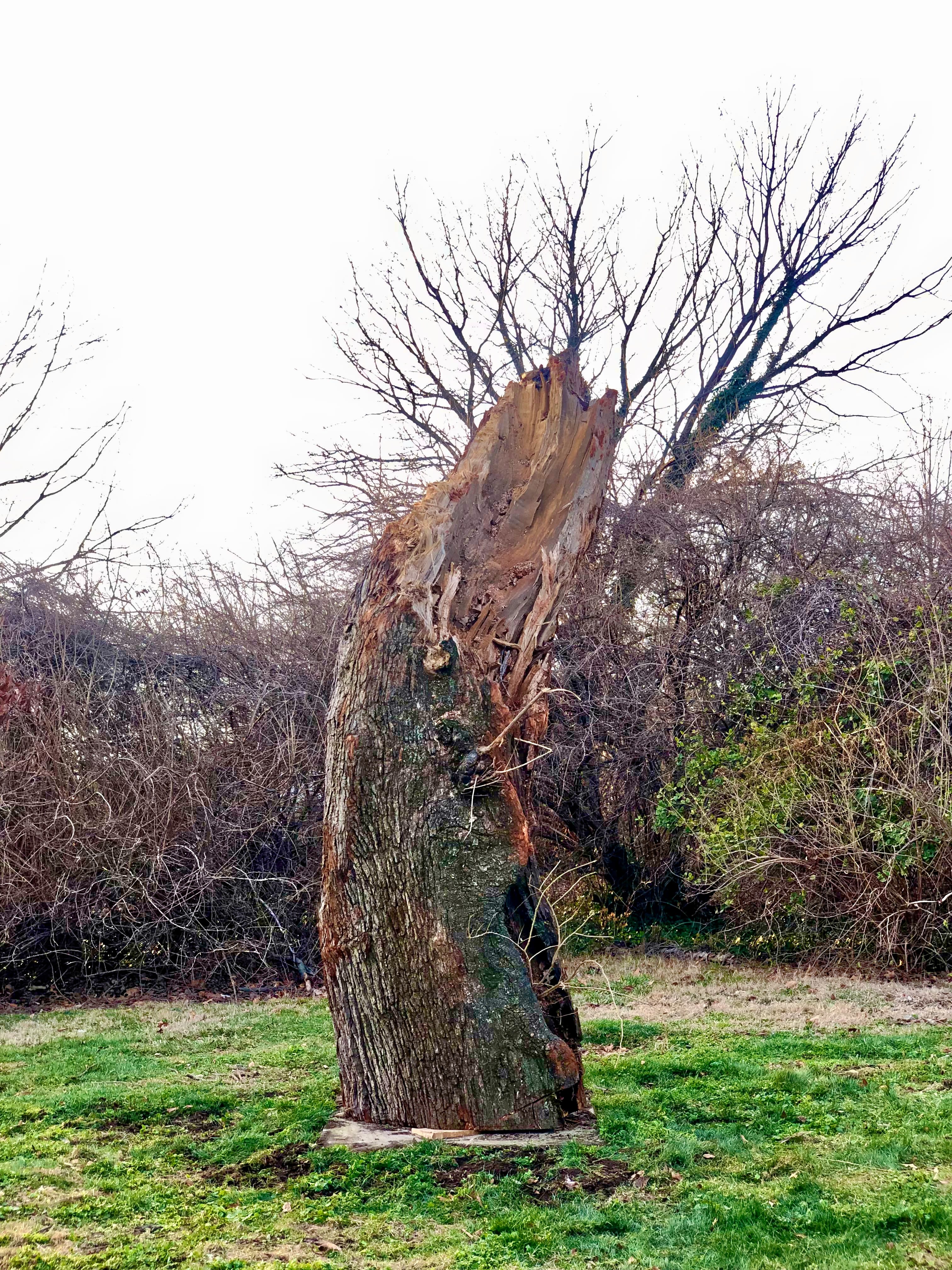
And then at the top, one of the highest points on campus, I put the Flame—this branch that had actually broken after a storm that precipitated the removal of the tree.
And in the center of the Stumpery, on a reclaimed concrete slab, I put the tortured torso of that tree with a gash right in the heart. And really, for me, this is a piece that looks a lot like the Laocoön (opens in a new tab). It expresses this tension and twisting; it's writhing in pain; and it exhibits this entasis, right: this tension that makes it feel sculptural and alive.
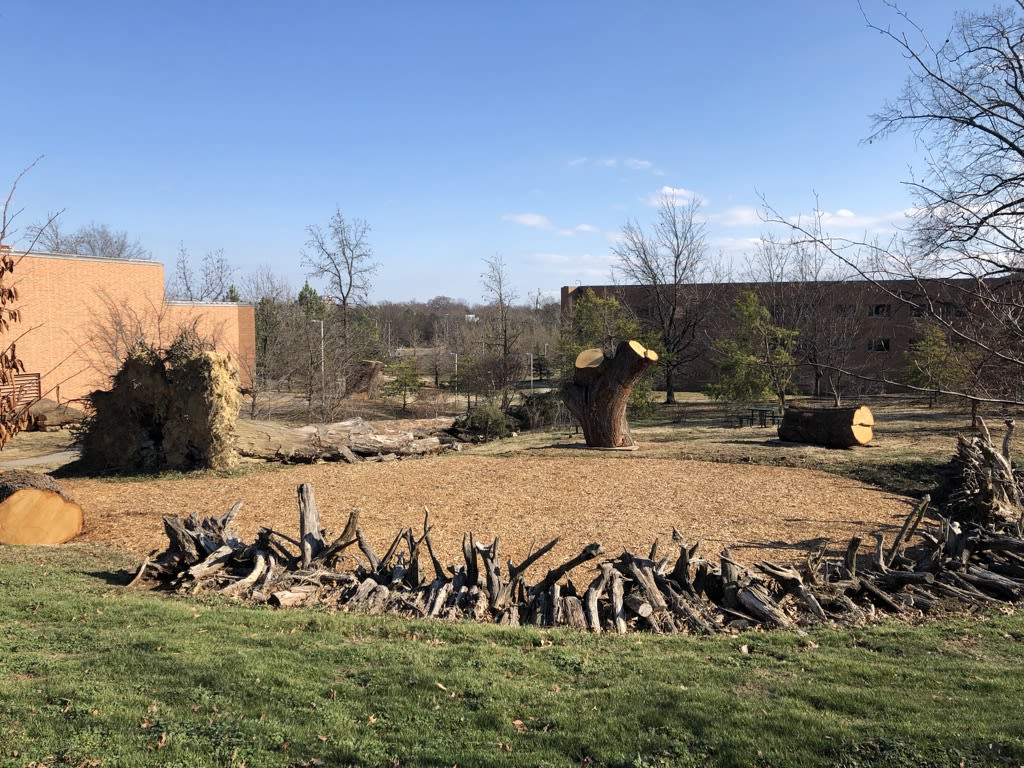
And once I set these pieces in there, and then covered the circle with the wood chips from the tree, it really became a garden of reflection, right? A space to go and leave things behind, to move forward.
Rebirth in the Stumpery

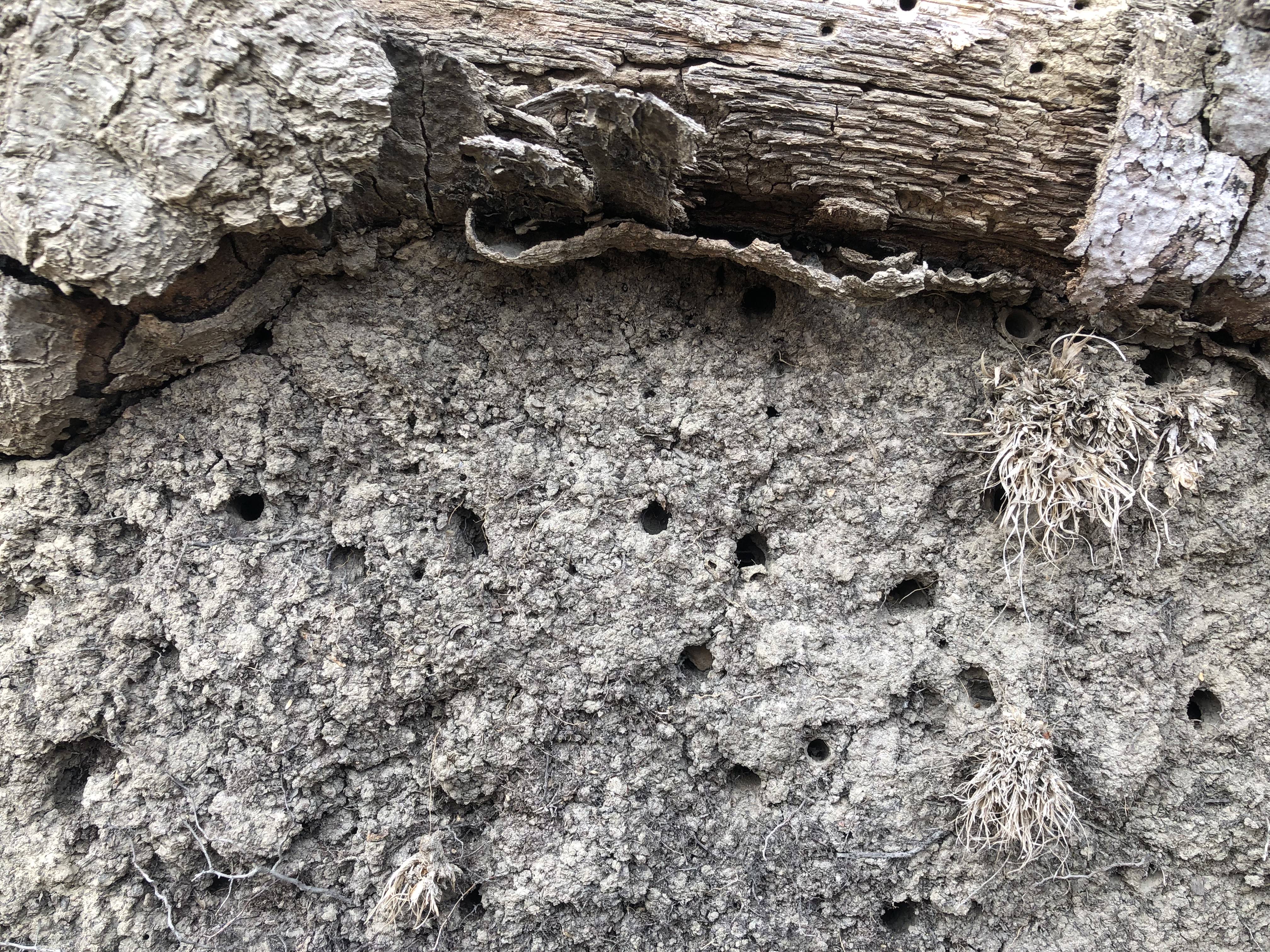
Holes made by boring bees in the stump of a tree
Holes made by boring bees in the stump of a tree
Boring Bees Nests
Be sure to take a close look at each tree in the Stumpery. This is how you’ll find signs of rebirth, such as these holes created by boring bees building nests.
Look around for signs of other critters, like foxes, chipmunks, bunnies, wrens, and woodpeckers, using the stumps and their roots for shelter, food, and more.
Through the Seasons
Select each of the images below to zoom in and learn more.
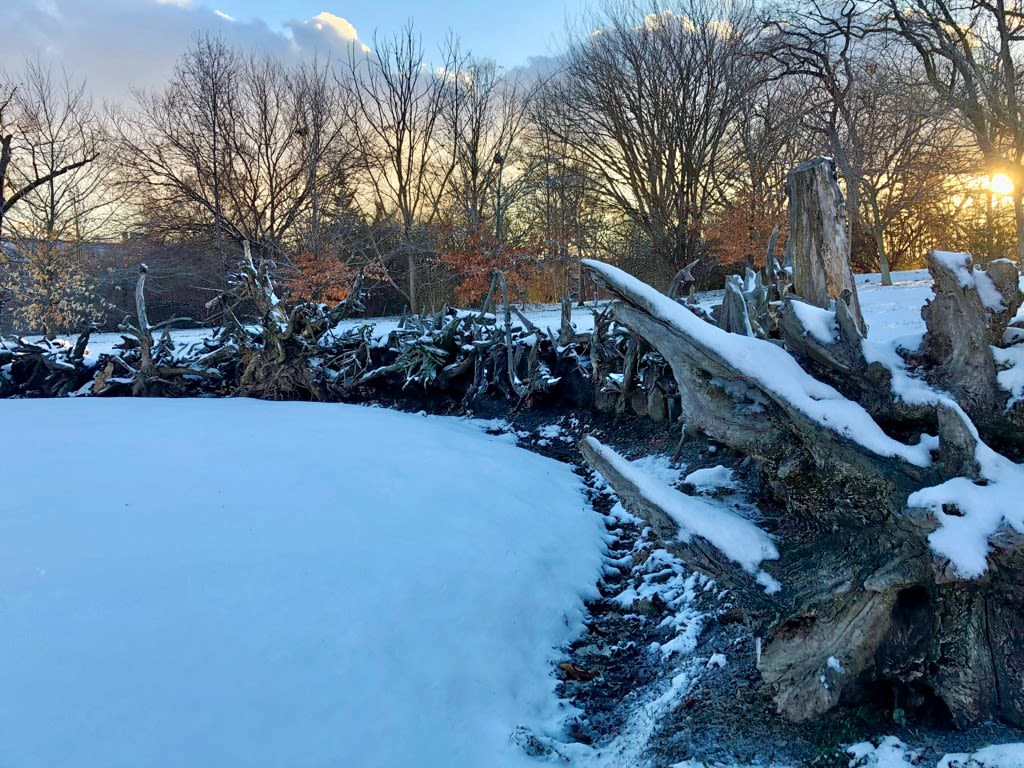
A collection of stumps formed into an arc
A collection of stumps formed into an arc

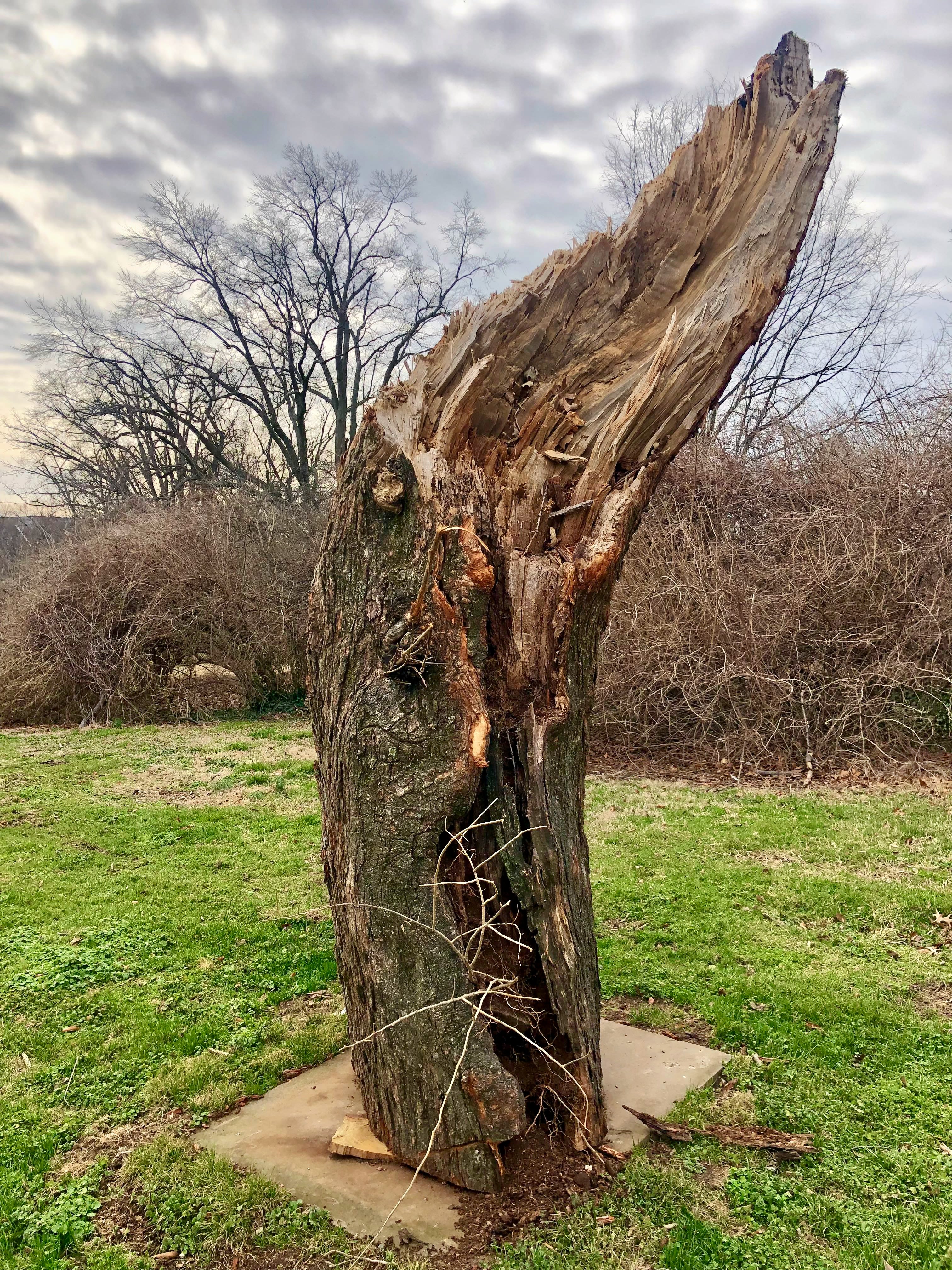
The trunk of a burr oak poised like a flame
The trunk of a burr oak poised like a flame
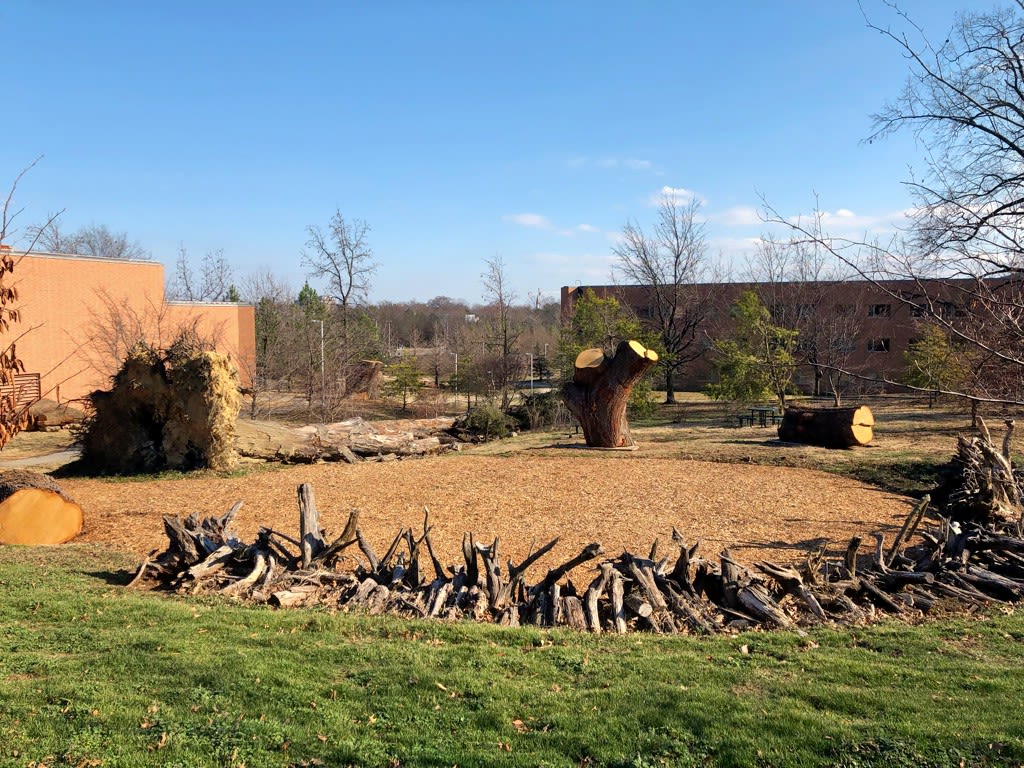
An overview of the Stumpery
An overview of the Stumpery

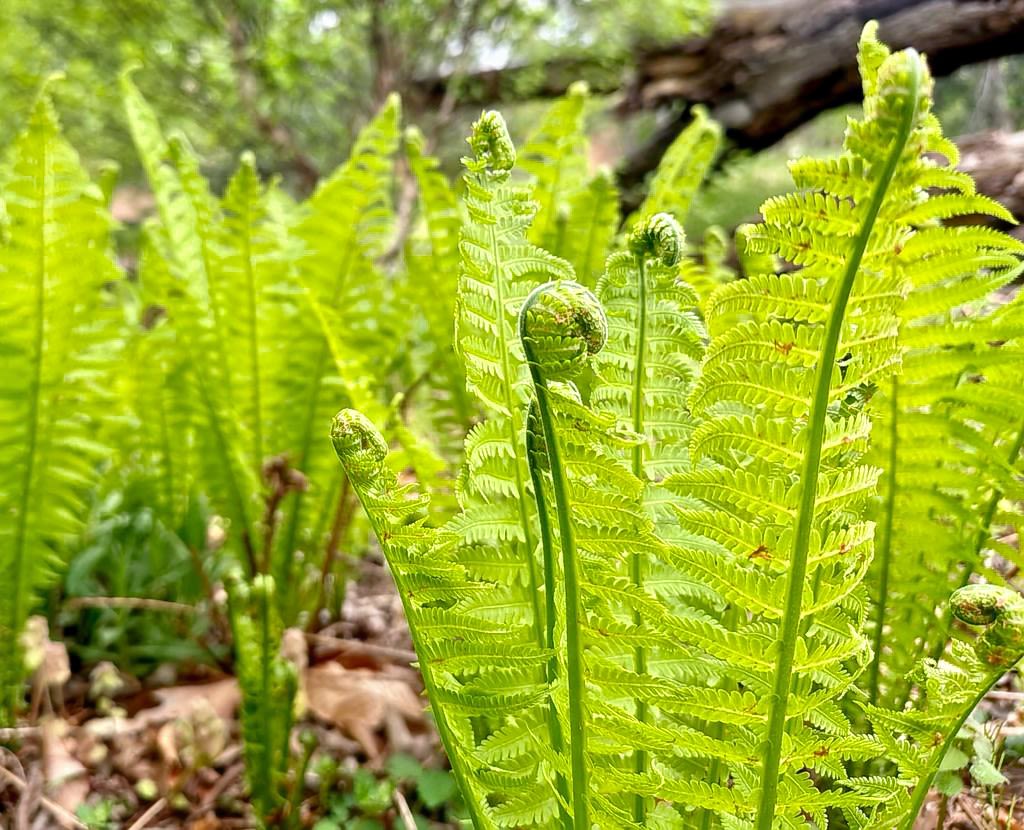
Ostrich fern
Ostrich fern

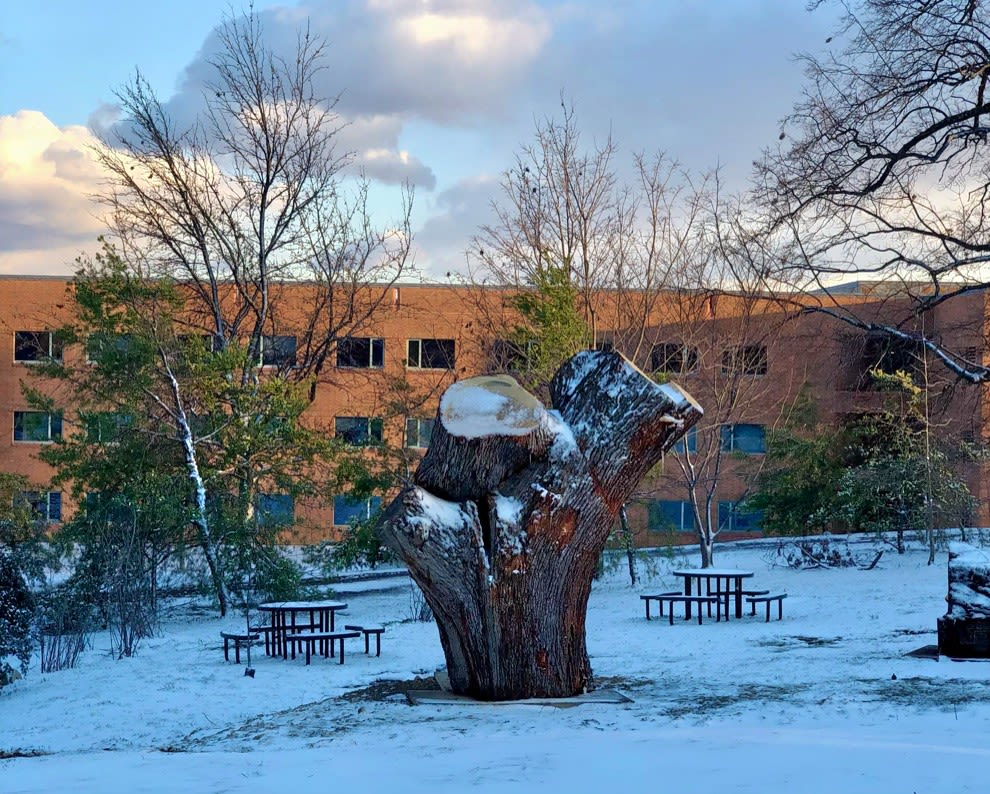
The trunk of what was once the largest tree in Washington, DC
The trunk of what was once the largest tree in Washington, DC
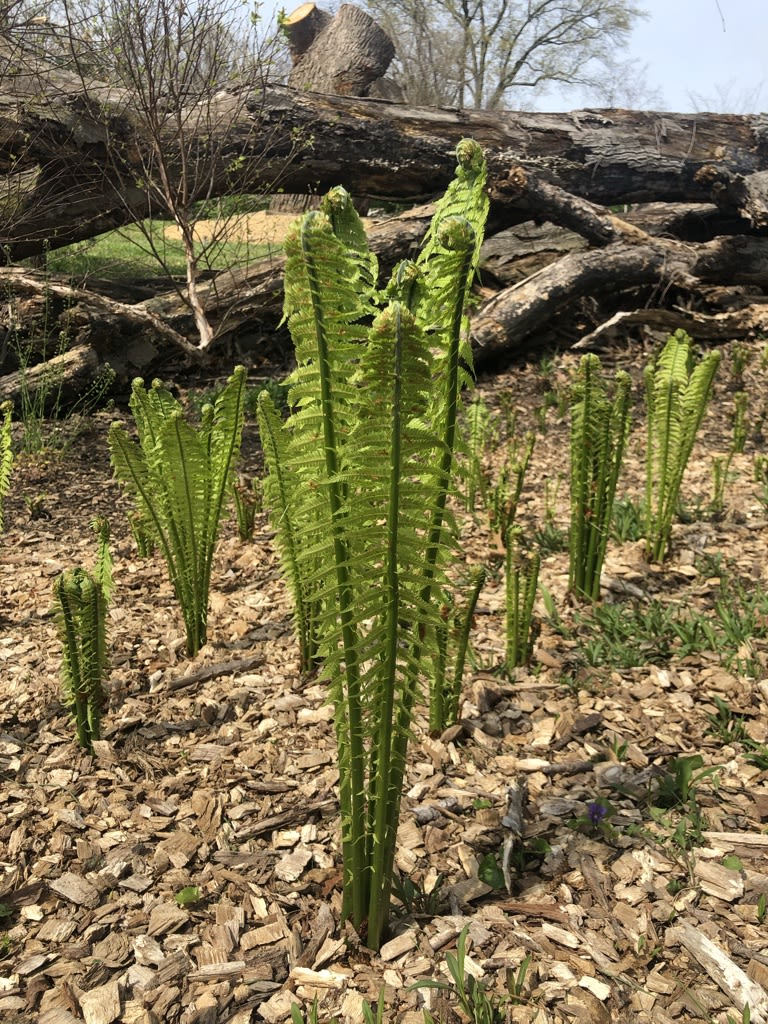
Ostrich fern rising before a stump's bottom
Ostrich fern rising before a stump's bottom
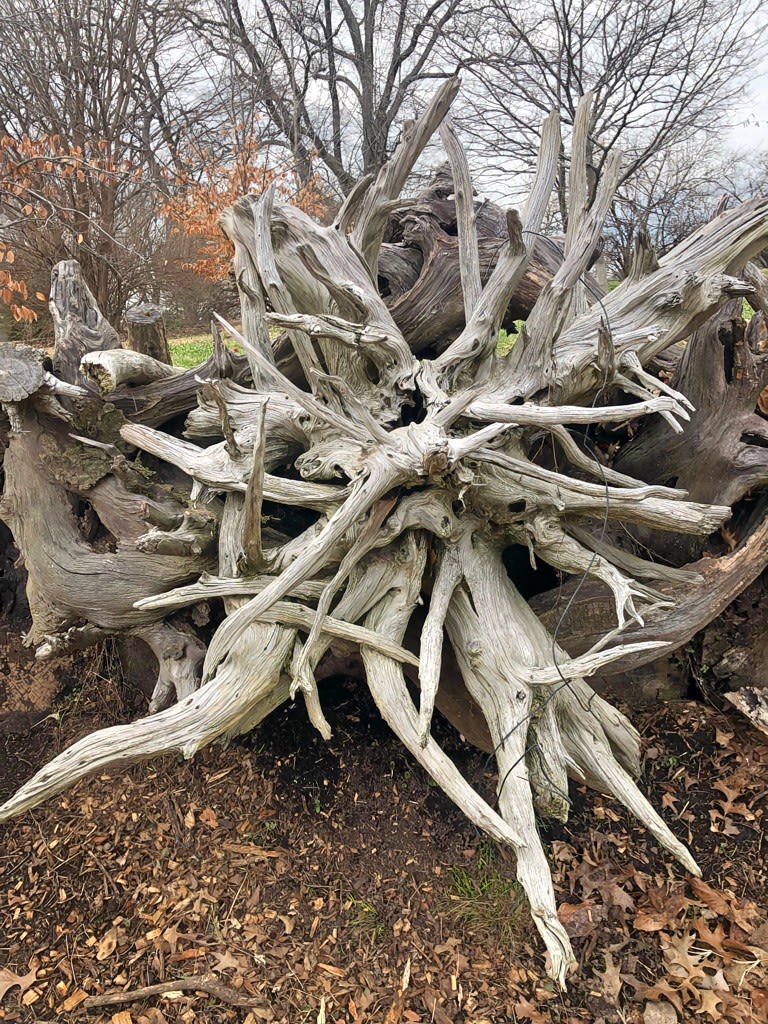
The roots of an Eastern red cedar
The roots of an Eastern red cedar

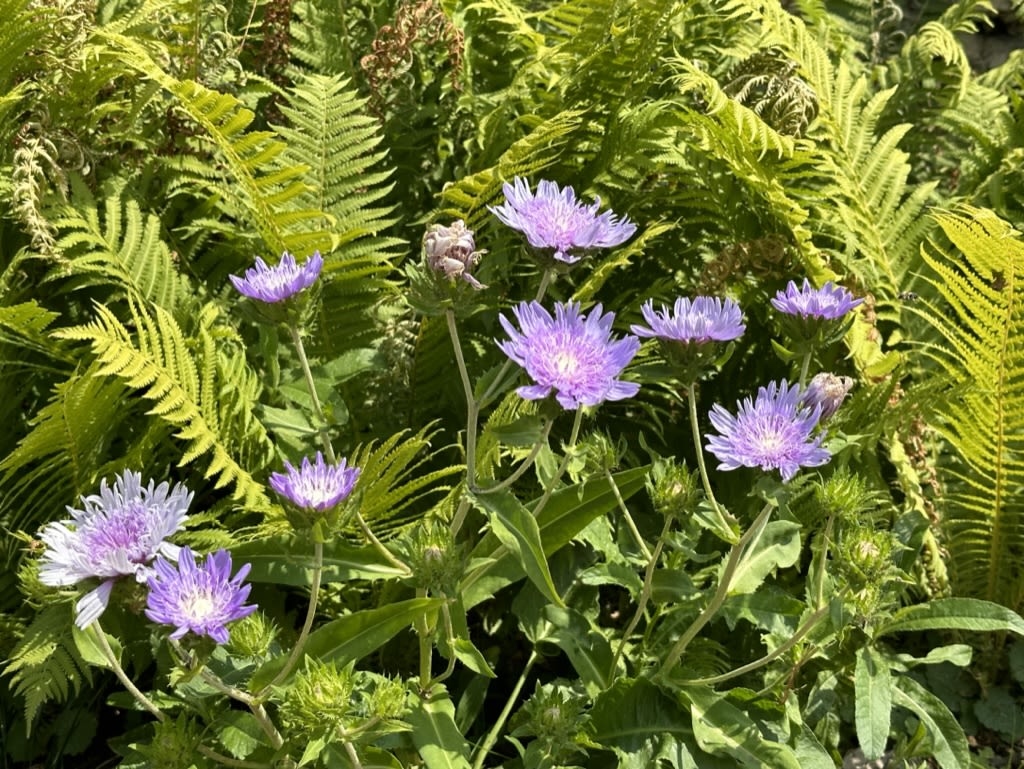
Aster flower
Aster flower
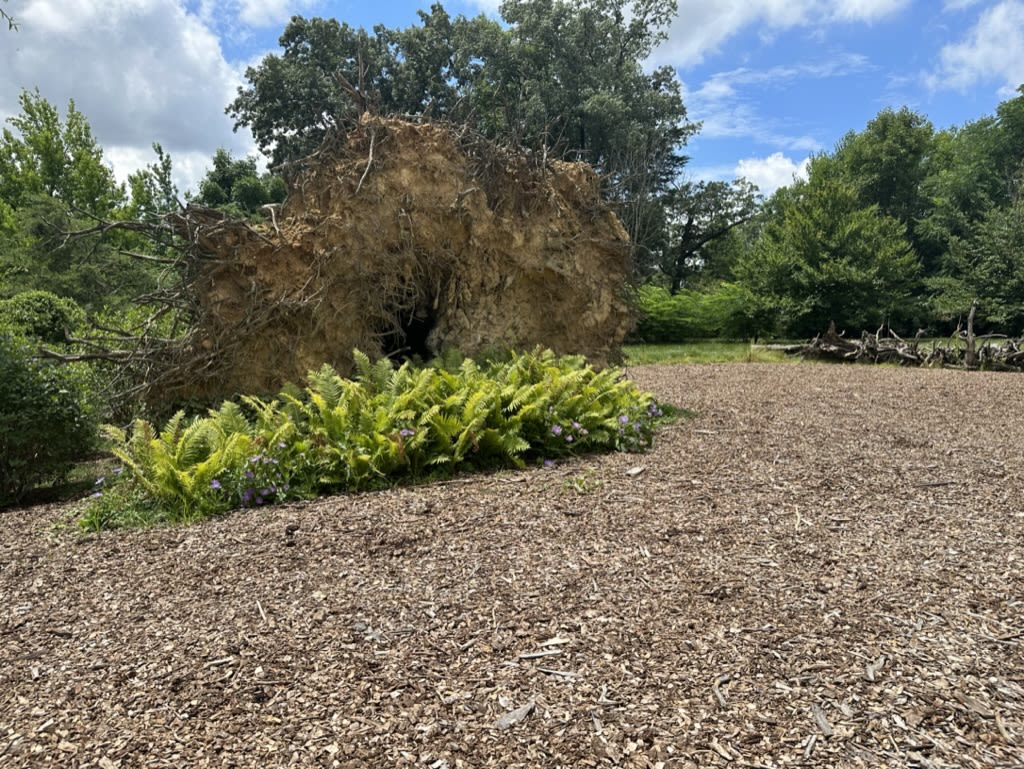
Ferns growing in the Stumpery
Ferns growing in the Stumpery

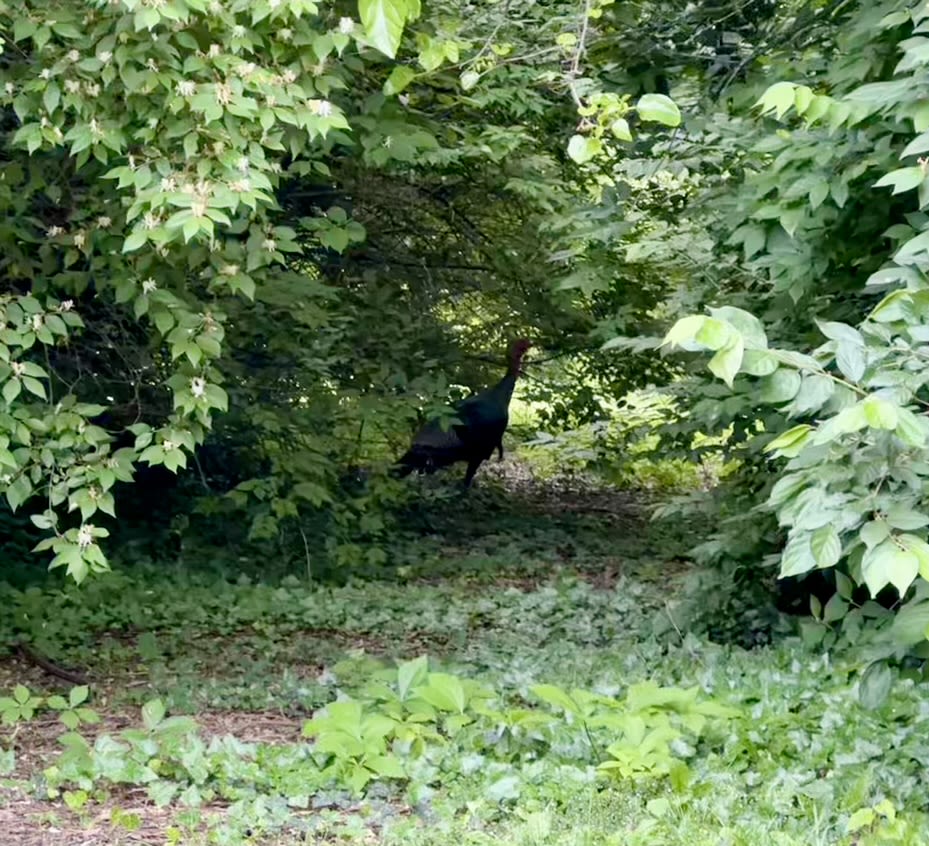
The turkey
The turkey
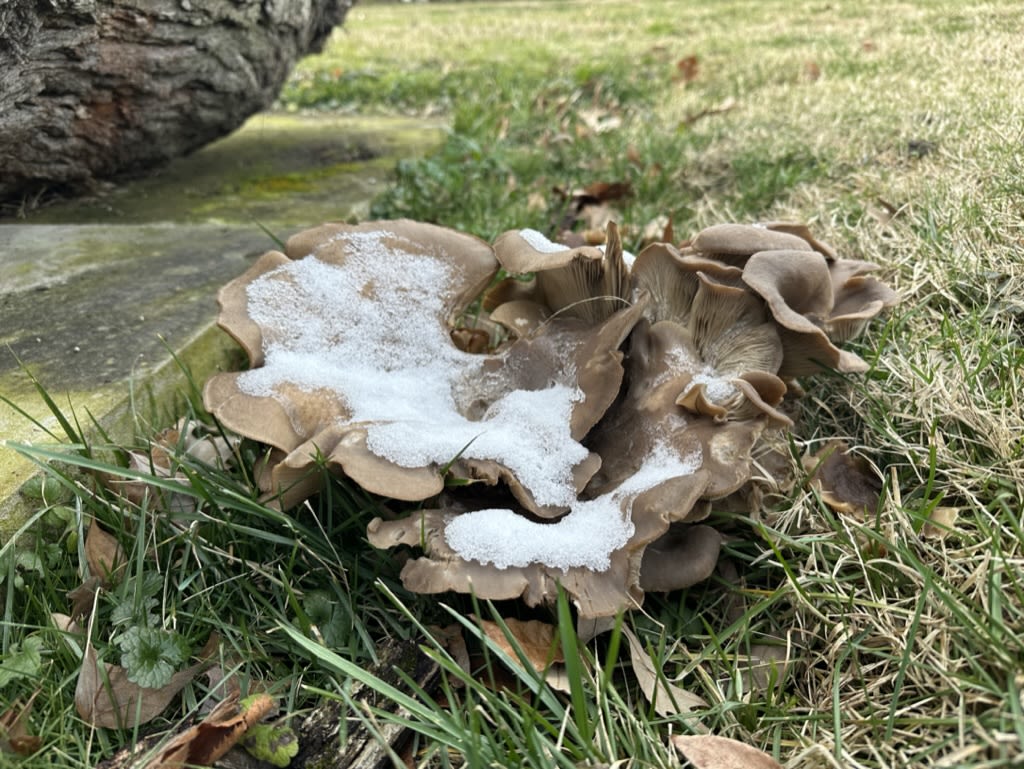
Mushrooms growing in the stumpery
Mushrooms growing in the stumpery
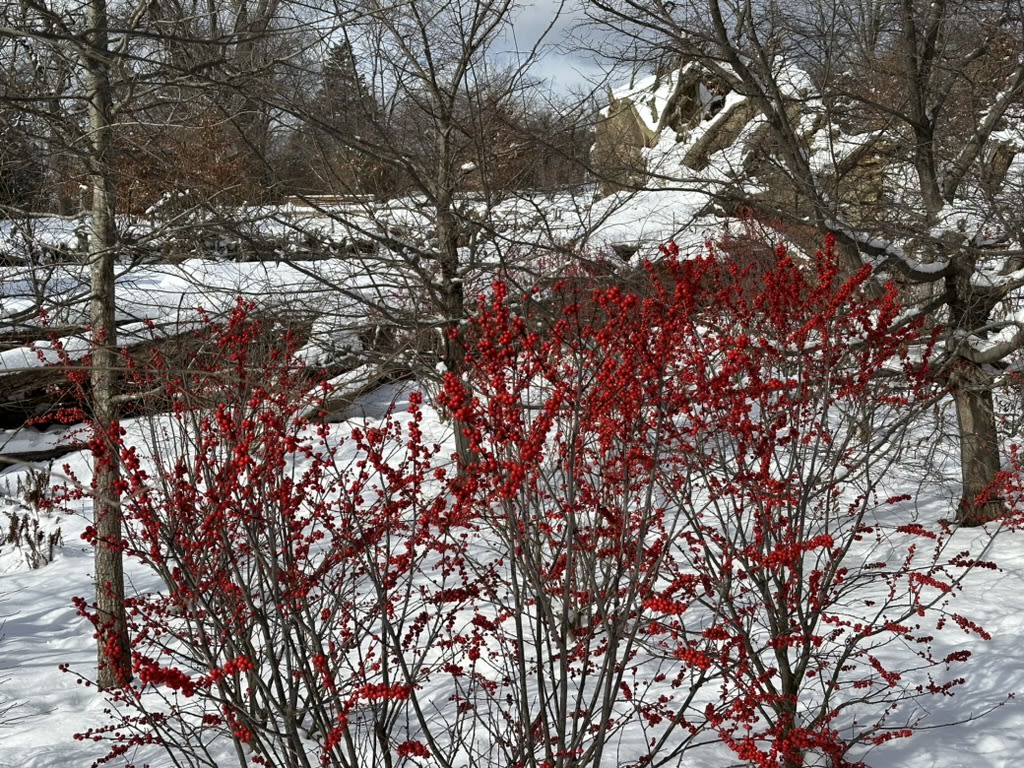
Winter berries growing in the snow
Winter berries growing in the snow
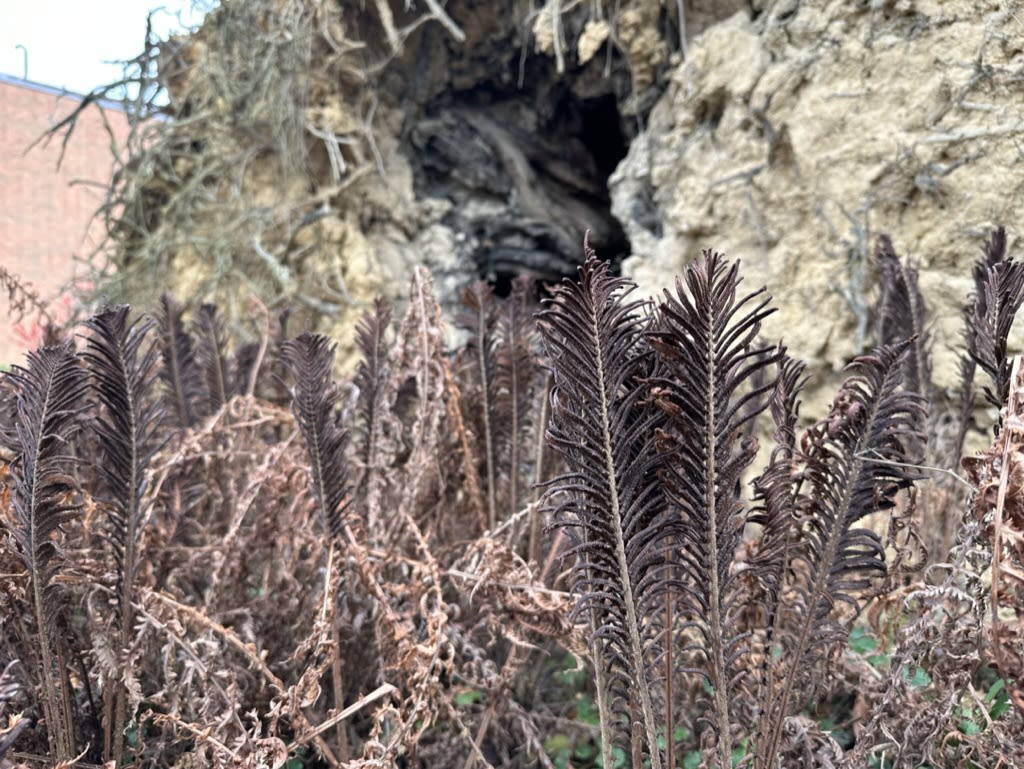
Fertile frond seeds
Fertile frond seeds