
The Rock of Valls Noyes
The Grounds at NFATC
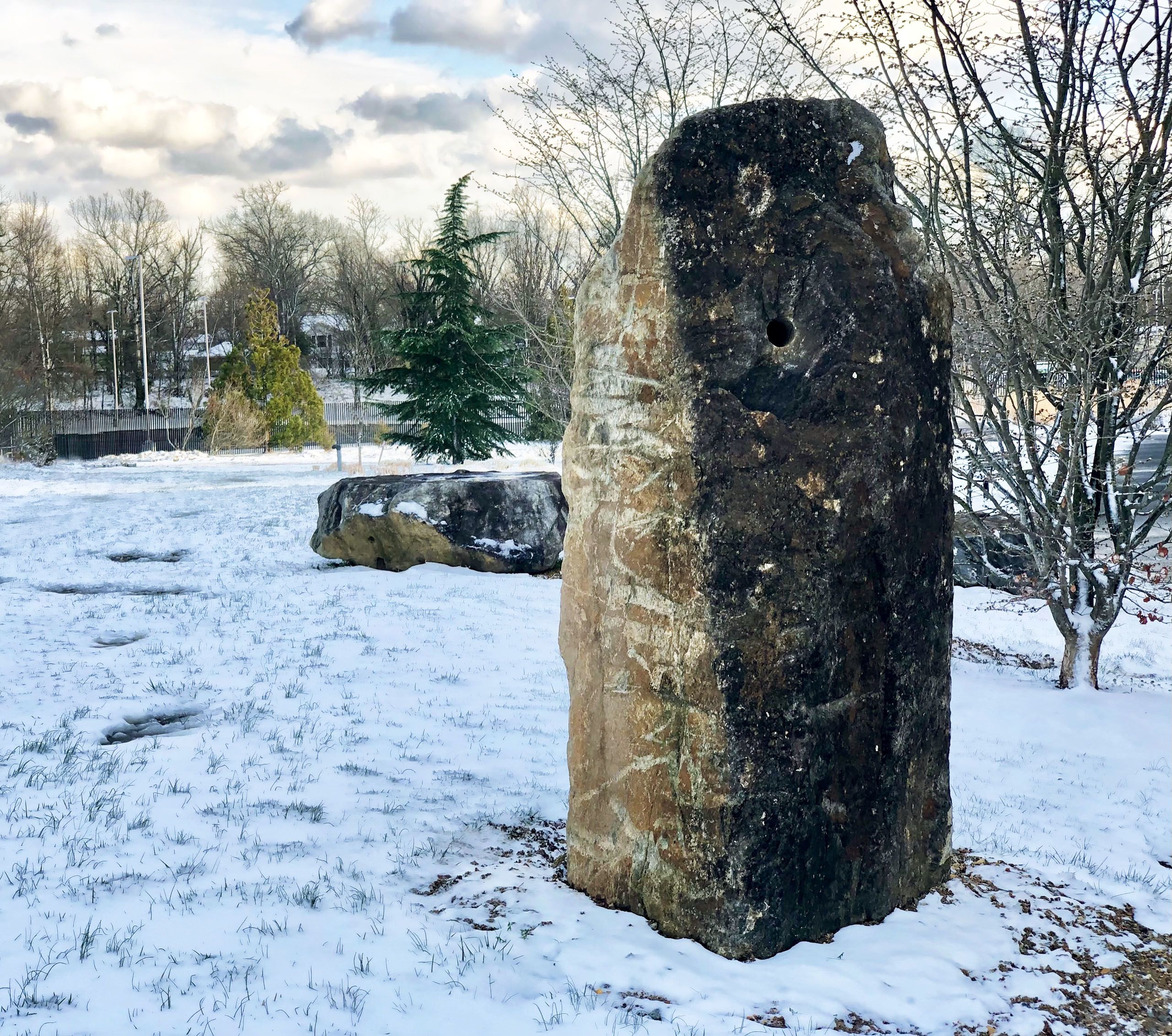

Leadership of individual bureaus within the Department of State, such as NFATC, regularly passes from hand to hand. Like the grounds at NFATC, the well-being of these individual bureaus depends on individual stewardship: those who work in these bureaus look after them with care and dedication so that they endure and thrive for years to come.
The Rock of Valls Noyes is dedicated to Ambassador Julieta Valls Noyes, who served as Deputy Director and Acting Director of NFATC from 2018 to 2021. Ambassador Noyes also served as the Assistant Secretary of State for the Bureau of Population, Refugees, and Migration, U.S. Ambassador to the Republic of Croatia, Deputy Assistant Secretary of the Bureau of European and Eurasian Affairs, Deputy Executive Secretary for the Department of State, and Chargé d’Affaires, a.i., and Deputy Chief of Mission at the U.S. Embassy to the Holy See, among other positions.
During her time at NFATC, she was known to be a great steward of the Center and an avid supporter of its grounds and gardens. She played a critical role in securing funding for the construction of Building B and viewed the grounds as an extension of the classroom.





Horticulturist's Tour
Listen to NFATC Horticulturist Darren DeStefano talk about honoring Julieta Valls Noyes and how he acquired and staged this rock.
Scroll to follow along with the audio.
Select the play button to listen to the audio as you follow along with the transcript below.
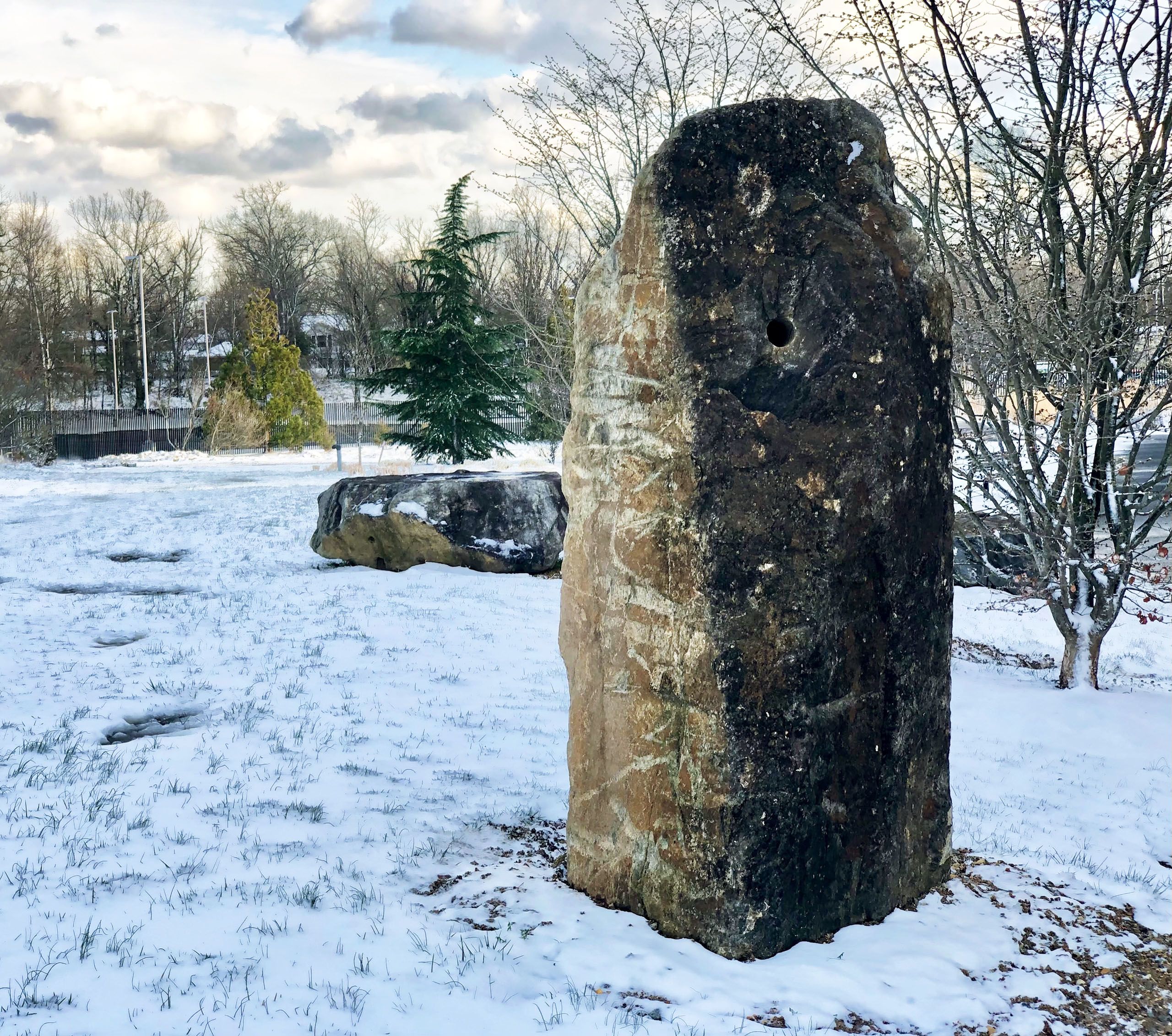
The Rock of Valls Noyes.
When I returned to campus after a two-year absence, I walked the grounds with Julieta Valls Noyes. I always knew she was an appreciator of the grounds, and I wanted to do something in her honor.
She was significant in my return to campus. She was really unwavering in her dedication to the grounds and to the vision of NFATC being a lot more than just interior spaces—about it having an environment, and a feel, and a style.
I spent a good part of the first year of my return mulling over how I would, first of all, resurrect a lot of what had been left to go fallow, and how to make something that would be fitting.
(Scroll to follow along with the audio.)
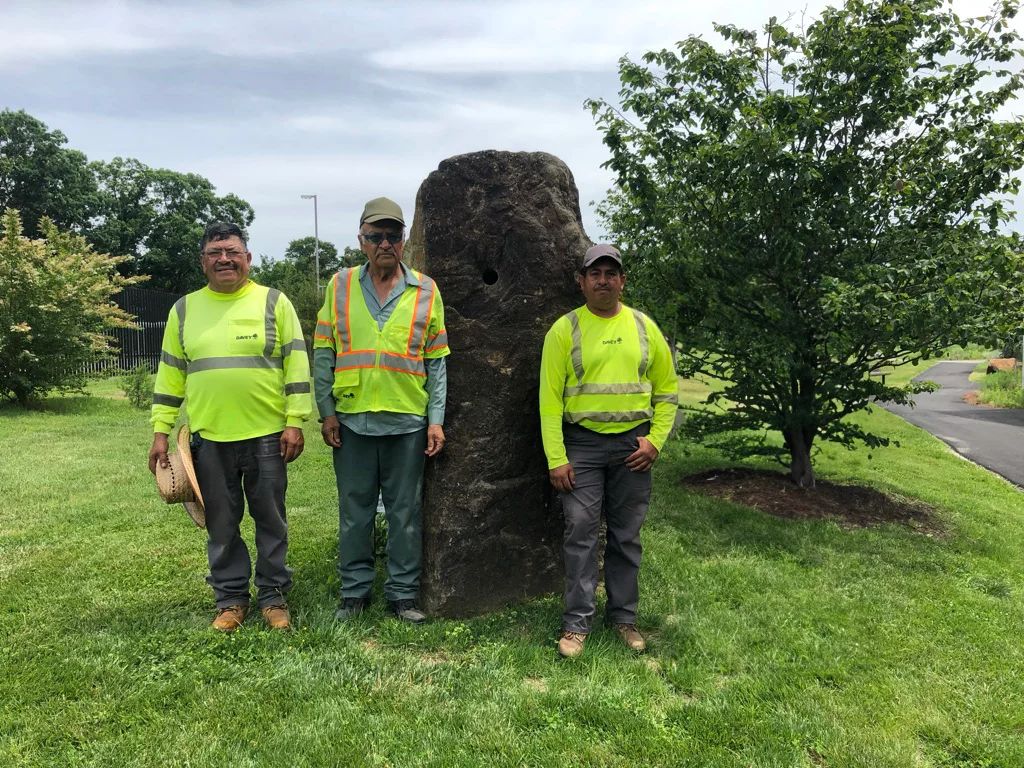
So, the rocks that we're looking at, I actually brought them to campus in 2008. And when we pulled them into campus, they were heavy. And I moved them with a backhoe and chains. And I remember sweating, having the chains really straining under the weight and knowing and the equipment really at the edge of its ability to move the rocks. And I was nervous.
And then they stayed where they were for about a decade. Until the construction for the B Building. And they were sitting there when I got back after my two-year absence. And there was a day that I was just walking around, considering what to do. And I walked over and saw the stones. And I had been staying in a place that was called the Garden of the Gods.
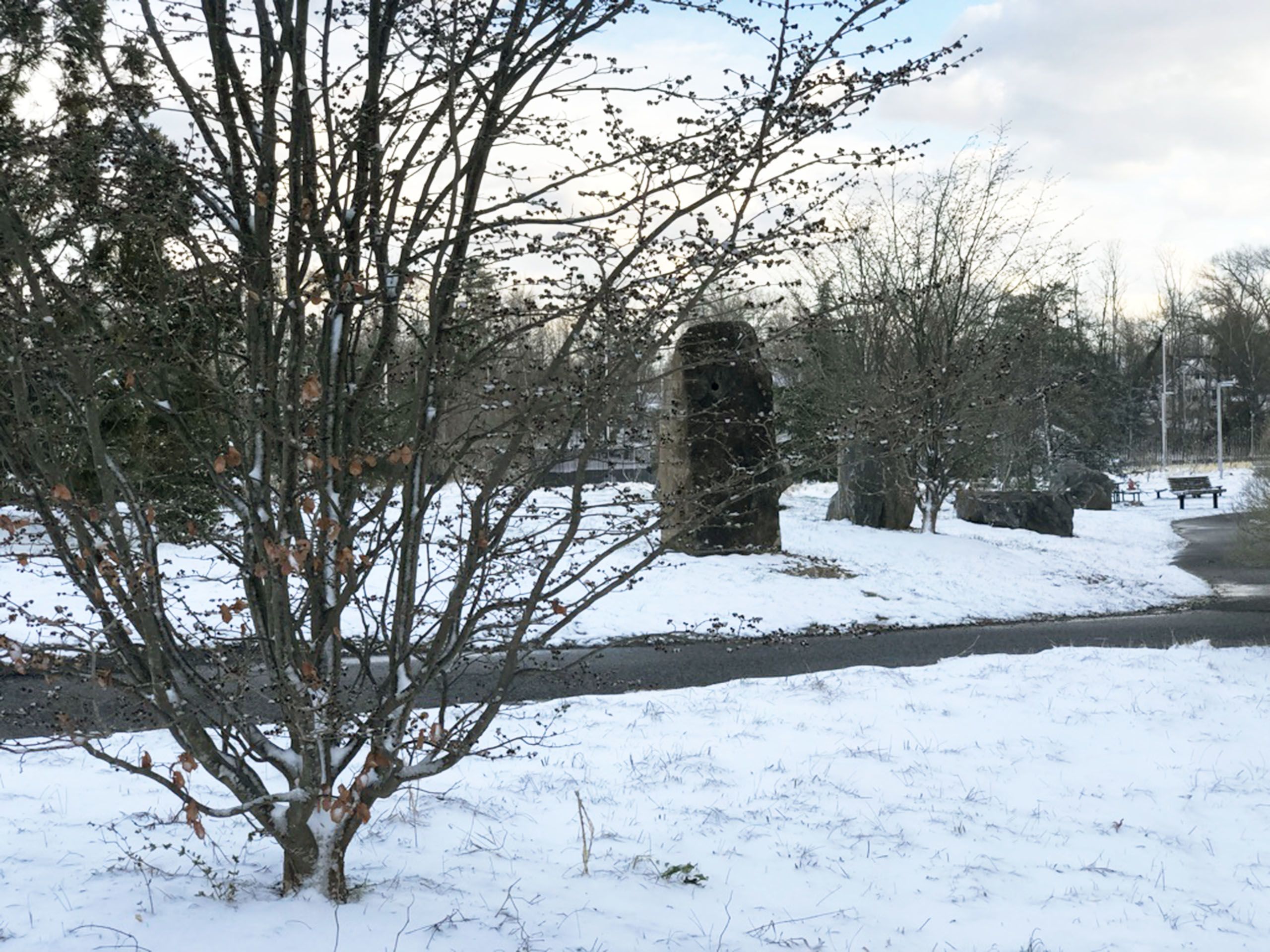
And rather than it be a planted garden, it's just a bunch of stones. I looked at one of the rocks that was laying behind P1, and I saw the perfect borehole in the cap of this stone. And it just seemed to me a perfect monument to raise. And to set it in honor of Julieta.
Although this seemed to be this incredible juxtaposition, I would not particularly identify Julieta with some sort of Neolithic stone. But at the same time, it seemed like this metaphor for her steadfast stewardship of the site. And so, I really strove at that moment to create a composition featuring this rock uprighted as a monolith and to give it no further ornamentation.
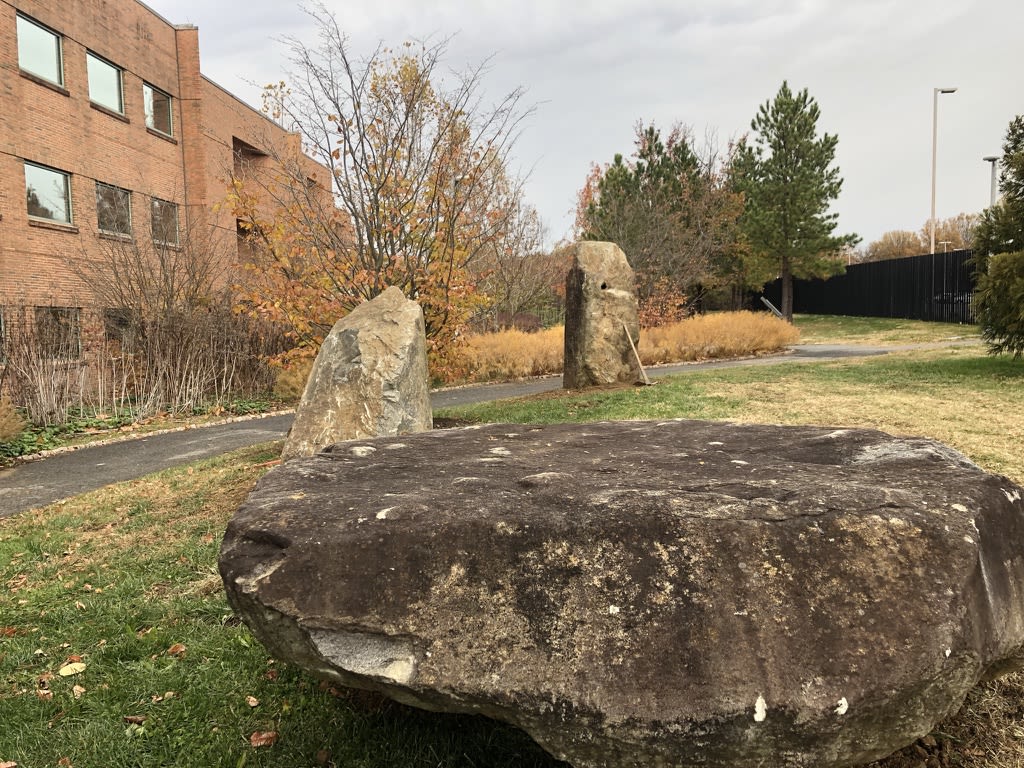
So, I got the equipment, and I picked up the stones and carried them around the back of the K Building. And I laid them out in an assembly. Every time you set stones, it's a real act. It's something that's done with extreme intention, the placement. It's this distillation of exactness.
Each location, each position becomes very prominent and meaningful in the assembly. And you do it not with a pencil and paper. You do it in real time with the stress of these huge, heavy rocks. And the men you're working with and the equipment that you're using. And you have to result in a finished product that cannot be altered again. So, you have one shot to get it right. And you really want to do your best.
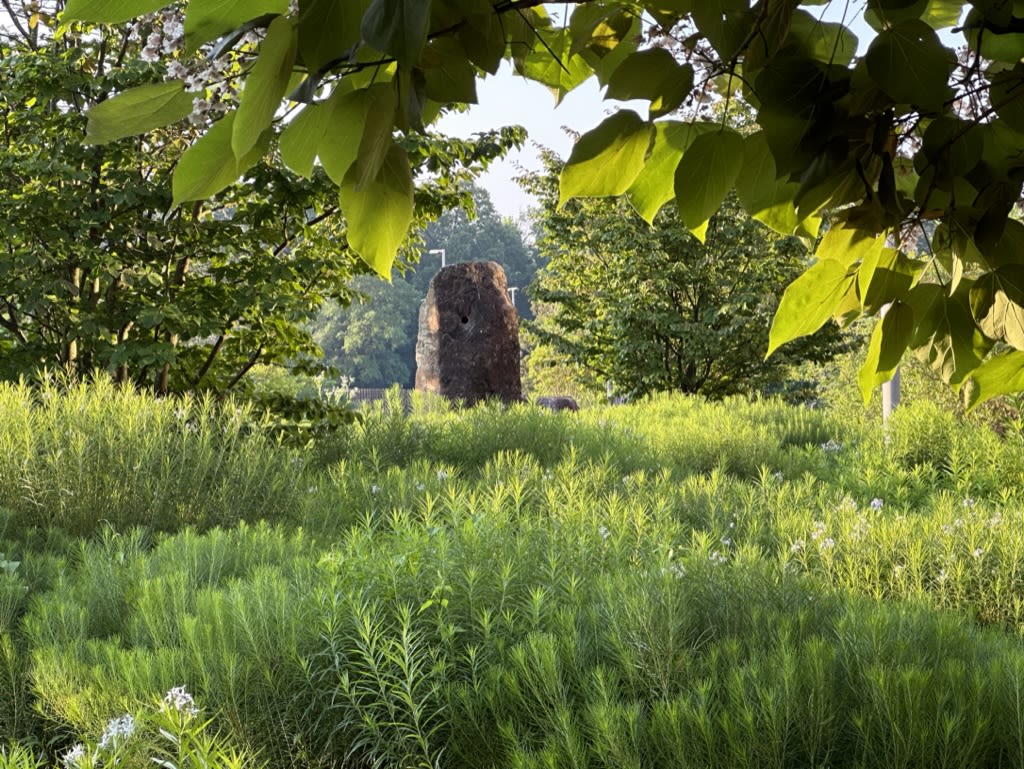
And so, as we were setting these boulders one by one, we were moving them, tweaking them here and there, and looking from this angle, from that angle, in order to get this feeling of walking through the Narrows, looking right at the stone monument with the oculus right in your view, right? You wanted to come in through the turnstile from the parking lot and to have that monolith just off to your side, right? The oculus pointing directly at the Narrows. I wanted to enter from the other turnstile and to see it in the distance, to be able to walk around the curve and to draw you over to that location.
And all the while, with this subtle notion that this monument, this piece was dedicated to Julieta.