The Ceremonial Circle
The Grounds at NFATC
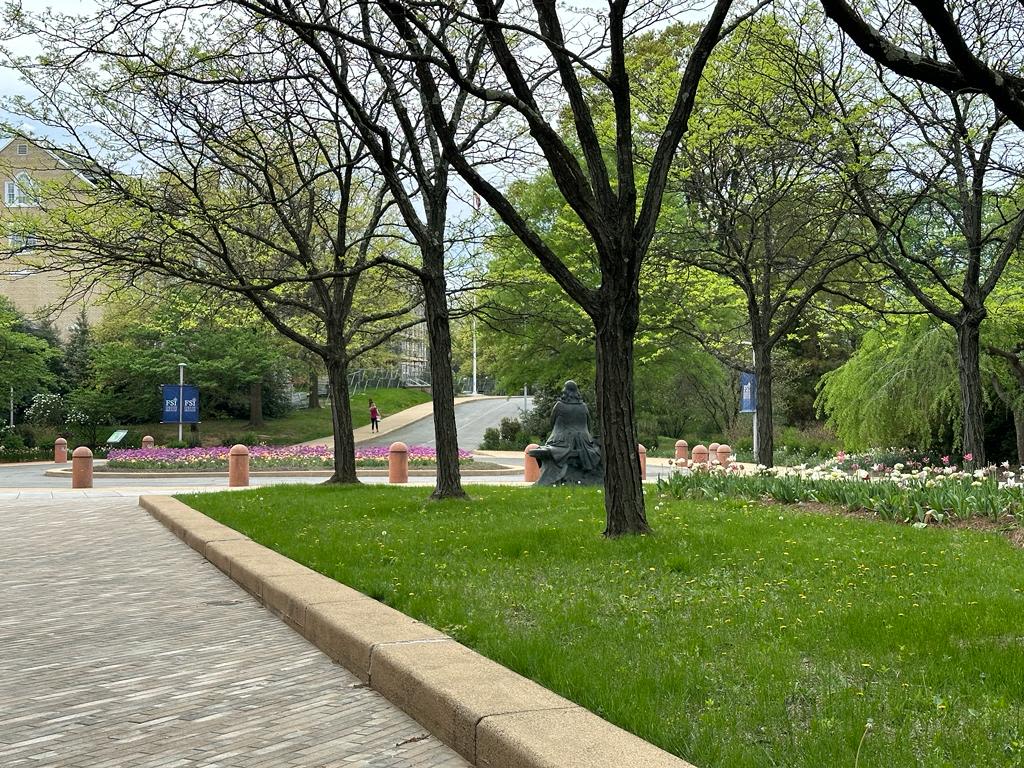

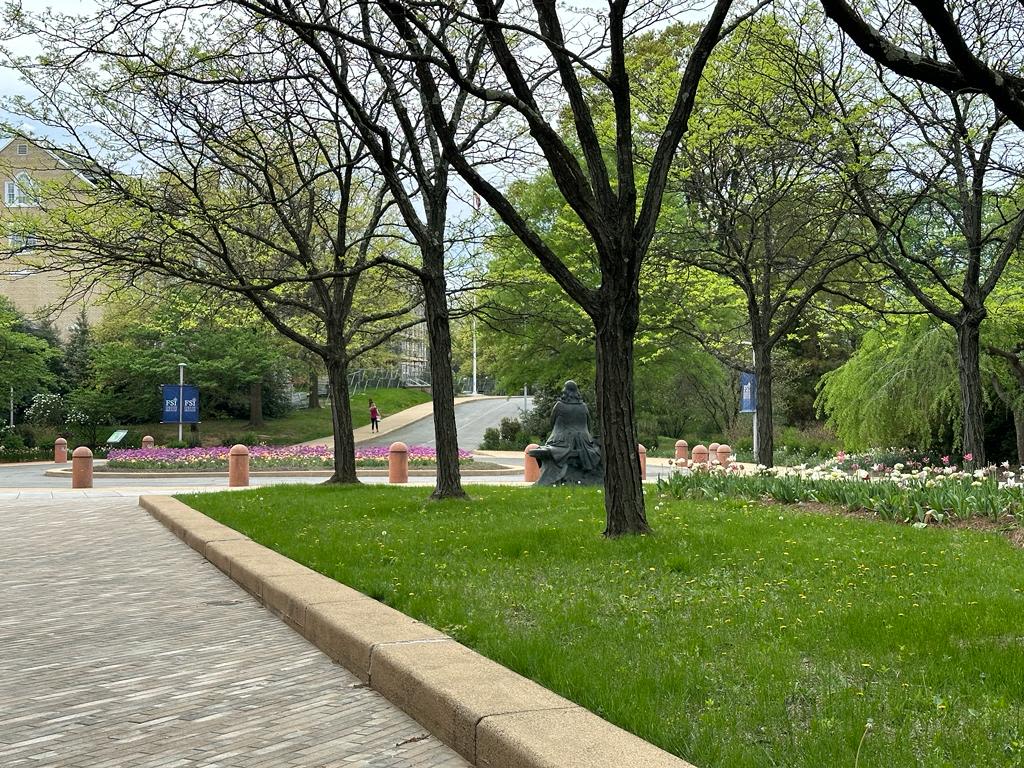
The statue of Benjamin Franklin by the Ceremonial Circle is a duplicate of a piece by American sculptor Paul Wayland Bartlett (1865-1925) that sits in front of the Waterbury, Connecticut, public library. The original has a twin that was cast during World War I and sits in the front courtyard of the U.S. Embassy in Paris. This duplicate was commissioned for the Department’s Bicentennial in 1982, paid for with private funds, and originally resided at the Diplomatic Entrance of the Department on C Street between 22nd and 23rd Streets, NW, Washington, DC.
In 1993, the Department of State established its National Foreign Affairs Training Center on this site. In May 2002, a ceremony that included six former Secretaries of State named the training center for George P. Shultz, who was Secretary of State at the time the Department of State acquired the site. The commemorative plaque hangs to the southeast of the Franklin Statue.




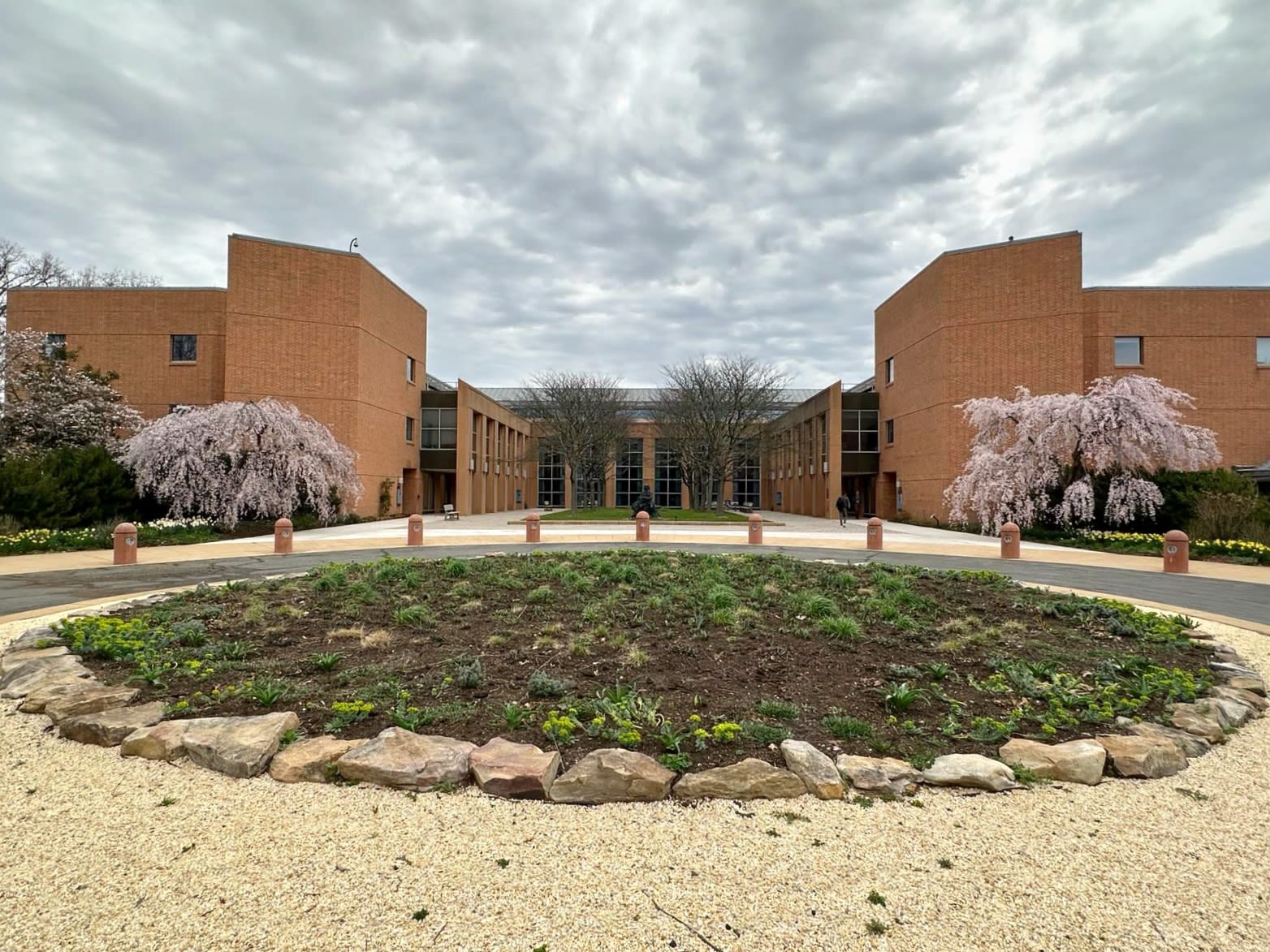
Horticulturist's Tour
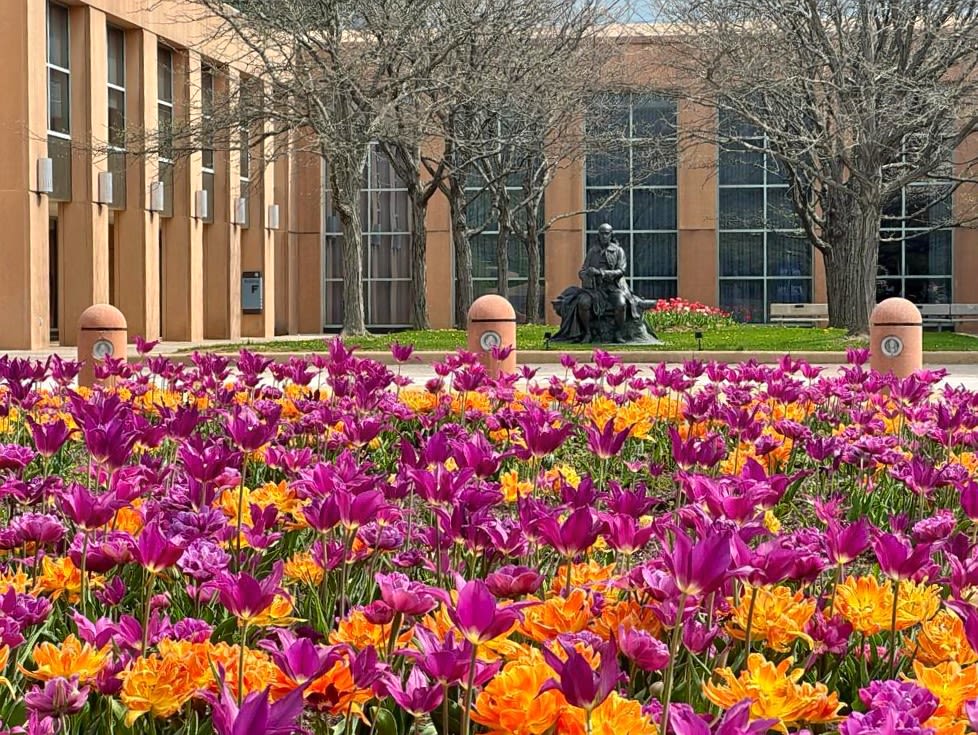
Listen to NFATC Horticulturist, Darren DeStefano, talk about redesigning the courtyard to better complement the statue of Benjamin Franklin and mirror the wood lobby of the F Building.
Select the play button to listen to the audio as you follow along with the transcript below.
The statue of Ben Franklin is the sole exterior art piece on campus.
It's a life size bronze, classical, of Benjamin Franklin seated. It's had a pretty lackluster setting. I mean, it's in front of a kind of concrete edged, raised rectangle of green and extensive concrete patio with a tight joint and a hash pattern.
When the opportunity came in order to rebuild it, I was interested. And I especially wanted to introduce pavers onto campus. I mean, as far as surfaces, one of the things that I like about campus is that it has asphalt sidewalks. Asphalt is a really nice material. I mean, it rolls with the landscape and contours, and it turns, and it's soft underfoot. And it's not altogether that common in a built environment around Washington. You're more likely to find concrete.
Concrete is the gift of the Romans, but they didn't put it on the ground. I mean, that was the material to build walls. In my opinion, it's rigid and harsh, and I prefer never to use it as a surface.
(Scroll to follow along with the audio.)
So, when I had the chance to remove the concrete from around Ben Franklin, I immediately thought of pavers because the building itself is brick. And I love the brick city. I lived in the Netherlands and I loved how they did streets of brick, houses of brick. Every, curbs were brick. It was really brick on top of brick on top of brick. And, you know, I thought, 'Ben, he'd been in London.' You know, 'that's a brick city.'
And the concrete had popped all over the place. There were all of these raised panels; people were tripping on it. And that was actually from the roots of the locust trees and a testament to their strength. You know, they had gone underneath of the concrete, where there had been a crack or a seam admitting water. It expanded greatly and, it just, the concrete being so rigid, it couldn't break anywhere except at the expansion joints. So, it caused all of these pops.
The pavers are a much better solution because they can be tuned, right? You can make small rises and make a surface that's uneven, at least walkable. And yeah, it was amazing how much root mass had developed underneath of the concrete. So, we did remove it and dug down, laid a bed of sand, and then set to laying paver.
And I took pavers that were especially long. I'd been at the Floriade last year, which is the once-in-a-decade garden show in Amsterdam. A lot of what they were showcasing, the styling had these nice, long, thin bricks, and I enjoyed that and took that back with me and decided that this would be a great pattern to set, you know, these long leading lines in a 45.
And I thought it would serve to meet the wood lobby, which has a parquet wooden floor laid at a 45. I just did the inverse angle, the mirror image, and tried to connect the two spaces. And I thought with the brick layout, you'd be more likely, if there was a gathering in the wood lobby, for it to come outside and to feel comfortable. It's a lot more humanizing to be around brick as opposed to expansive concrete, which is just vacuous and kind of deadening.
That was the whole job. Just picking it up, laying it down, resetting some of the deck chairs. And I hope it's a more used space than it was before.
Through the Seasons
Select each of the images below to zoom in and learn more.

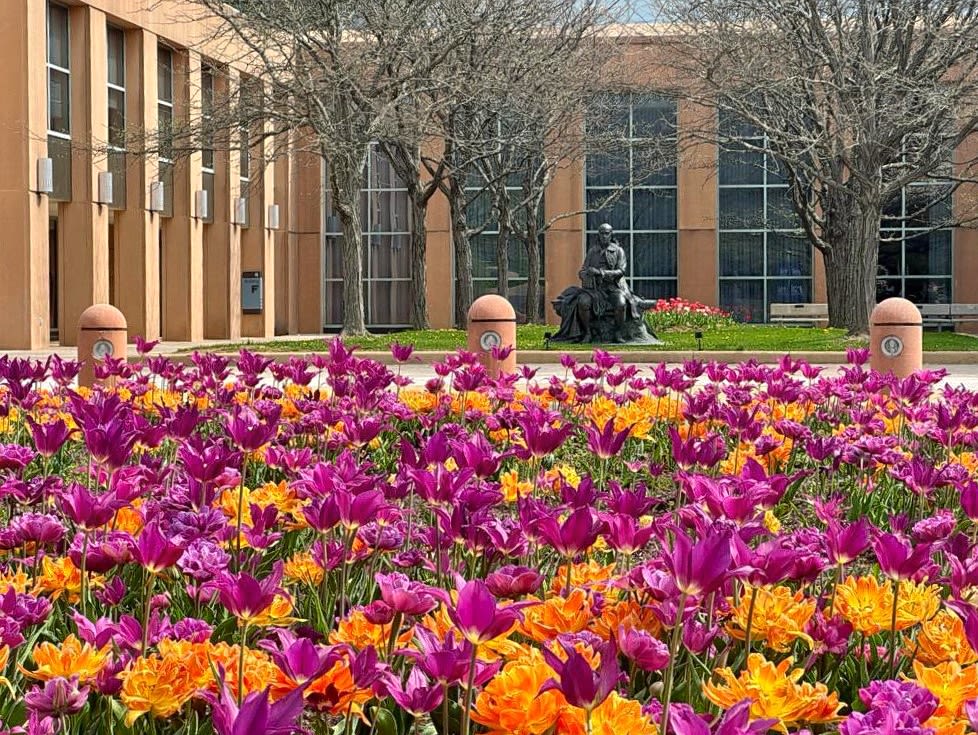
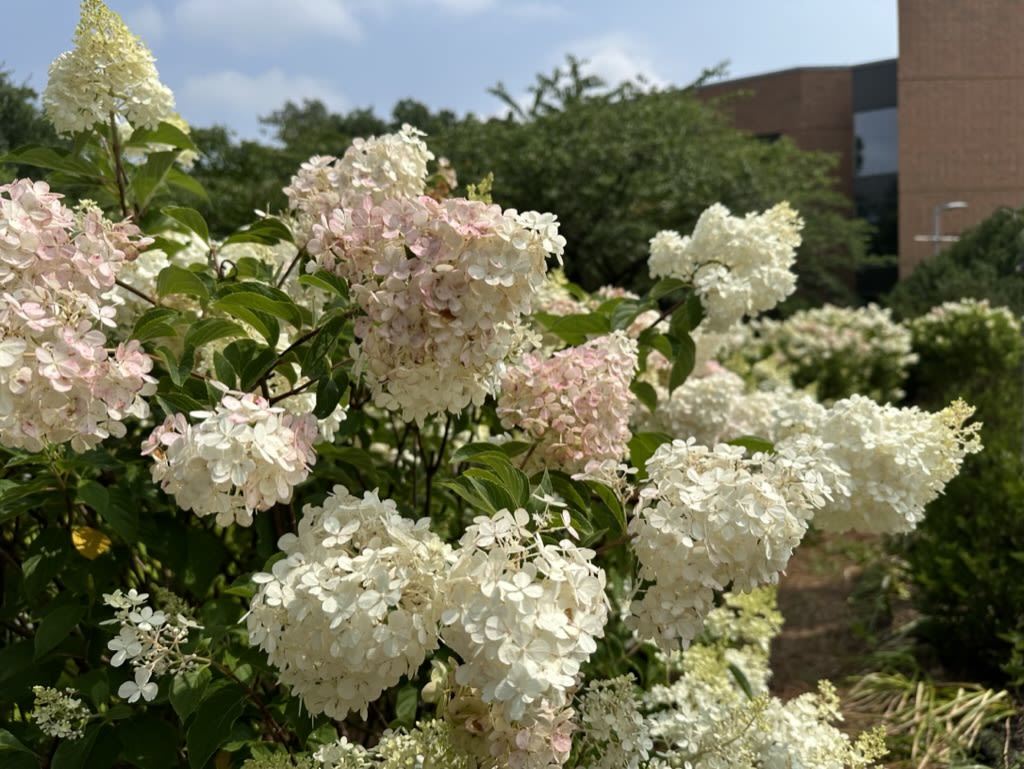
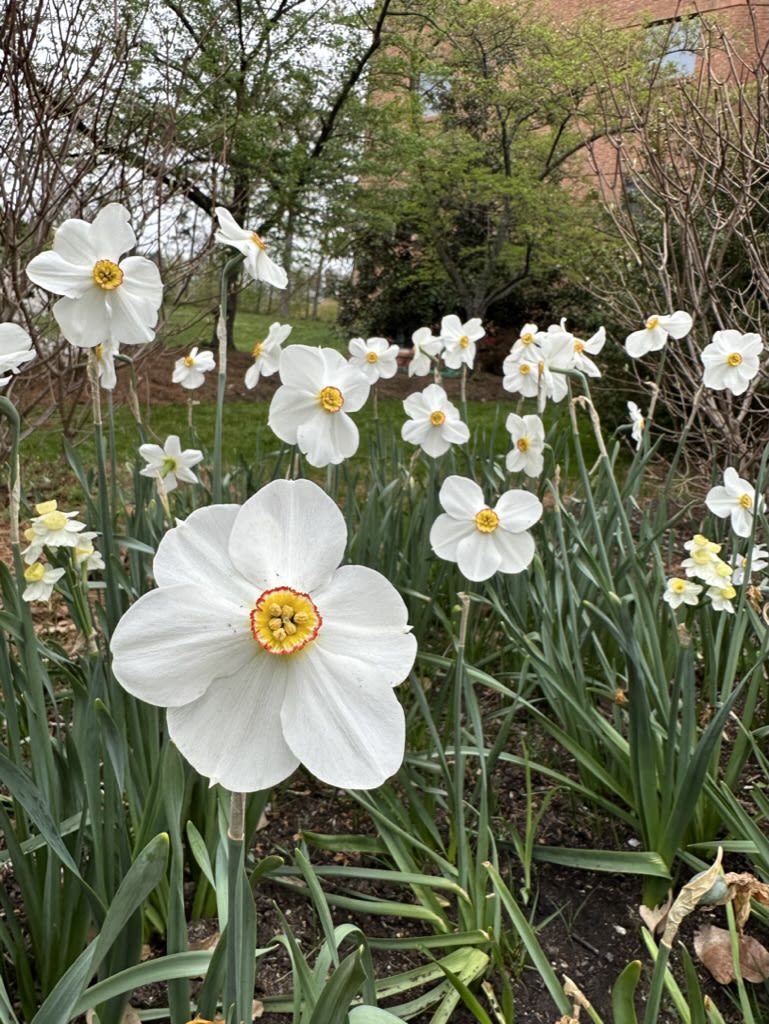
Flowers planted in the ceremonial circle
Flowers planted in the ceremonial circle

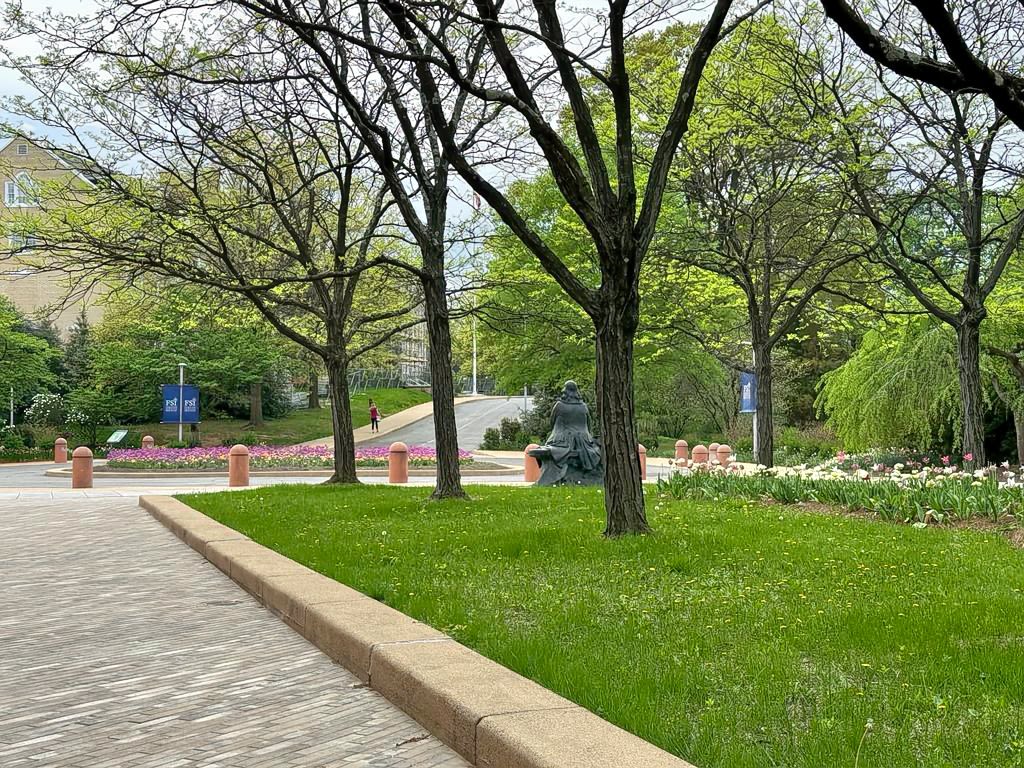
View of Benjamin Franklin statue from behind
View of Benjamin Franklin statue from behind